Share
Share


This article appeared in the May 12, 2026 issue of the monthly print edition. Subscribe now.
It is termed a bungalow — but it’s not just any standard bungalow. Situated in a vibrant Kuala Lumpur suburb, the expansive 15,000 sq ft residence sitting on two plots totalling a massive 20,000 sq ft is more like a mansion.
Naturally, such opulence is not confined to the enjoyment of its occupiers (a family of six) only, but is also designed to host family and friends for gatherings and celebrations.
Sited at the Bukit Jalil Golf & Country Resort, the two-storey home belongs to an ultra-high net-worth individual (UHNWI) who only wants to be known as William — or “richdadwilliam” among his friends.
The copious space alone marks this property out for visibility, but the artfulness of the design is what transforms square footage into life and story.
A Mediterranean starting point
Long before the interiors were conceptualised, the foundation of the home was shaped by a specific visual language rooted in southern Europe.
“I wanted an open-air concept. There is this particular region in Spain which is known as Marbella — they have a lot of beachfront houses with an open-and-exit kind of design. I really like that design and tried to implement [it] to this house,” William says.
That reference to Marbella, a coastal enclave known for its sunlit villas and fluid indoor-outdoor layouts manifests here in subtle but consistent ways.
The house is arranged to allow movement around its full perimeter, with a generous green spine wrapping the built form. Openings are wide, circulation is intuitive, and the boundary between interior and exterior is intentionally softened.
Material choices reinforce this narrative.
Travertine, commonly seen in Mediterranean architecture, is used extensively on the exterior.
“A lot of the designs, like Marbella, also use a lot of stones — whether it’s white marble, quartz stone, exterior, or travertine,” he says.
Beyond aesthetics, the decision is also practical, as masonry is more durable and feasible for long-term maintenance. Secondly, their natural earthen tones complement the overall design.
And whether you come alone or in a group, the entrance door spanning 12ft wide, when it opens up, already makes you feel welcome.
Space for time together
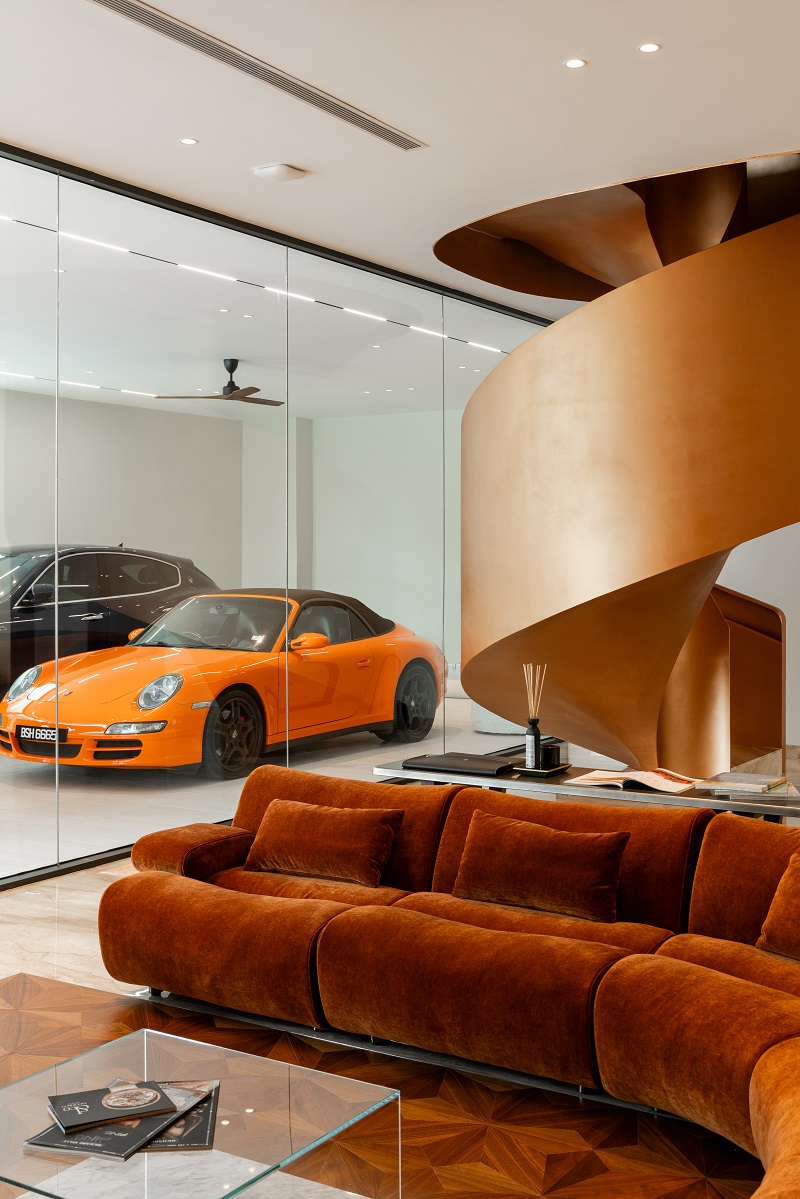
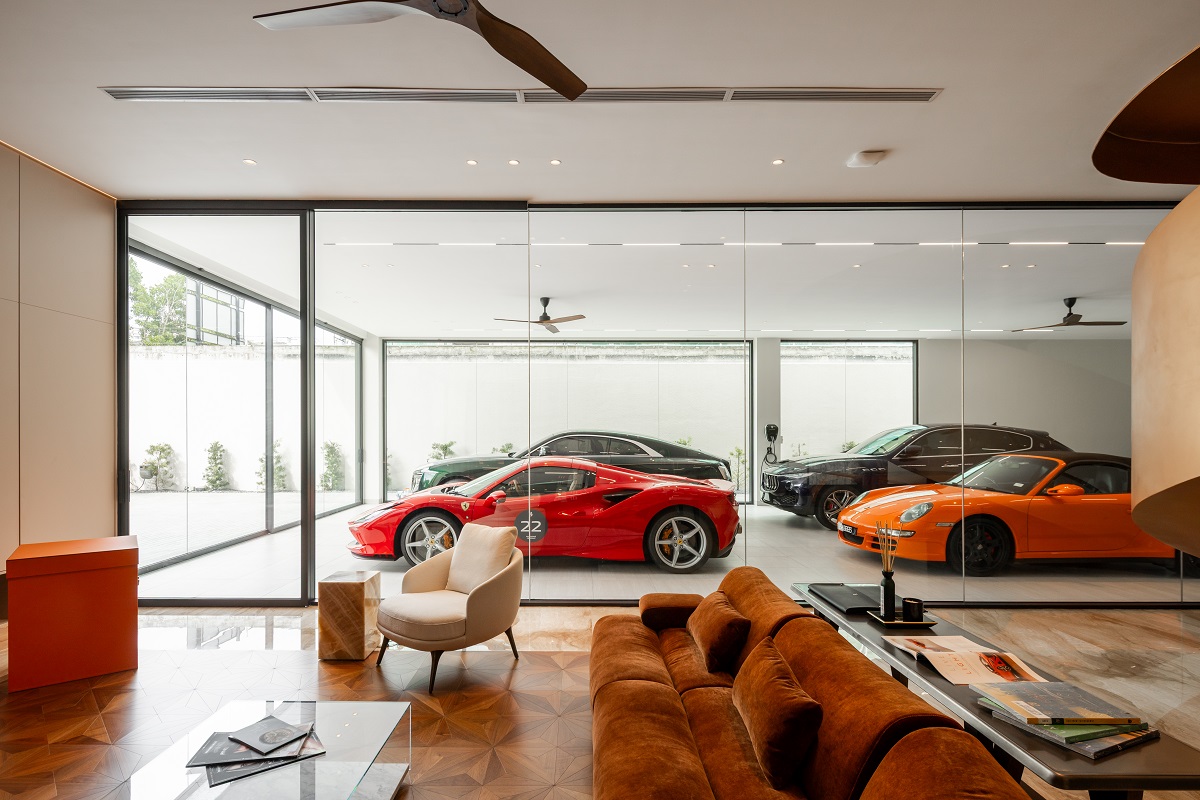
Setting the stage for a strong introduction is a collection of luxury cars encased in a seethrough glass “garage” — the first sight that will capture your attention when you step beyond the front gate — and will continue to form the optical backdrop as you chat over coffee or clink your champagne glasses in the “lounge” room.
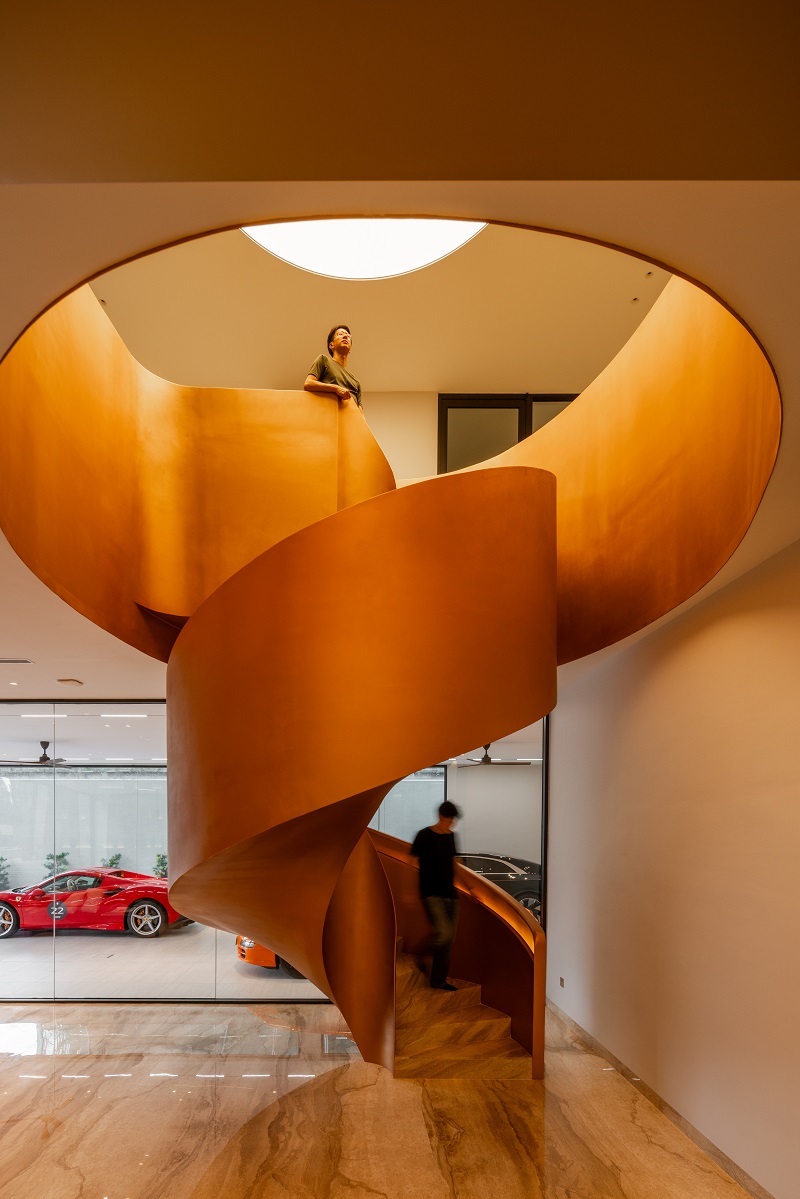
Originally conceived as a games area, the space has evolved over time.
“Initially the lounge area was planned for a family entertainment area with lots of table games. As design and discussions progressed, [however,] we curated and improved the space to come up with this perfect solution,” says Mieux Design creative director Sheila Chang.
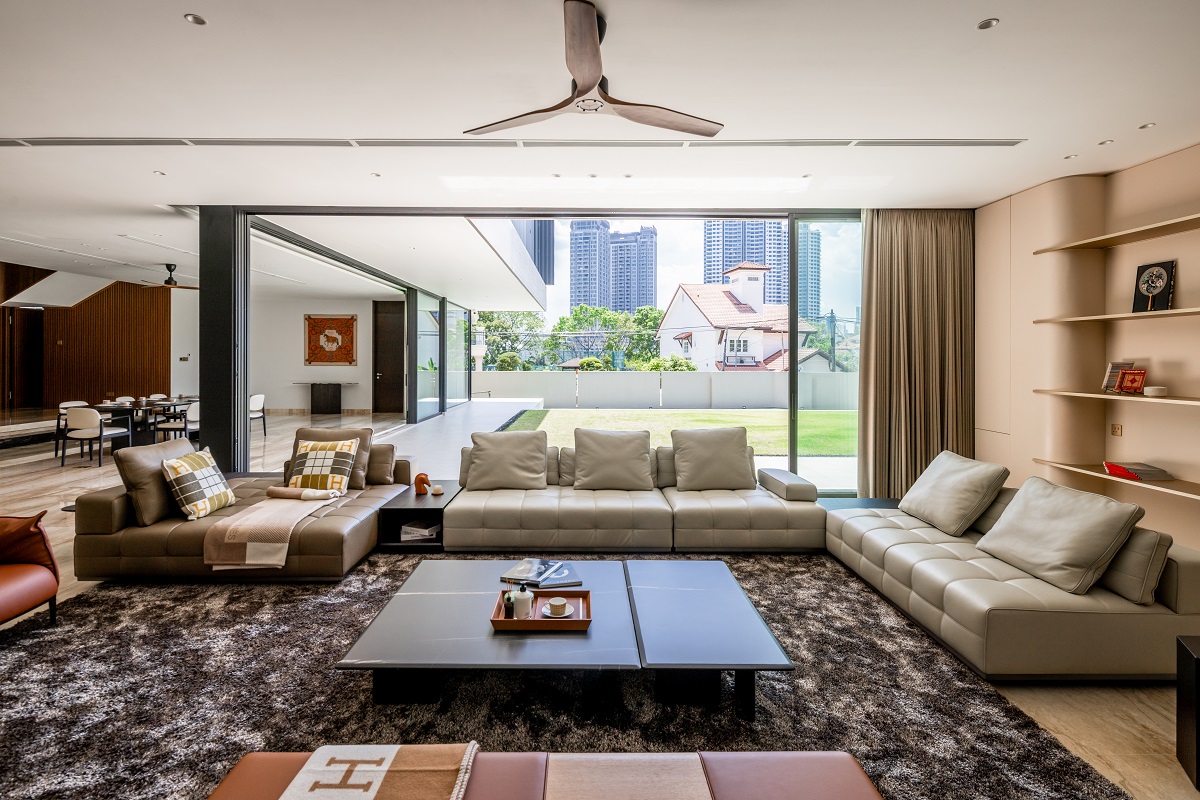
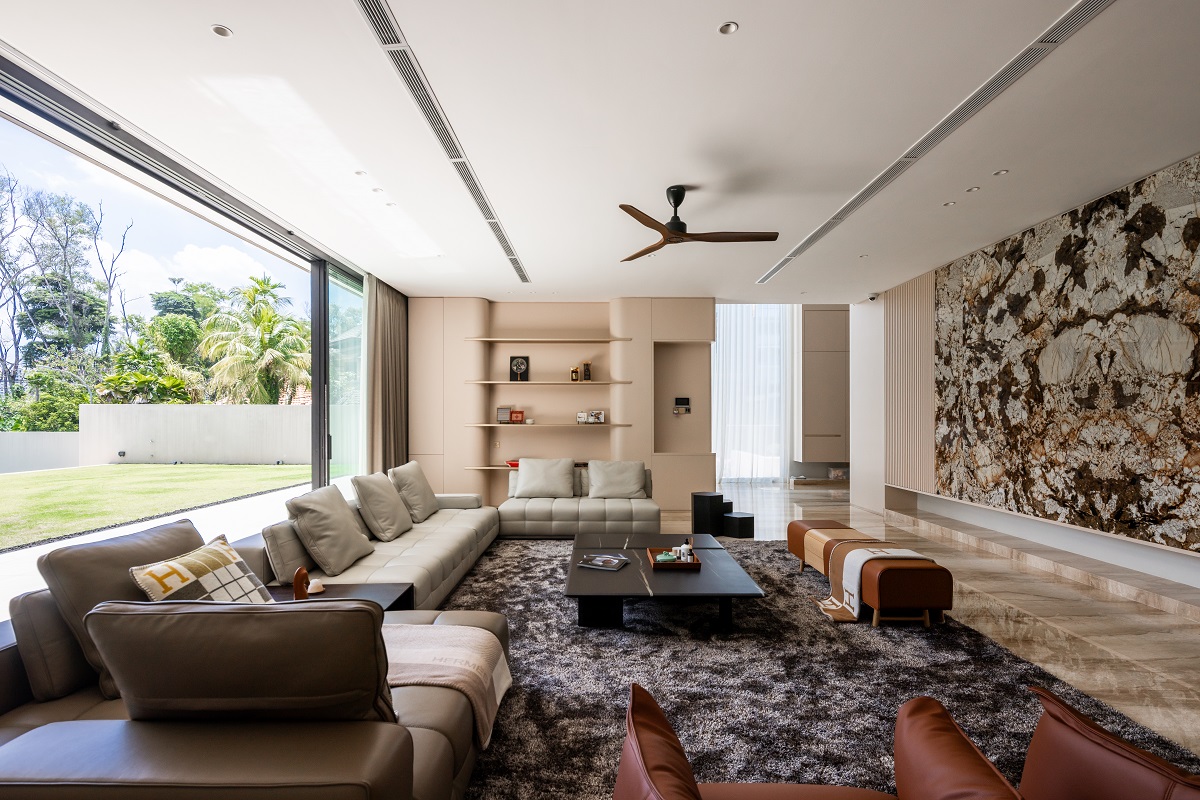
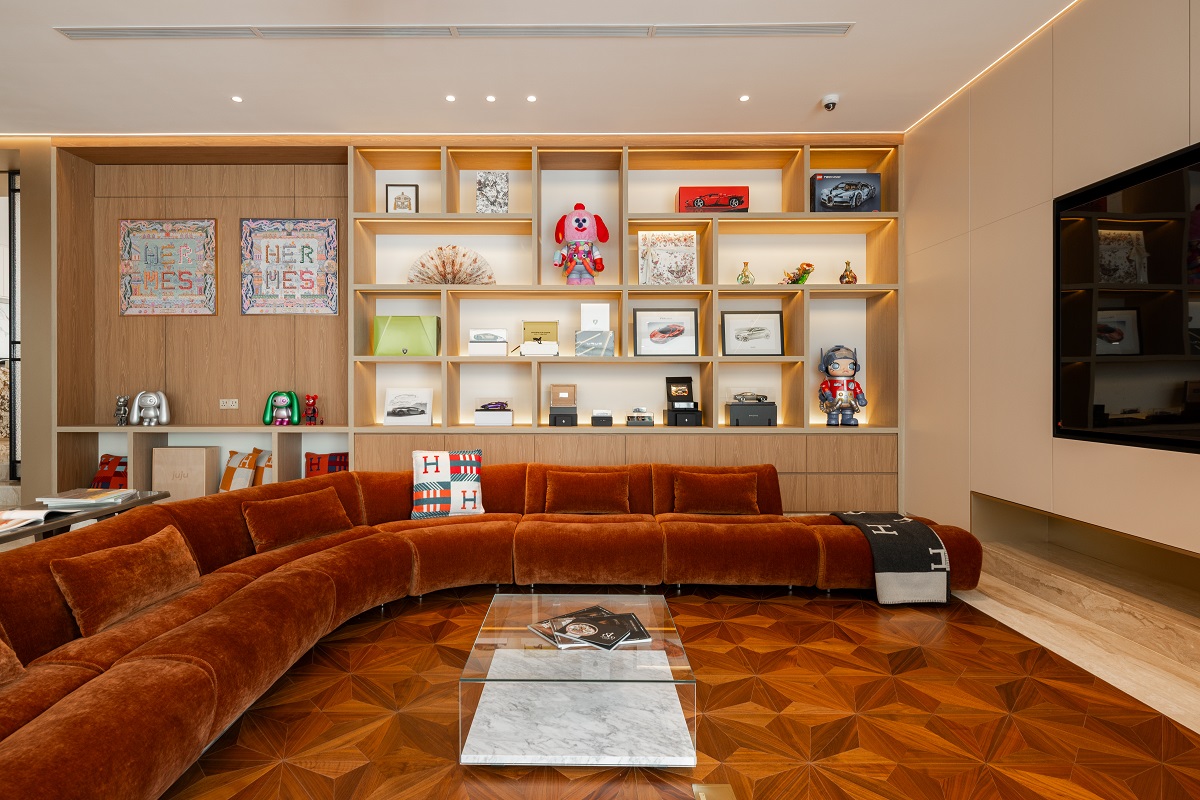
The result is a Hermes-inspired design that has eventually evolved into a lounge area where the family can have casual activities in the space overviewing the sleek vehicles.
William describes it simply: “It’s comfortable. I can have my cars [on display]. It’s very nice when you host events and parties. People can be around this area and enjoy the setting,” he says.
Balancing statement and restraint
While parts of the home, particularly the lounge, lean into more expressive design moments, much of the interior palette is intentionally restrained.
Earth tones dominate — beige, brown and soft neutrals that echo the exterior materiality and Mediterranean influence.
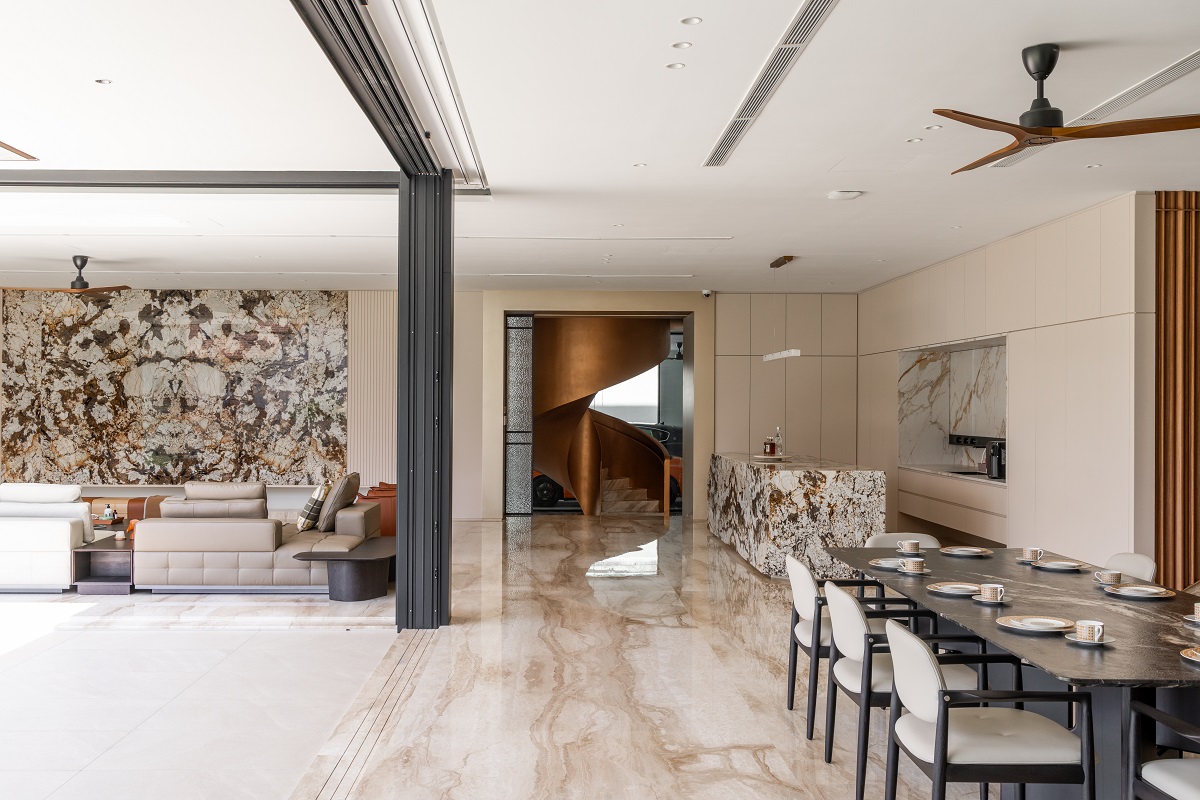
These are paired with more defined features such as sculptural marble islands and illuminated wall panels that introduce contrast without overwhelming the space.
“We always like to achieve timeless quiet luxury design, yet practical with easy house maintenance. Hence, the contrast between bold and subtle pops create a quiet luxury ambience,” Chang says.
Even material substitutions reflect this balance. Wood textures, for instance, are achieved through cement boards to reduce maintenance concerns outdoors, a decision that prioritises longevity without compromising the intended aesthetic.
Work, play, rest distinguished architecturally
Inside, the house unfolds as a sequence of zones rather than a singular open plan. The ground floor is anchored by two distinct living areas: one formal, the other more relaxed. This duality is intentional from the outset.
“The public area segregates into a formal meeting area like the living hall, while a fun area like the lounge is more casual,” Chang says.
The zoning is reinforced architecturally. Subtle transition arches, material changes and framed thresholds guide movement between spaces, creating what Chang describes as a shift in “dimension and ambience”.
“You will see a gold archway guiding us to go into different dimensions and ambience as if we walk into different zones and space,” she says.
As with common functionality, the upper level houses bedrooms and quieter, more personal spaces, while the ground floor remains open to guests and activities.
Even recreational elements are carefully positioned to avoid disrupting the home’s internal calm.
“Most of the recreational activities happen outdoors whereas indoor is a more chill and cosy kind of environment,” Chang explains.
That extends across the entire site. Not only is there a basketball court, pickleball court, and expansive lawn sitting outdoors, but a wet kitchen designed for heavier cooking.
William says doing the cooking outside keeps the interior spaces cleaner and more controlled.
Design that interprets affluent living
Projects of this scale often come with highly specific requirements, something Chang and her team are accustomed to navigating.
“We have experience working with many UHNWI clients. We truly understand their preference and requirements.
Rather than imposing a singular design language, the approach here is to interpret lifestyle cues, hosting habits, family dynamics and personal preferences, and translate them into spatial decisions.
“Overall our designing is pretty much human oriented, and it is about experience when going into different kinds of space and environment,” she adds.
In the broader market context, EdgeProp listings as at end-April show bungalows in Bukit Jalil Golf & Country Resort ranging from RM4.3 million to RM20 million, with land areas between 6,921 and 16,953 sq ft.
..........
EdgeProp brings you another month of data-driven insights, exclusive interviews, and market commentaries. Subscribe now for your free copy!