Share
Share


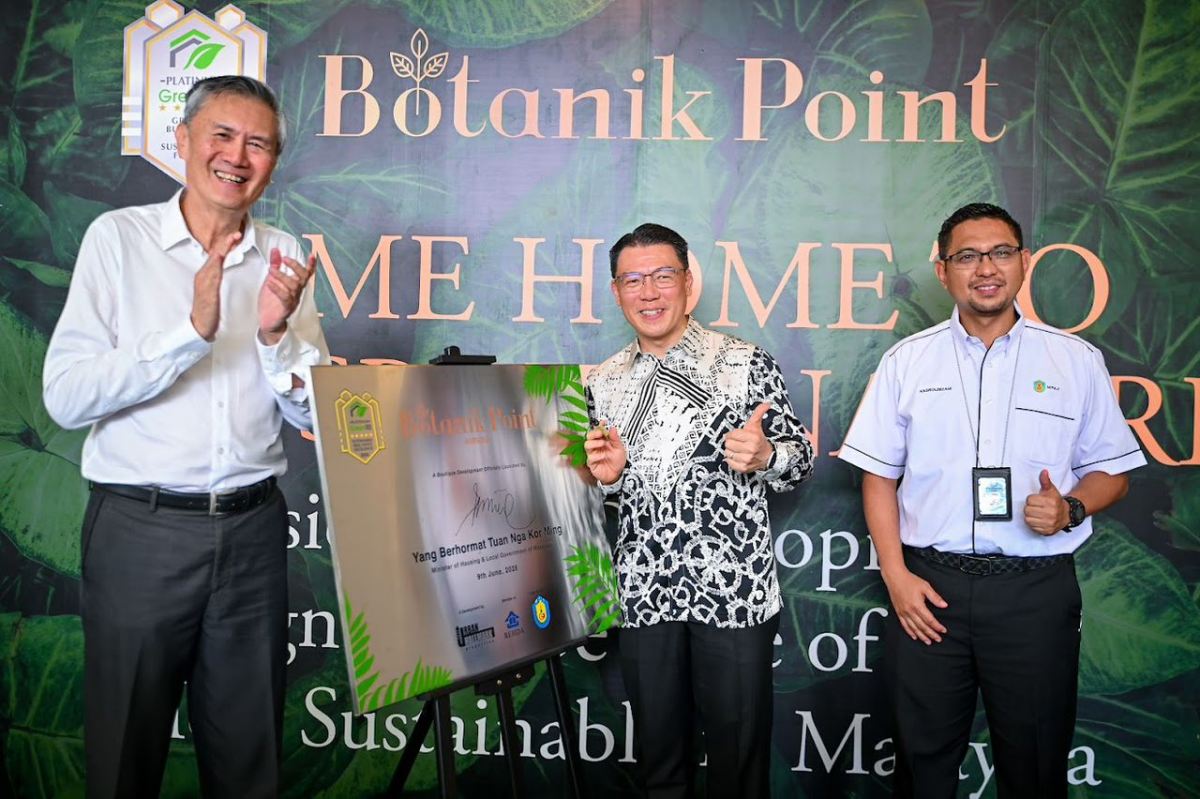
PETALING JAYA (June 9): Urban Hallmark Properties Sdn Bhd has launched Botanik Point, a low-density residential development in Ampang, Kuala Lumpur with a gross development value (GDV) of RM96 million.
The project, launched by Housing and Local Government Minister Nga Kor Ming, sits on a 1.78-acre freehold site and comprises 46 residential units, including 42 townvillas and four semi-detached homes.
Urban Hallmark founder Datuk Jeffrey Ng said the company deliberately reduced the number of units permitted under local planning guidelines.
“Based on the permitted density under the local plan, we could have developed up to 108 units on this site. Instead, we chose to build only 46 units. That decision was made in the best interest of future homeowners,” he said at the Botanik Point Nature Reserve launch today.
Ng said the project is designed around preserving part of the site’s existing natural environment rather than clearing it entirely.
“When we first acquired this site, we knew we had a choice. We could follow the conventional path, clear the land entirely and start from scratch. Or we could challenge ourselves to do something different. We chose the latter,” he said.
According to the developer, about 30% of the site will be retained as a protected nature reserve, preserving mature trees and existing vegetation.
“Instead of removing nature, we allowed nature to shape the development itself. Today, approximately 30% of the site remains dedicated to a protected nature reserve,” Ng said.
Ng said the project reflects the company’s “less is more” development philosophy: “Less density. More quality. More thoughtful spaces. Less environmental impact. More value for homeowners”.
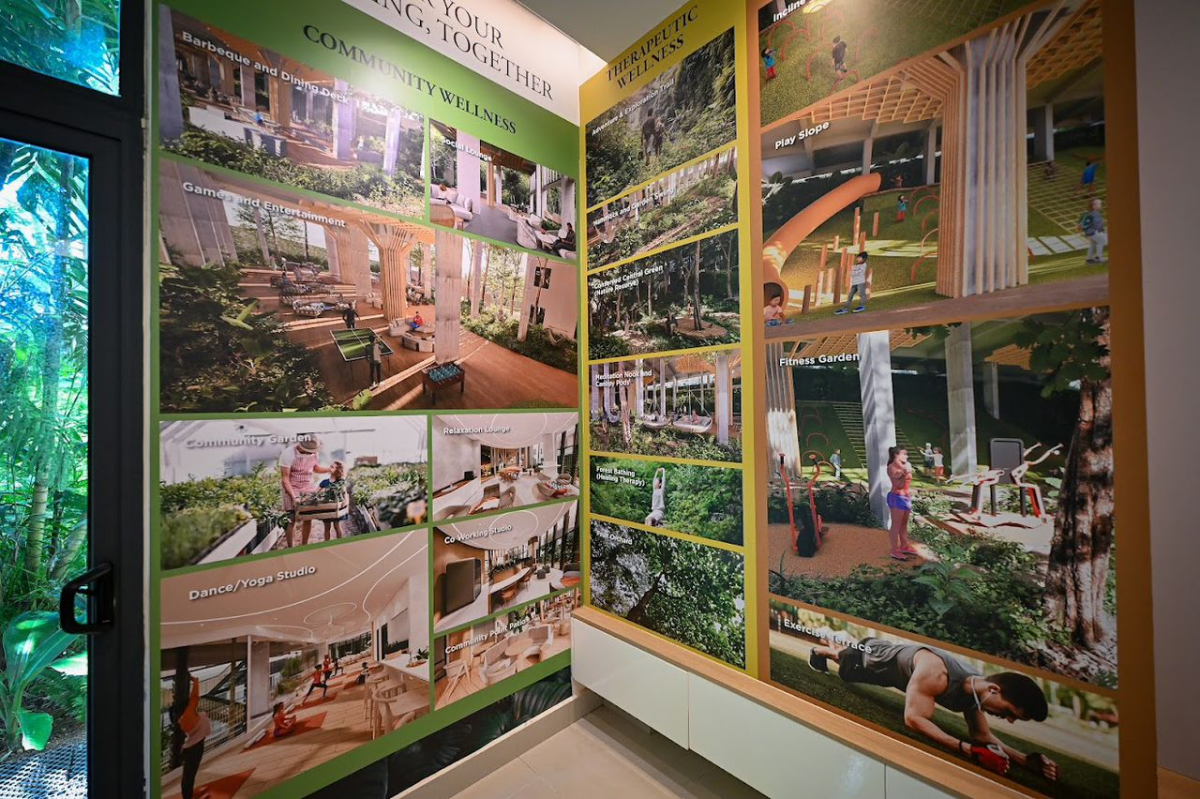
He added that the lower-density approach provides residents with greater privacy, comfort, and access to green spaces.
The development also incorporates features to improve natural lighting and ventilation.
“With features such as high ceilings, full-length glazing, and strategically-positioned air wells and skylights, Botanik Point taps into passive design strategies for natural cooling through cross and stack ventilation, as well as improved daylighting,” he said.
TRCRC partnership and ArbNet accreditation
Urban Hallmark also signed a memorandum of understanding (MOU) with the Tropical Rainforest Conservation and Research Centre (TRCRC) to collaborate on biodiversity conservation, ecological restoration, scientific monitoring, and environmental education initiatives at the site.
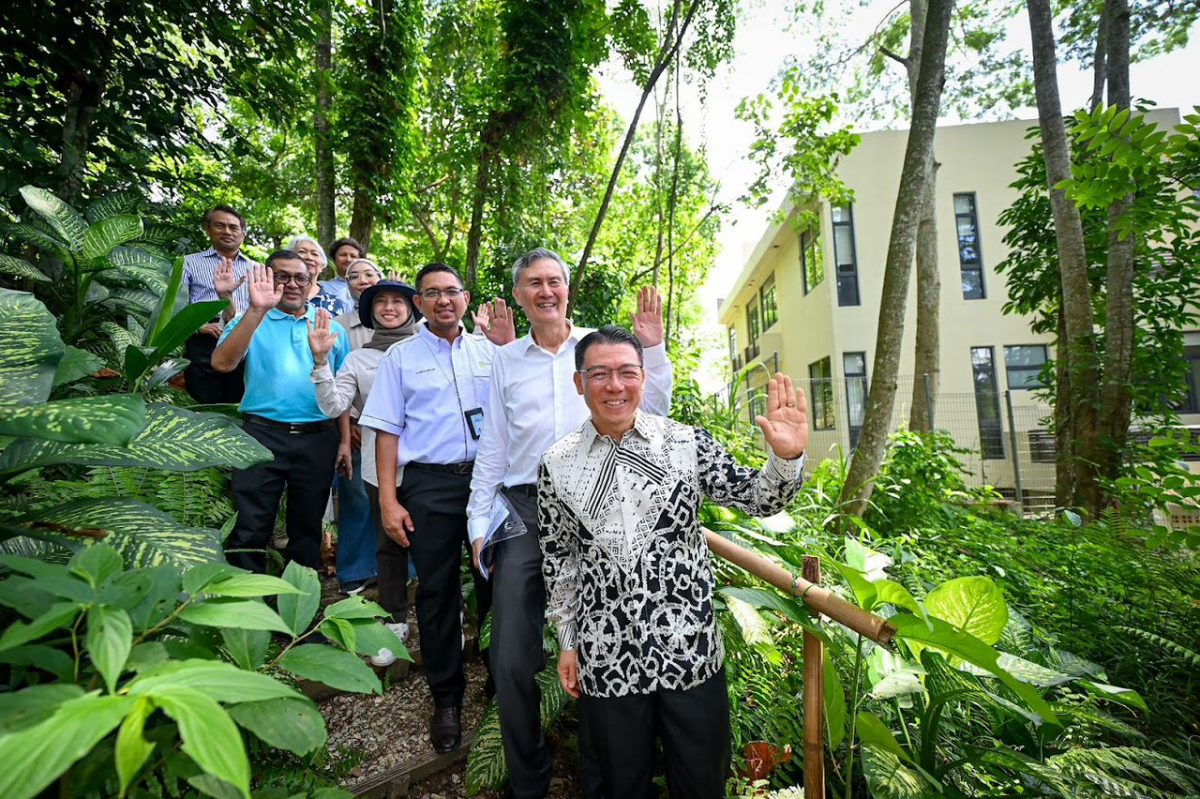
The partnership will also support the project’s pursuit of ArbNet Level 1 Arboretum Accreditation, an international recognition for curated tree collections and landscapes committed to biodiversity conservation.
TRCRC executive director Dr Dzaeman Dzulkifli said the MOU reflects a shared recognition that conservation and urban development can work together to create healthier, more resilient environments for people and nature.
“TRCRC’s work focuses on the conservation and restoration of tropical rainforests through science, collaboration and community engagement. Cities and urban landscapes now play an increasingly important role in biodiversity outcomes,” he said.
He added that as urban areas expand, well-designed green spaces are becoming as important as protected ecosystems in more remote areas.
“Urban biodiversity is often underestimated, even though trees, plants, and green spaces provide essential services such as improving air quality, supporting birds and pollinators, managing stormwater, and creating spaces that support physical and mental wellbeing.
“These green elements function as living infrastructure that quietly sustains urban life. This is why the vision behind Botanik Point is encouraging. While many developments include landscaping and green spaces, it is still relatively rare for residential projects to adopt internationally-recognised frameworks that guide long-term ecological stewardship and biodiversity value,” he said.
Ng also said preserving nature should be viewed as a long-term investment rather than an added cost.
“Preserving nature should not be viewed as a cost. It is an investment. An investment in Malaysia’s future and in the quality of life of future communities,” he said.
Product details and connectivity
Botanik Point’s townvillas have built-ups ranging about 2,200–2,900 sq ft, with prices starting from RM1.6 million. The development’s four semi-detached homes offer built-ups between 5,500 sq ft and 5,800 sq ft, with prices starting from RM4.3 million.
The project is accessible via major highways including the Ampang–KL Elevated Highway (Akleh), Middle Ring Road 2 (MRR2), and Duta–Ulu Kelang Expressway (DUKE).
Completion is expected within 36 months.
Nga: Madani agenda and sustainability push
Nga said the project reflects Malaysia’s broader push towards sustainable urban development under the Madani agenda.
“The Madani Government has placed sustainability at the heart of its development agenda, with the letter ‘M’ in Madani representing kemampanan (sustainability),” he said.
Sustainability is now central to national development policy, including initiatives such as the National Circular Economy Council and the Malaysia Smart City Rating Framework. This includes strengthening recycling requirements nationwide, including mandatory recycling facilities in shopping malls.
“Major malls such as Mid Valley Megamall, The Exchange TRX, Suria KLCC and Sunway Pyramid are among those required to have recycling facilities,” Nga said.
He also highlighted Malaysia has surpassed its tree-planting target, with 115 million trees planted to date. At least 51% of Malaysia’s land is now required to remain under permanent forest reserve protection.
In addition, the government is expanding waste-to-energy infrastructure and plans to develop 18 such plants by 2040.
“The benefits of sustainable urbanisation should be enjoyed by all Malaysians, not just a select few,” he said.
Nga said Botanik Point aligns with Malaysia’s broader sustainability and urban resilience agenda, including the United Nations Sustainable Development Goals (SDGs), particularly SDG 11 on Sustainable Cities and Communities, SDG 13 on Climate Action, and SDG 15 on Life on Land.
The project has received Provisional GreenRE Platinum certification, reflecting its commitment to environmentally responsible planning and sustainable building practices.
He pointed out ArbNet accreditation has so far only been awarded to township developments or parks in Malaysia, making this a significant development for the industry and positioning Botanik Point as potentially the first residential project in the country to seek recognition for a residential arboretum landscape.
Urban Hallmark’s boutique development strategy
The launch also builds on Urban Hallmark’ broader positioning of Botanik Point as part of a shift in demand for landed homes in mature urban enclaves.
In an earlier interview with EdgeProp, Ng said rising urban density in KL is reshaping how landed homes are valued, with buyers increasingly prioritising lifestyle, privacy and long-term liveability.
(Read also:
Botanik Point elevates landed living to holistic wellness experience)
He said Botanik Point was developed as a response to a clear gap in the market for differentiated landed housing within established neighbourhoods, particularly in Ampang’s Taman Zooview area.
Ng said the surrounding area, characterised by older bungalow enclaves and mature greenery, continues to attract upgraders and multigenerational families seeking to stay within the locality while improving their living environment.
..........
EdgeProp brings you another month of data-driven insights, exclusive interviews, and market commentaries. Subscribe now for your free copy!