

This article appeared in the June 11, 2026 issue of the monthly print edition. Subscribe now.
There is a moment during the conversation with EdgeProp when Datuk Haris Onn Hussein begins speaking not about architecture, but about street lights.
Too bright, he says, and the glow spills uncomfortably into the homes. Too dim, and residents may not feel at ease taking an evening walk after dinner.
For the founder and managing director of Serene Impian Development Sdn Bhd (formerly known as Impiana Land & Development Sdn Bhd), luxury has always lived in these unuttered details.
Understated luxury
Over nearly two decades, Haris has built a reputation for creating some of the Klang Valley’s more understated landed residential enclaves through the Serene gated home series, where landscaping and the rhythm of everyday living define the meaning of “exclusive”.
From Serene Kiara and Villa Serene Kiara in Desa Sri Hartamas to Serene Mont Kiara, and now the upcoming Serene Kwasa Damansara, the projects share a distinct architectural language rooted in tropical practicality and low-density living.
Yet Haris himself speaks less like a conventional luxury developer and more like a longtime custodian refining a philosophy over time.
“We don’t reinvent ourselves every project,” he says, “if you keep redesigning everything from scratch, you keep making new mistakes.” Instead, the approach at Serene revolves around what he describes internally as “90% consistency and 10% improvement”.
The philosophy traces back to the company’s earliest years. Established in 2006, Serene Impian has remained largely focused on mid-high and high-end residential developments, with an emphasis on what the company calls quality and attention to detail.
Its maiden venture into the luxury landed segment began in 2008 with Serene Kiara, a six-acre gated enclave comprising 48 semi-detached homes in Desa Sri Hartamas, completed in 2010. It was followed by Villa Serene Kiara in 2011, an adjacent 18-acre enclave featuring 68 semi-detached homes and 16 bungalows, completed in 2013.
Later came Serene Mont Kiara, a project that further cemented the developer’s niche within the luxury landed segment. The developments became particularly notable for its low-density planning, clubhouse facilities and architecture inspired by colonial-era tropical homes, all while being built on Malay reserve land.
Opportune position between two growth nodes
While it was something many buyers and developers approached cautiously at the time, for Haris, the bigger story was always the location itself.
He recalls attending a property talk decades ago, where a veteran researcher remarked that the best locations are often found between two centres of growth.
“That stayed with me,” he says.
Back then, the Sri Hartamas–Damansara corridor was still evolving. Yet Haris saw potential in the area’s positioning between key urban nodes, combined with its greenery and relative exclusivity.
“There was a perception attached to Malay reserve land,” he says. “So we decided to take that on as a challenge and asked ourselves: Could you create a high-quality development there and make it successful?”
The answer, it turned out, was yes.
Over time, the Serene series of luxury villas and homes developed a loyal following among buyers seeking landed homes with greater privacy, greenery, and a quieter interpretation of luxury living.
Interestingly, Haris says the Serene projects, though unavailable to non-Bumiputeras buyers because of land restrictions, were also highly coveted by them.
“Friends would come and say, ‘We love this concept. When can we buy one?’”
First open-title Serene series
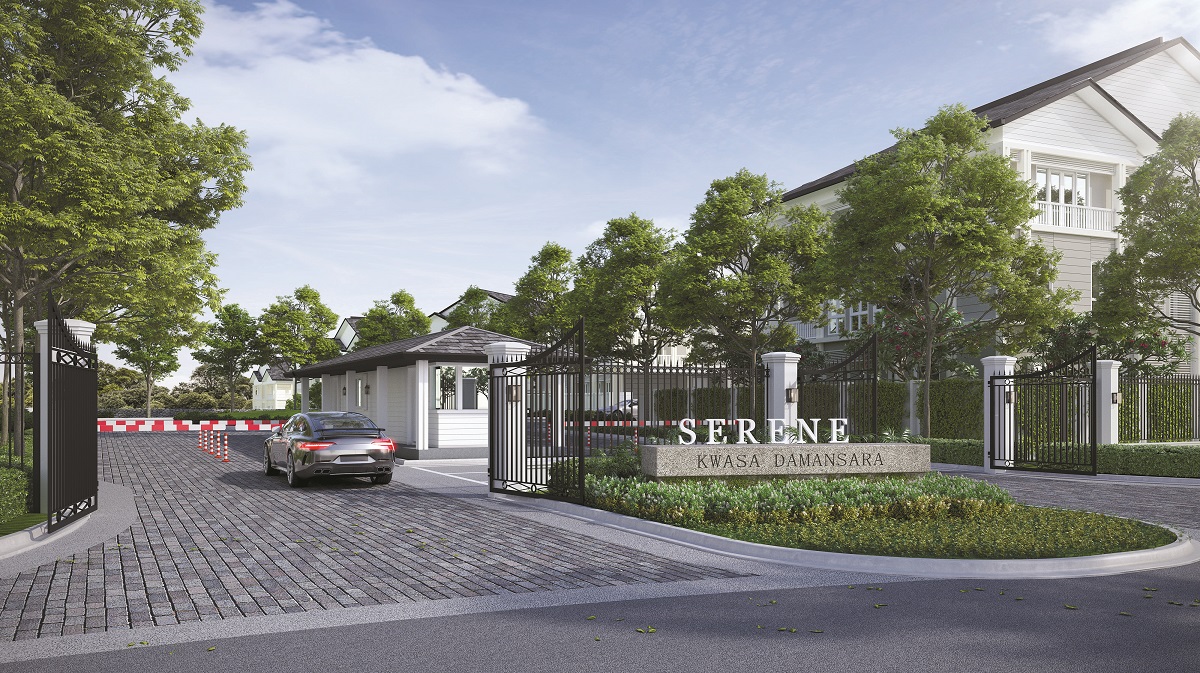
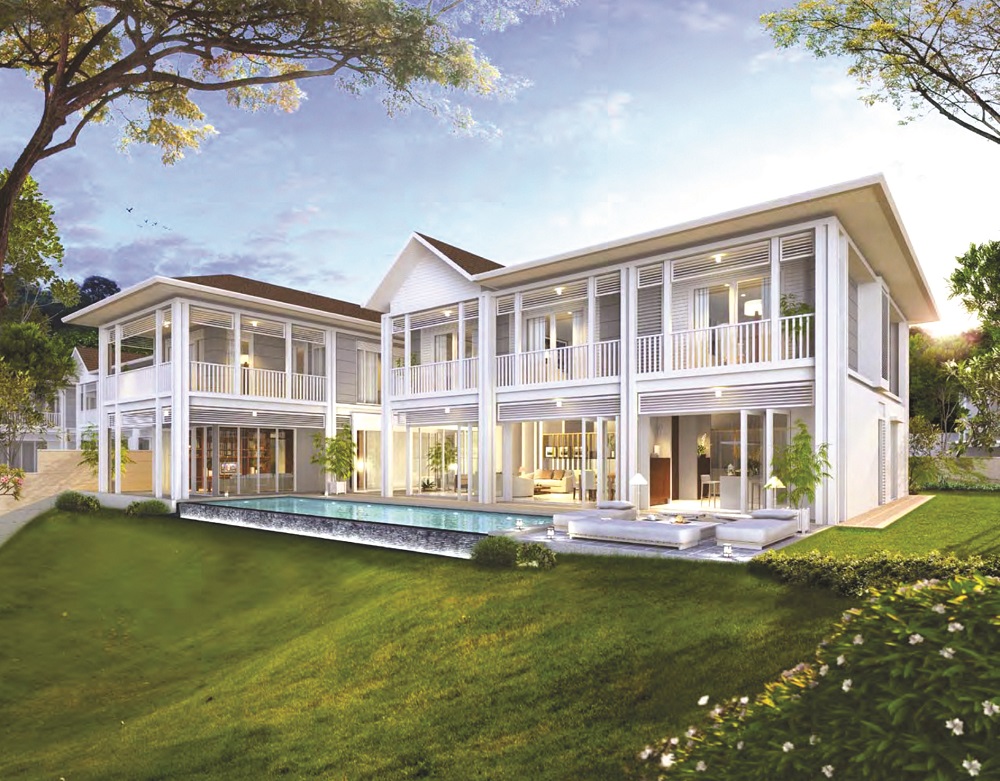
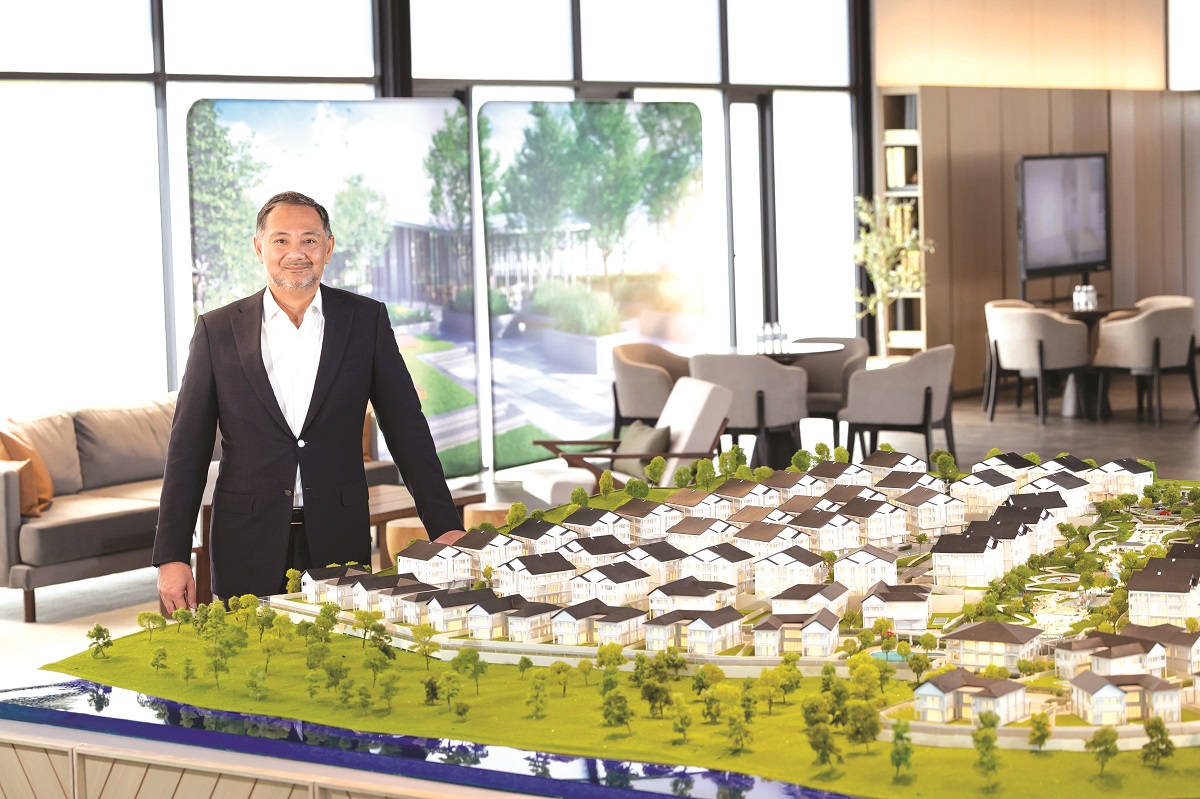
That opportunity may now arrive through Serene Kwasa Damansara, the latest addition to the Serene series and notably, its first open-title landed enclave. Planned across approximately 30 acres within Kwasa Damansara township, the project will comprise 141 landed homes — including 114 semi-detached residences and 27 bungalows with a low density of 4.7 units per acre. Semi-detached homes are expected to start from RM4.8 million, while bungalows are expected to be priced from RM9 million.
Expected to launch later this year, the development represents what the company describes as the next evolution of the Serene philosophy: low-density landed living anchored by greenery, water features, and understated architecture within one of Damansara’s largest emerging master-planned townships.
For Haris, however, the architecture itself is never intended to imitate global benchmarks of luxury homes.
When he first began discussing concepts with architects years ago, many of their proposed homes were inspired by Sydney or Melbourne.
“I told them, I don’t want Sydney or Melbourne. I want Malaysia.”
Airflow, light and space
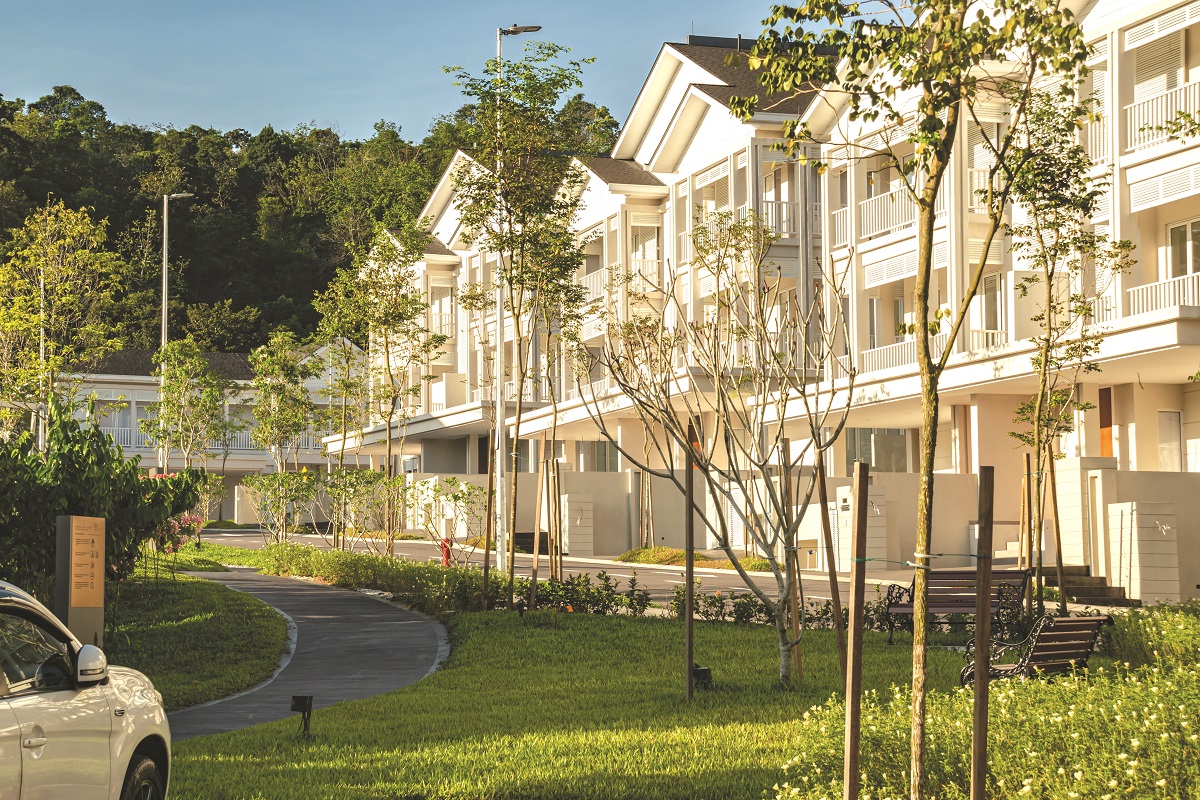
That eventually evolved into what the company today describes as a reinterpretation of classic colonial-era homes, with architecture shaped by deep overhangs, generous verandas, tall openings, and layered facades designed for tropical living.
Rather than recreating colonial homes, Haris wanted to reinterpret the spatial logic behind them.
“Those homes understood the climate,” he says, “they understood airflow, light and space.” The result is a design language that now runs consistently across the Serene series. It is also why Haris resists dramatic reinvention from one Serene project to another.
“We improve incrementally,” he states, “the obvious things may look similar, but internally there are many refinements.”
Some improvements are spatial. Others are on form and function. Many are things residents may never consciously notice.
Crafting the heart language
At one point during the conversation, Haris speaks at length about landscaping and pedestrian movement within the gated communities.
He describes how waterfalls within Serene developments are programmed to transition into quieter night modes after 10pm, balancing ambience with energy efficiency. Elsewhere, he explains why pedestrian pathways need to feel comfortable enough for evening walks without excessive brightness spilling into homes.
“If people finish dinner and want to walk around the neighbourhood, how should that experience feel?” he asks.
For Haris, designing the experience helps shape emotional attachment to a place.
The same precept extends to security. “Hardware only solves 70% of security,” he says. “The more important part is the software.” By software, he means the human systems behind gated living, the greater direct involvement in designing and supervising security protocols internally — guard training, SOPs, supervision and relationships between security personnel and residents.
“At this level, buyers expect more than cameras and barriers.”
That emphasis on operational detail has become deeply embedded within the company’s internal framework. Serene structures its developments around four core principles: the entrance statement, landscaping, facade experience, and internal layout.
The sequence, Haris says, is salient: “You come back from work, leave the public road, and enter your private enclave. That transition matters”.
Congruent, consistent, constant
Then comes the landscape journey, followed by the architecture of the home itself and finally the internal experience of layout, proportion and finishes. The objective, he says, is not to over-create impressions, but construct environments that age gracefully over time.
Trust forms a major part of the Serene philosophy. Very early on, Haris imposed a simple internal rule: what you see is what you get.
“If buyers start discounting your brochures by 10% or 20%, next time you need even bigger gimmicks,” he says. Instead, Serene chooses consistency.
He refers to the company’s earliest brochures and points out how closely the completed developments today still resemble their original visualisations, landscaping concepts, and arrival experiences.
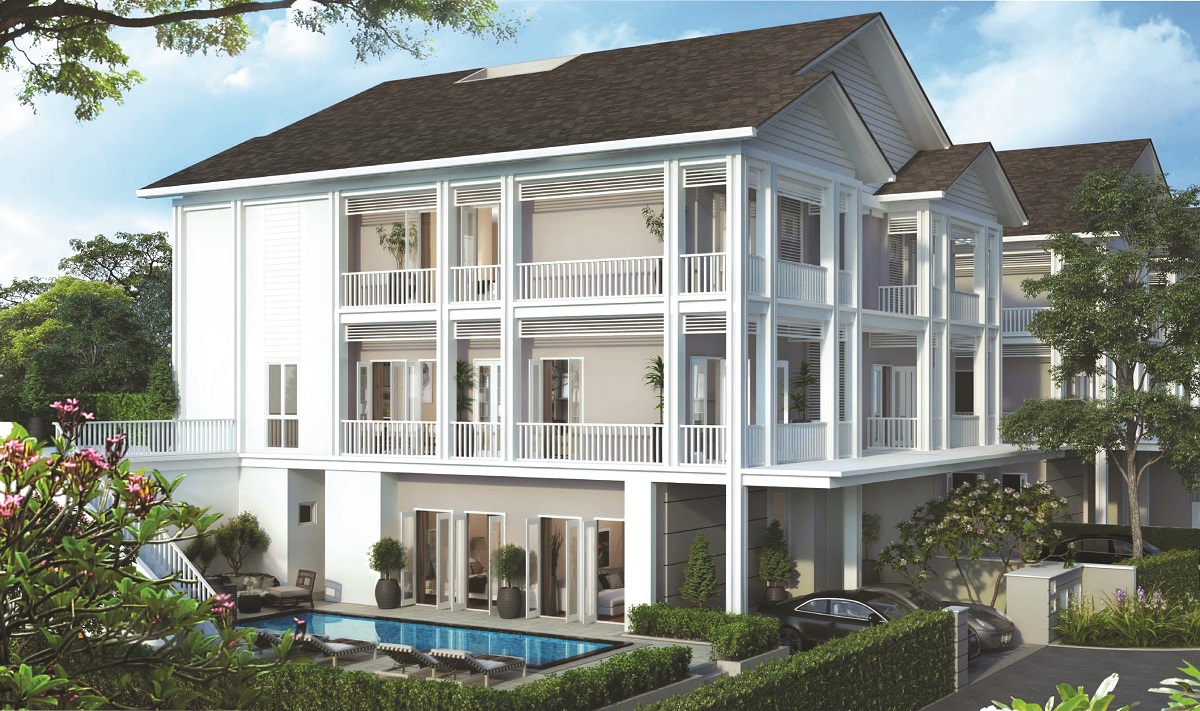
That invariability, he believes, matters more over time than short-term spectacle.
Even when discussing amenities at Serene Kwasa Damansara — which will include a residents’ clubhouse, infinity pool, gymnasium, pickleball court, yoga deck and landscaped
“Central Green” — he frames them less as lifestyle paraphernalia, and more as communal spaces intended to support how residents naturally live and gather.
That mindset also shapes how Serene approaches luxury living today. Rather than chasing density or thematic concepts, the focus remains on low-density planning, practical layouts, landscaping, and long-term liveability.
This is the constant across the Serene series, and one Haris believes still resonates and will resonate with homeseekers today and in the future.
..........
Read about emerging trends, data-backed insights, growing subsectors, and expert commentaries in EdgeProp print. Subscribe now for your free copy!
Interested in this project?
Drop your details if you'd like a sales consultant to contact you.
In this Series
Learn how banks are transforming
Video: Innovation at work
Video: The new digital bank
Video: The new digital bank