Share
Share


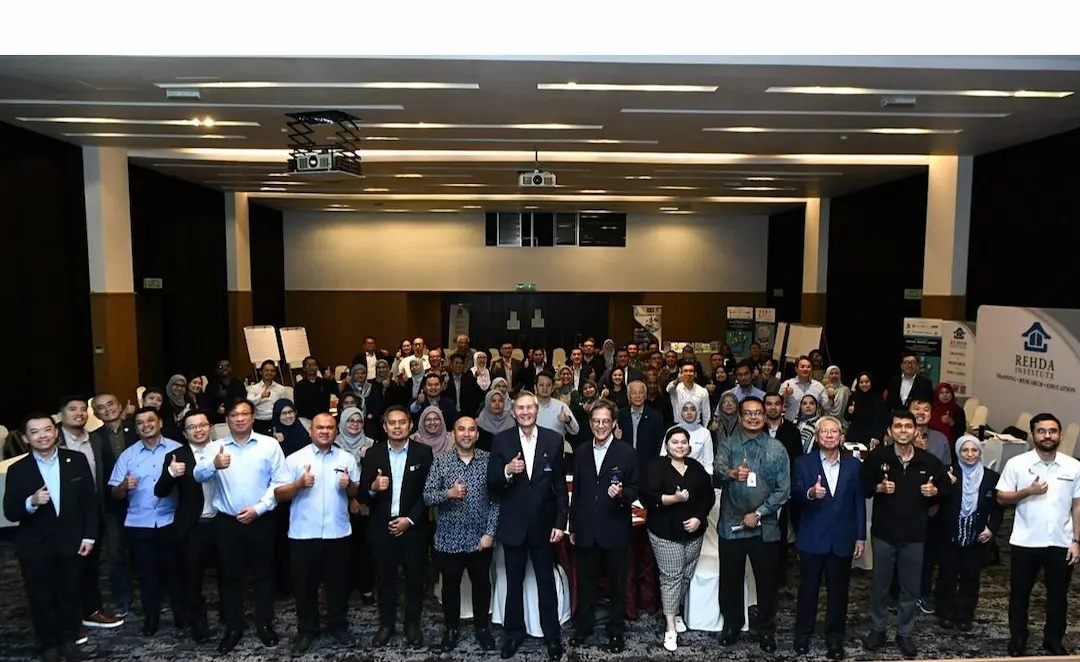
- Sabah’s approach provides homebuyers with more flexibility in terms of unit selection and removal of the holding period for reselling, according to participants of the Real Estate and Housing Developers' Association (Rehda) Institute’s workshop on housing quota.
PETALING JAYA (Dec 3): Sabah’s Bumiputera housing quota approach should be adopted by other Malaysian states, which retains the 30% allocation but provides homebuyers with more flexibility in terms of unit selection and removal of the holding period for reselling, according to participants of the Real Estate and Housing Developers' Association (Rehda) Institute’s workshop on housing quota on Wednesday.
One of the participants from Sabah highlighted that this approach has helped the Bumiputera community there. “We are helping them in a way where they do not need to wait for five years to release their Bumiputera units. So anyone [in Sabah] who buys a Bumi unit today can actually sell it tomorrow to a non-Bumi.
“They still get 30% quota from all the housing units, they still get the 5% discount and they do not need to get the property located at a pre-selected area. They can select any unit.”
The participant explained that the reason the Sabah state government decided to implement this approach in November last year was to reduce the number of unsold Bumiputera properties.
He added, “When we spoke to the Minister of Housing and Local Government Nga Kor Ming, he told us that if Sabah can do it, then he would look at the feasibility of implementing it in other states.”
Another participant, from Kuantan, said that while this approach has worked for Sabah, other states may face red tape bureaucratic challenges.
“Even though the prime minister has issued a guideline to speed up the process of approvals, with express lanes and so on, when it comes to the state, it is not so easily accepted. So, if we can actually work our way through these challenges and standardise bureaucratic processes across all states, then we’ll be able to see change,” he added.
Rehda Institute's representative remarked that the current Bumiputera quota policy may need to be reviewed to meet the current housing market.
“Today, Bumiputera homeownership is generally above 70%. So the question is, are we force-feeding the remaining 15% to 20% to buy homes even if they may not need one? The second point concerns ethnic integration, [which is] the idea of [encouraging] Bumiputera households to live alongside other communities.
“But when we look at the overall population breakdown, 70% are Bumiputera, 22% Chinese, and 7% Indian, so who exactly are we trying to integrate with, when the majority is already Bumiputera? These policies were introduced way back in 1971, and now we are in 2025. Do these policies still need to remain, or should they evolve with the times? It is also worth noting that quota requirements vary by state, from 20% to as high as 100%,” she added.
On reducing unsold affordable homes, participants were of the view that data analysis and sharing are integral in overcoming supply-demand mismatch for the segment. Most agreed that an area’s demographic should determine the allocation for affordable housing.
The workshop is to supplement Rehda Institute’s upcoming research report on housing quota titled “Housing For All: Co-Creating A Needs Driven Framework”, which will be launched next year.
Participants included representatives from the Ministry of Housing and Local Government, the Ministry of Economy, National Property Information Centre, Department of Statistics Malaysia, PLANMalaysia, government agencies, local authorities, property developers and local universities.
Unlock Malaysia’s shifting industrial map. Track where new housing is emerging as talents converge around I4.0 industrial parks across Peninsular Malaysia. Download the Industrial Special Report now.