Share
Share


This article first appeared in the Industrial Special Report in November 2025.
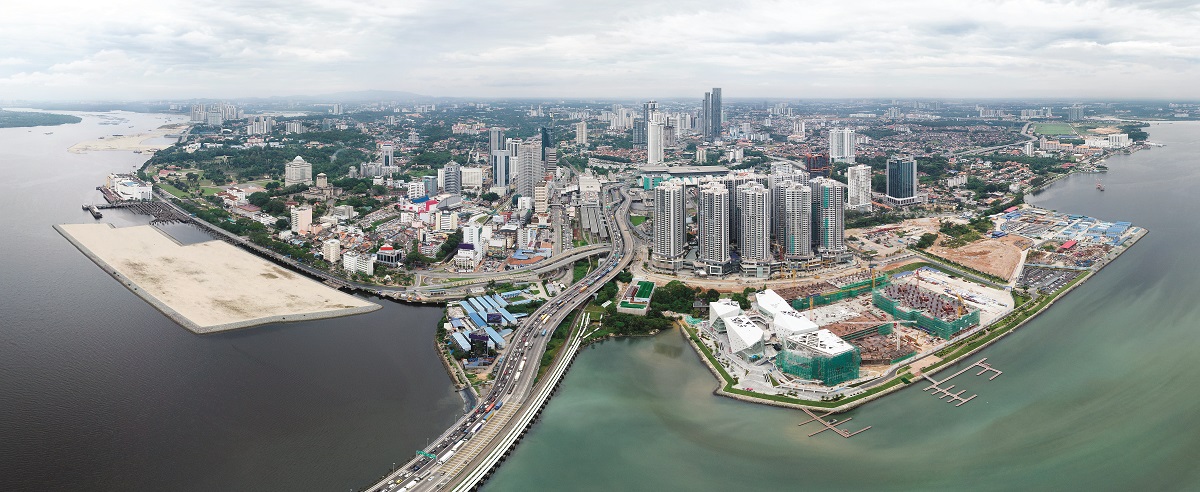
Johor’s industrial engine is shifting into high gear as the Johor–Singapore Special Economic Zone (JS-SEZ) fuels fresh investment, powering demand for logistics, manufacturing, and data centre assets across the state.
Global, independent real estate consultancy Knight Frank Malaysia executive director Amy Wong Siew Fong tells EdgeProp that JS-SEZ presents a compelling proposition for investors, combining Singapore’s established strengths in capital and global connectivity with Johor’s competitive advantages in land availability, lower operating costs, and a ready labour pool.
She notes that logistics, advanced manufacturing, digital economy, and green technology are among the priority sectors being promoted under the initiative.

Government support easing bureaucracy
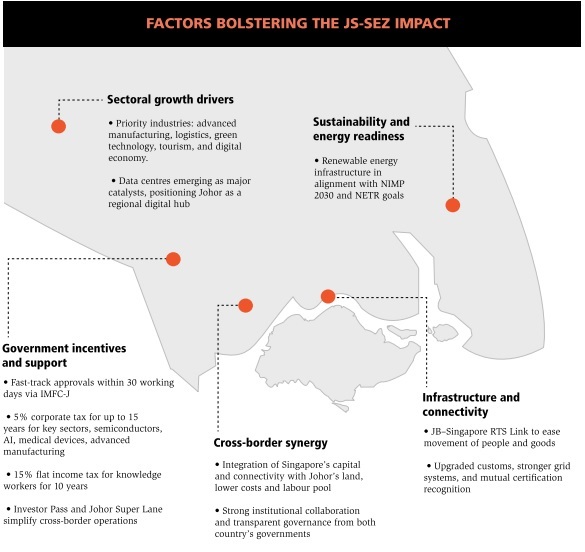
“The ease of doing business in Johor has been improving, with measures such as the Invest Malaysia Facilitation Centre–Johor (IMFC-J) providing a fast lane for approvals, and unified business facilitation to streamline processes,” Wong says.
As a one-stop centre, IMFC-J liaises with federal, state, and local agencies, allowing investment approvals to be fast-tracked within 30 working days; while initiatives such as the Johor Super Lane and Investor Pass further ease business operations by providing multi-entry access and quick employment-pass conversions.
On government incentives, she highlights support measures including a 5% corporate tax rate for up to 15 years for sectors such as semiconductors, artificial intelligence (AI), medical devices, and advanced manufacturing, and a 15% flat income tax rate for knowledge workers for 10 years.
Wong adds that Johor’s growing renewable energy readiness and green infrastructure align with Malaysia’s broader ambitions under the New Industrial Master Plan 2030 (NIMP 2030) and National Energy Transition Roadmap (NETR) to attract sustainable, high-quality foreign investment.
“Both [Malaysia and Singapore] governments have demonstrated strong commitment to streamlined governance, transparency and collaboration,” Wong says. “This provides a solid institutional foundation for long-term investor confidence in the JS-SEZ.”
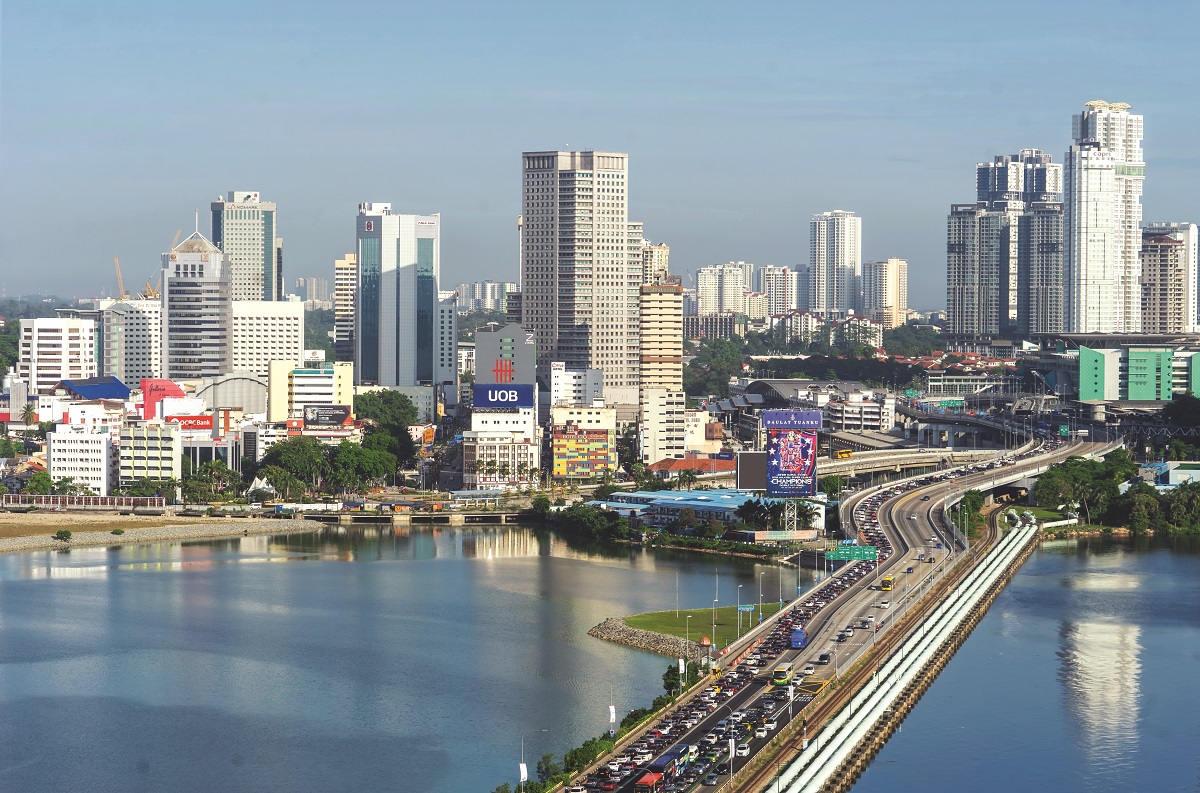
JS-SEZ sparks cross-border boom between Johor and Singapore
Concurring with Wong, Olive Tree Property Consultants’ founder and CEO Samuel Tan says the JS-SEZ presents a significant opportunity for investors seeking to capitalise on the combined strengths of both Malaysia and Singapore.
Samuel says the strategic economic collaboration provides a framework for deep cross-border integration, competitive incentives, and access to high-growth sectors including advanced manufacturing, digital services, logistics, tourism, and green economy initiatives.
He notes that infrastructure developments such as the Johor Bahru (JB)– Singapore Rapid Transit System (RTS) Link, improved customs processes, grid upgrades, and mutual certification acceptance between both countries will enhance the SEZ’s appeal.
JS-SEZ driving demand for properties
The JS-SEZ factor has already made a tangible impact on Johor’s property market, driving demand and price appreciation across various segments. From 2023 to 2024, factory prices jumped from RM300 to RM400 per sq ft (psf), while residential serviced apartment prices climbed 20.4%.

Samuel adds that current selling prices for new launches range RM900–RM1,200 psf compared to RM800–RM900 psf in 2021 in the JB central business district.
Grade A office rentals have also strengthened to RM5 psf from RM3 psf previously.
Samuel points out JS-SEZ is driving a surge in demand for industrial and logistics assets, with growing interest in industrial parks, warehousing and logistics hubs. Johor’s potential as a data centre hub has also expanded because of its proximity to Singapore, with multinational hyperscale operators such as Microsoft Azure, US-based Equinix, and Singapore-based Princeton Digital Group (PDG) investing in the state.
Johor emerges as Singapore’s plus one hub
He says that Malaysia and Johor stand to benefit by positioning themselves as cost-efficient, strategically-located extensions of Singapore’s economic ecosystem.

“Many companies are already adopting a ‘twinning’ or ‘plus-one’ strategy—maintaining a presence in Singapore while setting up complementary operations in Johor to manage costs, diversify risk and strengthen supply chain resilience,” he says.
JLL research and consultancy head Yulia Nikulicheva adds: “The expanded list of economic segments includes a wide range of business activities that would require office space once established in Malaysia”.
Jamie says that in the near term, the industrial and logistics sectors are likely to lead growth, with Johor offering larger plots, lower operating costs, and improving infrastructure compared to Singapore.
He also highlights “upward pressure on industrial land prices in Johor”, driven by relocation interest and the proliferation of data centres.

Will data centres drive Johor’s next investment wave?
Jamie says data centres have already attracted significant capital commitments and are rebranding Malaysia as a regional digital hub.
“In 2024, Malaysia chalked up a record RM163.6 billion in approved digital investments, of which data centres and cloud infrastructure accounted for roughly three-quarters.
“These projects bring high-value engineering, energy management, cybersecurity, and cloud-services roles, and create significant spillovers into construction, power, telecommunications, and professional services,” he said.
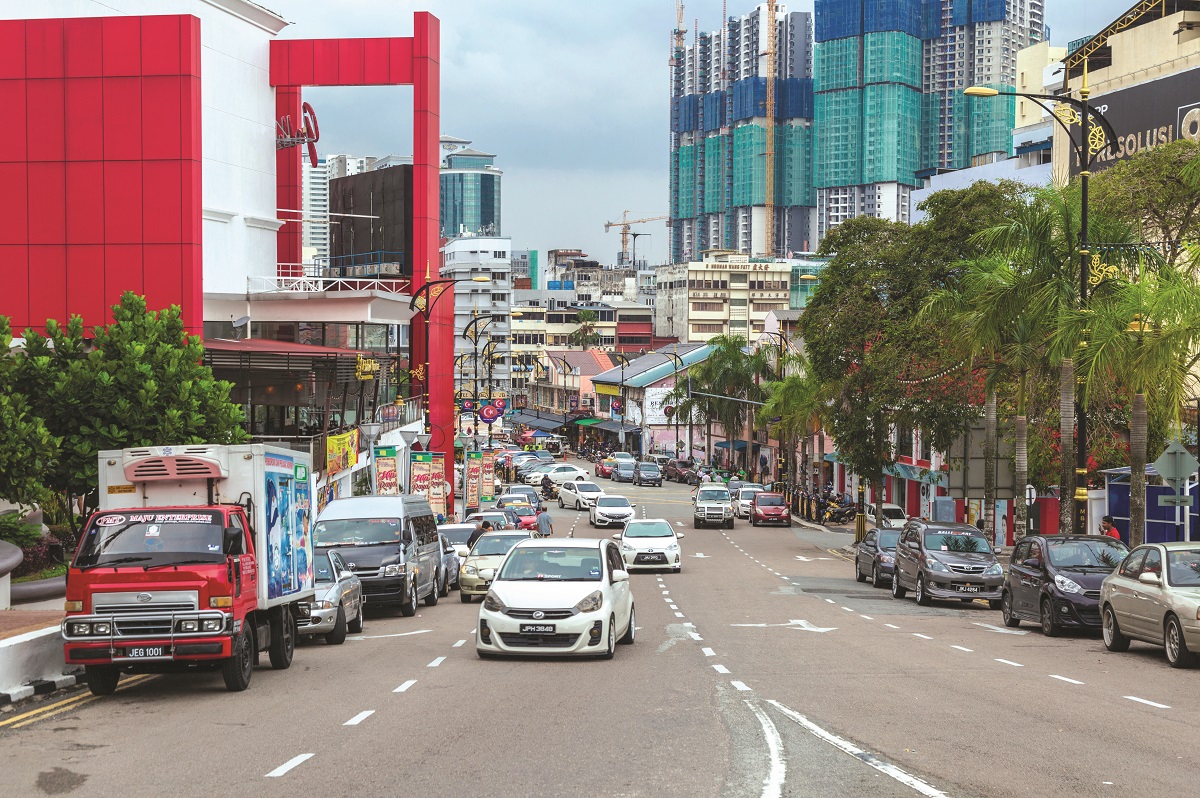
According to Wong, there is a noticeable shift from volume to value in the property market, based on data from the National Property Information Centre (Napic). While the total number of transactions has remained relatively stable, the total transaction values have increased. This trend is exemplified by Kulai, where transaction values rose by 142.1% y-o-y, climbing from RM2.98 billion in 1H2024 to RM7.21 billion in 1H2025.
Investors are showing stronger interest in semi-detached and detached fac-tories and built-to-suit facilities through land purchases, while data centre investments in Johor are accelerating, supported by ample power supply and land availability, Fong adds.
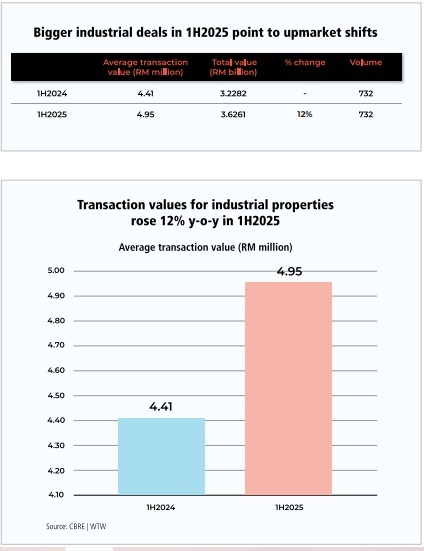
Industrial property transaction values rise
CBRE | WTW Valuation & Advisory Sdn Bhd director Jonathan Lo Kin Weng says the JS-SEZ is targeting 11 high value-added sectors through designated flagship zones, with over 140 enquiries already received from globally active firms, according to Singapore’s Economic Development Board, and the Malaysian Ministry of Investment, Trade and Industry (Miti).
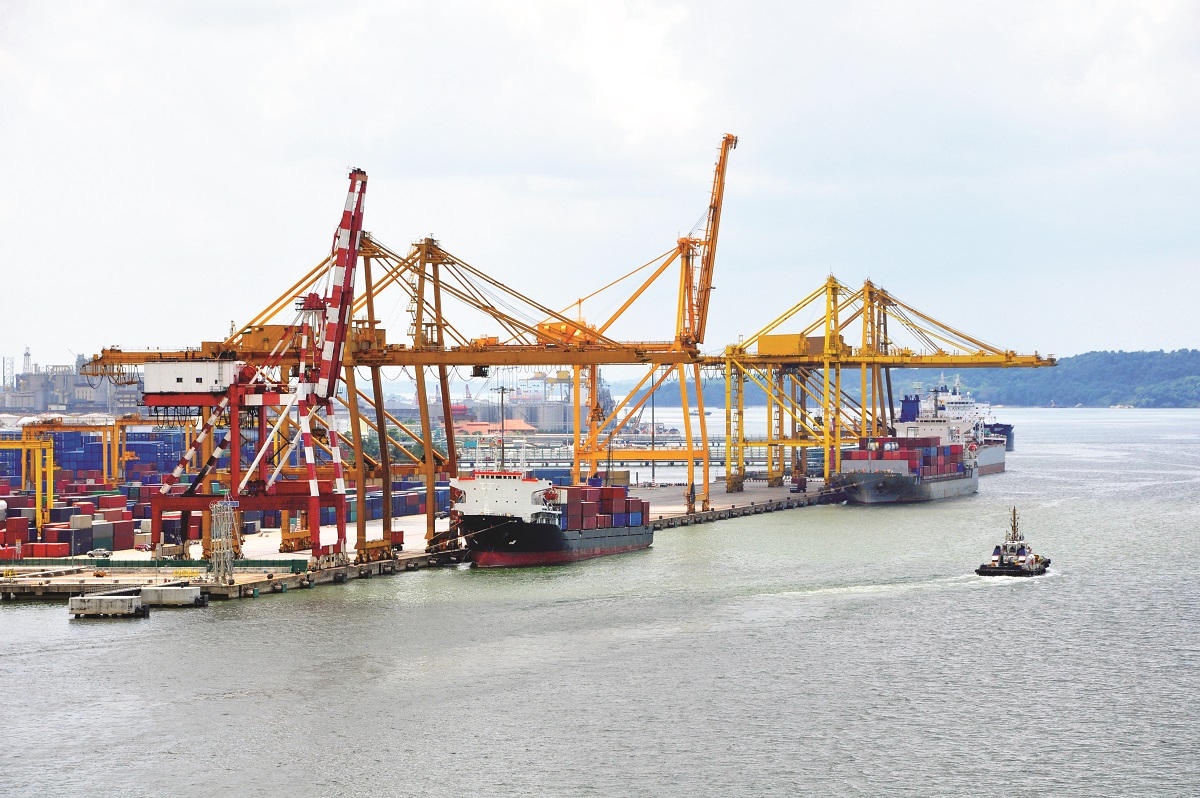
He adds that in 1H2025, Johor accounted for more than 60% of southern Malaysia’s industrial transactions, with values increasing approximately 12% from RM2.955 billion in
1H2024 to RM3.301 billion in 1H2025, even though volume dipped by approximately 11.3% from 4,947 to 4,387 units in the same period, based on data from the Southern Region Property Market Report (First Half 2025) published by the Valuation and Property Services Department of Malaysia (JPPH).
Lo notes that for commercial properties, total transaction values also saw a similar uptrend from RM4,145.86 million in 1H2024 to RM4,336.66 million in 1H2025.
Navigating risks and competition
Nevertheless, Wong cautions that investors should remain mindful of regulatory and political risks of the JS-SEZ, including potential policy execution gaps, inter-agency coordination issues, approval bottlenecks and infrastructure delivery timelines.
Samuel also warns of complex cross-border regulations, evolving standards, policy shifts, and governance considerations, advising investors to conduct due diligence and maintain flexibility in planning.
Lo points out that challenges persist in foreign talent quotas, work-pass procedures, currency volatility, and regional competition from neighbouring Batam in Indonesia, and Vietnam.
Supporting infrastructure such as grid upgrades, streamlined immigration, and better cross-border mobility could further enhance the JS-SEZ’s competitiveness and ease of living for Singaporeans in Johor, though lifestyle and policy harmonisation factors remain key to broader migration appeal, he adds.
..........
Unlock Malaysia’s shifting industrial map. Track where new housing is emerging as talents converge around I4.0 industrial parks across Peninsular Malaysia. Download the Industrial Special Report now.