Share
Share


This article appeared in the May 12, 2026 issue of the monthly print edition. Subscribe now.
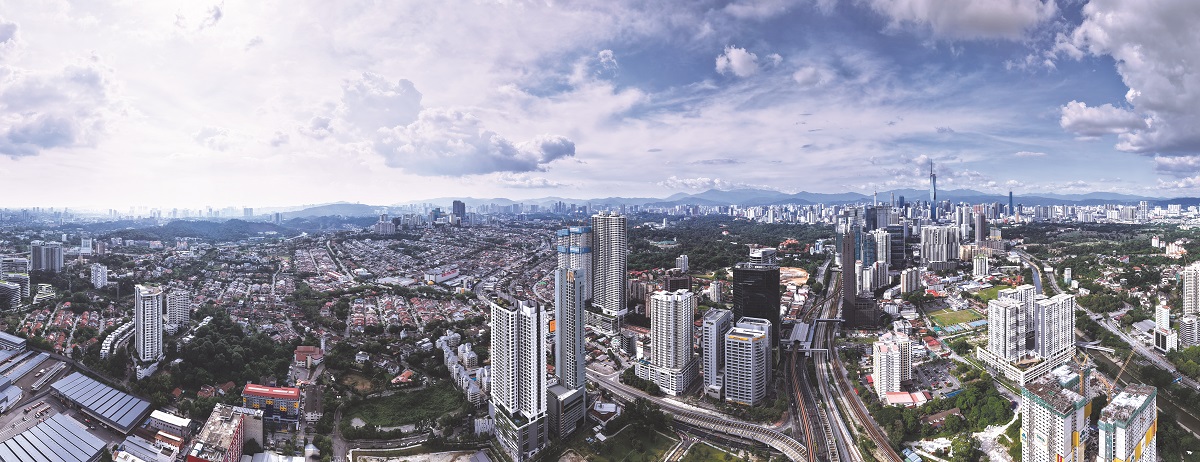
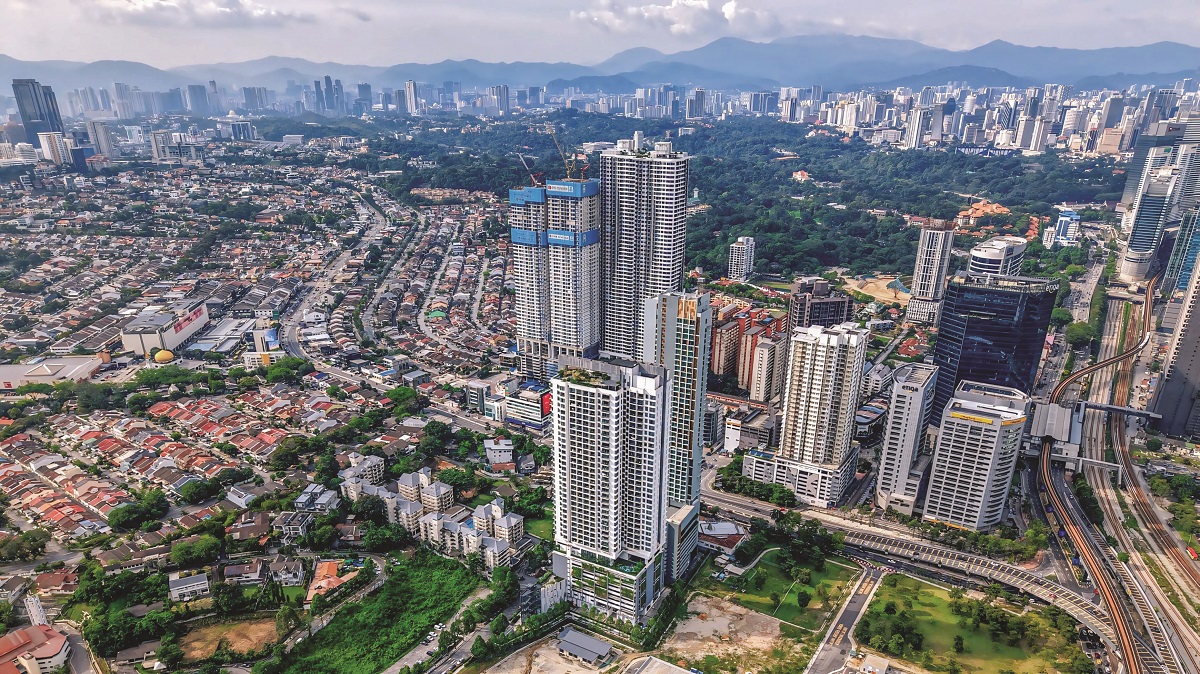
Located about 4km from Kuala Lumpur city centre, Bangsar has long been regarded as one of the capital’s most established residential suburbs. Originally a rubber plantation developed by Kuala Lumpur Rubber Co Ltd, the area has, over more than 50 years, evolved into a vibrant neighbourhood balancing residential, commercial and lifestyle offerings.
Bangsar comprises several distinct neighbourhoods, including Bangsar Baru (which hosts Jalan Telawi, the popular lifestyle hub), Bukit Bangsar, Bangsar Park, Bukit Bandaraya, Taman SA, Bangsar Utama, Lucky Garden, and Pantai Hills. Jalan Maarof serves as the suburb’s main thoroughfare, dividing the eastern sectors — Bukit Bangsar, Bangsar Park, Taman SA, Bangsar Utama, and part of Bukit Bandaraya — from the western neighbourhoods.
Property prices here, be they residential or commercial, are commonly considered among the upper tiers, supported by the expatriate market. Early movers are known to reap handsome returns either through rental yield or resale value.
However, have prices been sustained? What is the growth pattern like? Drawing some data from EPIQ and input from realtors, EdgeProp gives a more recent picture of this market located in the southwest of KL.
Landed residential remains resilient
Aegis Property real estate agent Shawn Fernandes notes that activity within certain segments of the market here remains resilient, particularly in the core landed housing segment.
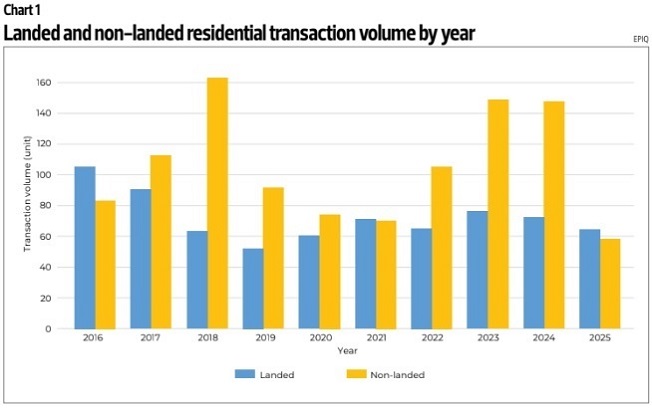
Based on his records, detached homes recorded 16 transactions in 2025, compared with 10 in 2024, and 15 in 2023. However, pricing varies widely, depending on property condition and specifications, ranging from RM413 psf to RM1,753 psf, indicating that well-positioned and well-maintained homes continue to command value.
However, not all landed segments perform equally. Semi-detached homes have seen more limited activity, with transactions averaging about four annually from 2023 to 2025. This is attributed less to weak demand and more to location constraints, as such properties are less commonly found in quieter parts of Bangsar, Fernandes tells EdgeProp.
EPIQ shows that landed property prices have moderated over the past decade, with median prices rising marginally from RM1.6 million in 2016 to RM1.7 million in 2025. However, median price psf has trended downwards over a 10 year cycle from RM777.99 psf in 2016 to RM755.54 psf in 2025, for land areas ranging 1,247.98–19,396.73 sq ft.
Over the longer term, Fernandes says transaction data points to a steady trend in property values, reflecting a market driven more by fundamentals than speculation, as local buyers continue to dominate, with foreign purchasers playing a relatively limited role in influencing pricing.
“The number of foreigners who purchase landed homes in Bangsar may not be significant enough to influence the market. Generally, local purchasers are the ones who feature more dominantly, and are the ones who can move the market,” he explains.
Expatriates, who often enter the market as tenants for two to six years before considering a purchase, contribute more significantly to the rental segment.
This rental dynamic remains a key driver of capital values — homes capable of achieving monthly rents above five digits tend to see stronger appreciation, underscoring the link between yields and long-term price growth. Conversely, properties that do not align with expatriate rental demand may face slower capital appreciation, particularly if this targeted tenant base shifts to other locations.
“Where the influence does come into play is in the rentals. If the rental of a landed home can be obtained north of RM20,000 per month, this then significantly increases its future capital value. Some homes in Bangsar have demonstrated this very well,” Fernandes adds.
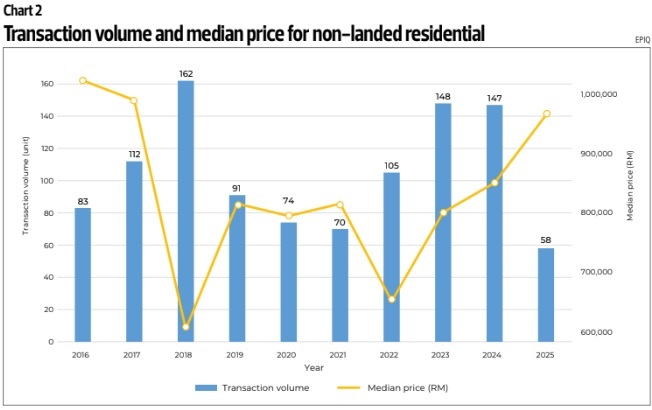
In the non-landed segment, transaction volumes and median prices over the past decade reflected fluctuations (Chart 2) for built-ups ranging 441.31–14,929.67 sq ft.
Although median prices slipped from RM1.02 million in 2016 to RM965,000 in 2025, it is noteworthy that this latest 2025 median price was a culmination of four years’ consistent yearon-year climb from RM650,000 in 2022. At the same time, psf prices varied across the period, landing at RM734.46 psf in 2025, compared to RM792.14 psf in 2016.
Opportunities for capital growth continue to exist, particularly through asset enhancement strategies. Older landed homes — many dating back to earlier phases of development in the 1970s — present potential for refurbishment and modernisation. Such upgrades can significantly improve rental yields, and in turn, capital values, says Fernandes.
Commercial — high rents lead to high tenant turnover
Bangsar has long been recognised as a hot spot for business, leisure, and gastronomical delights, with the suburb hosting a variety of retail centres, including Bangsar Shopping Centre, Bangsar Village, and Bangsar Village 2. Cafes such as Jaslyn Cakes, Lisette’s Café & Bakery, and VCR Bangsar attract patrons seeking artisanal coffee and baked delicacies, while designer boutiques like Nurita Harith, art galleries, and a wide selection of restaurants and bars — including Mantra Bar KL and Coley — contribute to the area’s dynamic lifestyle offering.
Nevertheless, the commercial segment — comprising semi-detached shops, shoplots and office lots — presents a more mixed outlook.
“As for the commercial properties, a detrimental factor we have seen is the high rentals for the retail lots. These high rentals have resulted in a noticeable high turnover of retail tenants. This does cause some investors to shy away, as there is less predictability in the yields.

In the last two years, it is not uncommon to see asking prices exceed RM40,000 per month for certain retail shopfronts of 1,500 sq ft; for example,” Fernandes says.
Still, Bangsar’s broader appeal remains intact. EPIQ revealed that the suburb benefits from strong connectivity via the Bangsar LRT Station on the Kelana Jaya Line, as well as major highways including the Federal Highway, SPRINT Expressway, New Pantai Expressway (NPE), New Klang Valley Expressway (NKVE), and Damansara–Puchong Expressway (LDP).
This established lifestyle ecosystem — anchored by retail centres alongside a diverse mix of cafes, boutiques and dining options — continues to support its desirability. Despite a more linear market environment, opportunities persist.
“Opportunities are still there, even in a more stable market, especially in the commercial segment. Bangsar is a mature and well-established area with very limited land left. That scarcity is key, because once supply is tight in a prime location, values tend to hold and grow over time,” PropNex Malaysia real estate agent TH Lee tells EdgeProp.
“On top of that, Bangsar has a strong reputation and a location that’s hard to replace. With consistent government policies and continued interest from both local and foreign investors, it remains attractive for long-term investment.
“For investors, the key is to focus on established areas like this with limited new supply, strong demand, and good connectivity. That’s where you’re more likely to see steady capital appreciation over time,” he adds.
As KL’s urban landscape evolves, Bangsar appears to be entering a phase defined less by rapid escalation and more by stability. While headline growth may be moderating, the area’s fundamentals — location, connectivity, and established community infrastructure — suggest that opportunities remain in both the residential and commercial segments, albeit requiring a more selective and value-driven approach from investors.
..........
EdgeProp brings you another month of data-driven insights, exclusive interviews, and market commentaries. Subscribe now for your free copy!
.jpeg?Dc.IvzT0vI55UUTaKxAW9caca44P99nz)