Share
Share


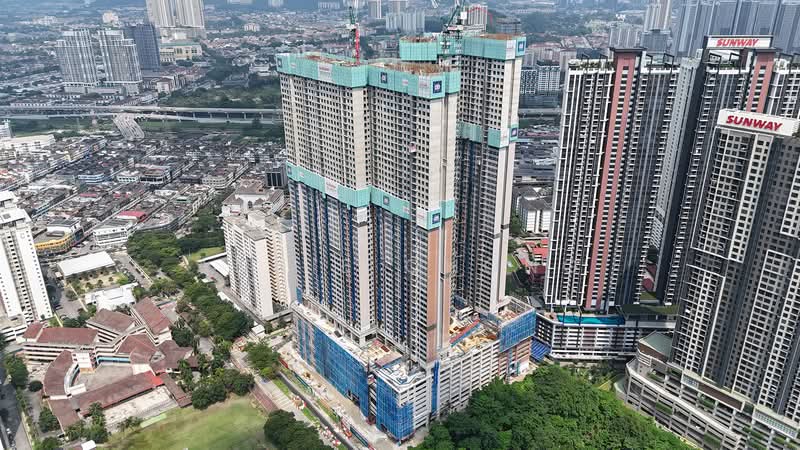
The latest data from the National Property Information Centre (Napic) suggest what the National House Buyers Association (HBA) describes as a structural contradiction in Malaysia’s “affordable housing” segment, highlighting a widening disconnect between what is being built and what households can realistically afford.
Despite sustained demand for homes priced at RM300,000 and below, a large number of completed units remain unsold, exposing a structural mismatch in the market.
Napic said, in this segment, *14,201 completed residential units worth RM2.77 billion remained unsold as at the first quarter of this year, accounting for 43.3% of Malaysia’s total residential overhang, with the bulk concentrated in the Klang Valley, Johor and Perak.
Malaysia’s rising property overhang is therefore no longer merely a question of affordability. It reflects a deeper problem involving product mismatch, financing barriers, and development assumptions.
*Napic’s public 1Q2026 release and secondary reporting did not further split the 14,201 by narrower price bands (for example, “below RM200,000” vs “RM200,000–RM300,000”), nor did it give a clean percentage of total overhang specifically for “≤ RM300,000” completed units.
Q1. Why are ‘affordable homes’ unsold?
At first glance, homes priced at RM300,000 and below ought to be the most marketable segment because they are aimed at the mass market. However, affordability is not determined by headline price alone.
Several structural factors help explain the overhang:
(a) “Affordable” price does not mean affordable monthly commitment
Many households, especially younger buyers, are already grappling with:
1) Stagnant wage growth
2) High household debt
3) Rising living costs
4) PTPTN (National Higher Education Fund Corporation) and vehicle loan commitments
5) Tighter debt service ratio assessments by banks
A RM280,000 apartment may still require:
*A down payment
*Legal and stamp fees
*Renovation costs
*Furniture and fittings
*Monthly maintenance and sinking fund charges
*Parking charges
*Commuting costs and other incidental expenses
For lower- and middle-income households, the total cost of ownership can become burdensome.
(b) Location mismatch
Many lower-priced projects are built:
1) Far from employment centres
2) With weak public transport connectivity
3) In oversupplied suburban corridors
4) In areas lacking social infrastructure
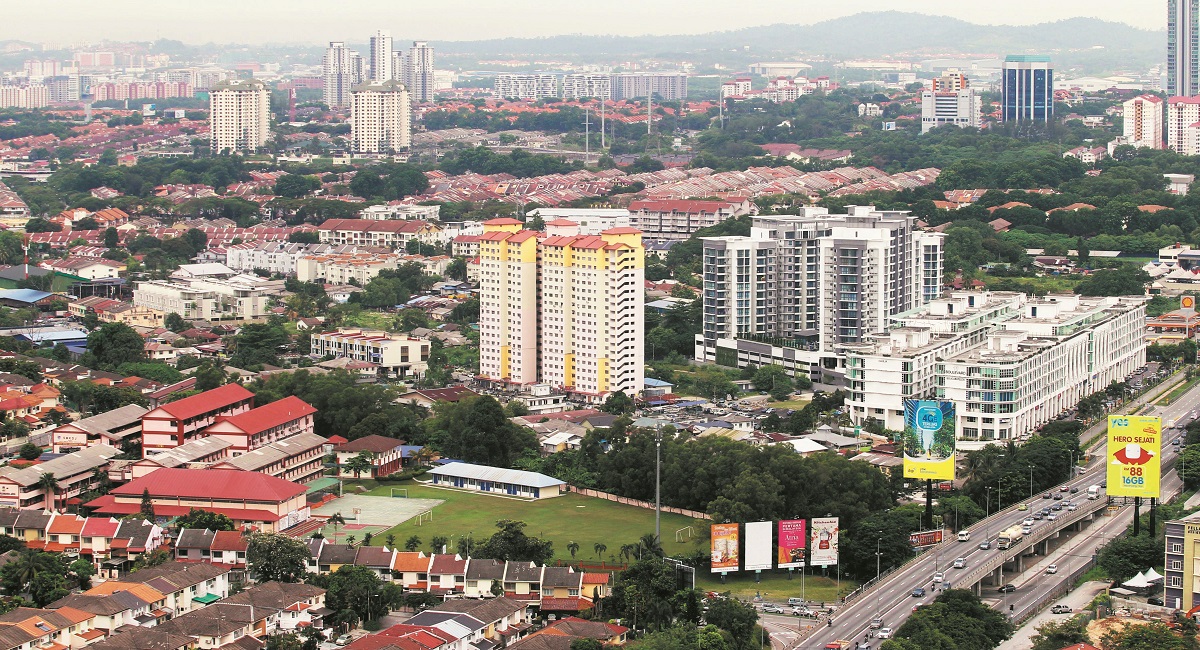
While demand for homes priced below RM300,000 remains strong, many of these properties are not being developed in locations where they are needed most, particularly in cities and major urban centres where employment is concentrated.
Buyers may prefer renting closer to their workplace rather than owning distant units with high commuting costs. This is especially visible in peripheral townships where supply has expanded faster than actual population growth.
Read also
Pros and cons of buying and renting homes
(c) Product mismatch
Some “affordable” units are technically low-priced but commercially unattractive because of:
1) Very small unit sizes
2) Poor layouts
3) Lack of family-friendly features
4) Inadequate parking
5) Weak workmanship quality
6) Limited amenities
Buyers are becoming increasingly selective, even within the affordable segment.
(d) Financing rejection remains a major issue
Many applicants struggle to meet banks’ financing requirements because of irregular income streams, weak documentation, existing debt commitments, poor credit profiles, or issues involving Central Credit Reference Information System (CCRIS) and PTPTN repayments.
In many cases, units may initially be booked by buyers, only for purchases to collapse when financing applications are later rejected. Units appear reserved, but the financing does not come through, which can distort market signals and contribute to completed inventory remaining unsold.
(e) Speculative planning assumptions
Some projects may have been conceived on the basis of assumptions around stronger demand growth, rapid urbanisation and price appreciation, rather than fully aligned end-user absorption realities.
Certain developers assumed:
1) Rapid urbanisation
2) Investor demand
3) Foreign buyer spillover
4) Infrastructure-led appreciation without sufficient support from genuine owner-occupier demand, creating pockets of oversupply.
Q2. Does the overhang reflect a serious affordability mismatch?
The current overhang shows that Malaysia is facing not simply a housing shortage, but a shortage of well-located, liveable, financeable and truly affordable homes.
Napic data have consistently shown heavy overhang in urban and high-rise segments. Condominiums and apartments account for more than 60% of residential overhang nationwide.

The key issue is market affordability versus policy affordability. A home classified as “affordable housing” under government thresholds may still be unaffordable in practical household cash-flow terms.
In major urban centres such as Kuala Lumpur, Selangor, Johor and Penang, buyers face:
i) Rising rents
ii) Transport and commuting costs
iii)Childcare and household expenses
iv) Inflationary pressure
v) Stricter bank scrutiny
As a result, many households delay purchases, rent for longer or scale down expectations.
The overhang may therefore reflect a structural disconnect between developer-led supply decisions and actual purchasing power.
Q3. What measures should be implemented?
A co-ordinated response is needed from property developers, financial institutions, and the government.
(a) Measures for property developers
Developers may need to shift from “build what is profitable” to “build what is absorbable”. They should conduct more realistic demand studies, reduce speculative launches, prioritise owner-occupier demand and rebalance project mix.
Greater emphasis should be placed on practical layouts, family-sized affordable units, transit-oriented housing and landed affordable homes where feasible, as well as adopting a build-then-sell (BTS) 10:90 framework.
A stronger BTS 10:90 model could potentially reduce speculative launches, improve construction discipline, curb abandonment risks and better align supply with actual demand.
(b) Measures for financial institutions
Banks could consider more flexible credit assessments for gig-economy workers, shared-equity financing, rent-to-own schemes and targeted first-home financing support.
However, lending standards cannot be loosened excessively, as systemic financial risks must still be managed prudently.
(c) Measures for government
Government and relevant authorities improve planning approvals and consider allowing projects to be downsized where appropriate, tighten approvals in oversupplied zones, require stronger market-feasibility studies, co-ordinate state and federal housing databases and strengthen demand-side support.
Possible measures include targeted stamp duty exemptions, first-home purchase guarantees, down-payment assistance, transport-linked housing incentives and improved public transport and infrastructure.
Affordable housing becomes more viable when commuting costs fall, travel times improve and links to employment centres strengthen.
Enforcement against abandoned projects must also be strengthened, as weak enforcement reduces public confidence in new launches and can harm genuine demand.
Q4. What are the broader implications if overhang continues rising?
Persistent overhang could have significant consequences across the property ecosystem.
(a) Slower future launches
Developers may defer projects, reduce new launches, conserve cash flow and focus only on prime locations.
(b) Downward pressure on pricing
Oversupply may result in rebates, hidden discounts, furnishing incentives and margin compression. Developers may be reluctant to cut list prices outright in order to protect market benchmarks.
(c) Reduced construction activity
Fewer launches would translate into weaker contractor activity, lower demand for building materials and reduced employment in construction-related trades.
(d) Softer investor confidence
Investors tend to turn cautious when capital appreciation slows, rental yields narrow, vacancy rates rise and resale competition intensifies.
(e) Homebuyer sentiment becomes more defensive
Prospective buyers may delay commitments in anticipation of better bargains, falling prices or stronger developer incentives, contributing to a self-reinforcing slowdown cycle.
Conclusion
Malaysia’s housing challenge today is less about absolute supply and more about location suitability, financing accessibility, income realities and planning discipline.
The existence of substantial overhang even in the RM300,000-and-below segment is a strong warning that the housing market can no longer rely purely on volume-driven development models. Sustainable housing policy should increasingly focus on real affordability, liveability and demand alignment, rather than simply numerical housing targets.
Shifting priorities among younger generations are also influencing demand, with many becoming more cautious about long-term mortgage commitments amid economic uncertainty.
Read also
So, you want to buy a house?
Single umbrella for all housing data: Why we need a centralised data bank now
Affordable housing ecosystems are inherently multi-stakeholder: governments regulate and fund projects; developers build and manage properties; banks and investors finance developments; social-service agencies connect residents to housing opportunities; and oversight bodies monitor compliance.
Each entity collects data, but often in different formats, with limited interoperability and little systematic sharing. Information remains fragmented.
Without real-time, unified data on supply, demand, income levels, occupancy rates, waiting lists, geographic needs, pipeline projects and completions, policymakers are often relying on partial or outdated information.
HBA has repeatedly reminded the Housing Ministry of the need for a centralised data bank to collate and standardise housing data across the ecosystem.
HBA notes that the system has yet to be fully synchronised. The next discussion will focus on the need for a true “single umbrella” approach.
This article is written by Datuk Chang Kim Loong, honorary secretary-general of the National House Buyers Association (HBA). HBA is a voluntary non-governmental and not-for-profit organisation manned wholly by volunteers.
HBA can be contacted at:
Email:
[email protected]
Website: www.hba.org.my
Tel: +6012 334 5676
The views expressed are the writer’s and do not necessarily reflect EdgeProp’s.
..........
Read about emerging trends, data-backed insights, growing subsectors, and expert commentaries in EdgeProp print. Subscribe now for your free copy!