Share
Share


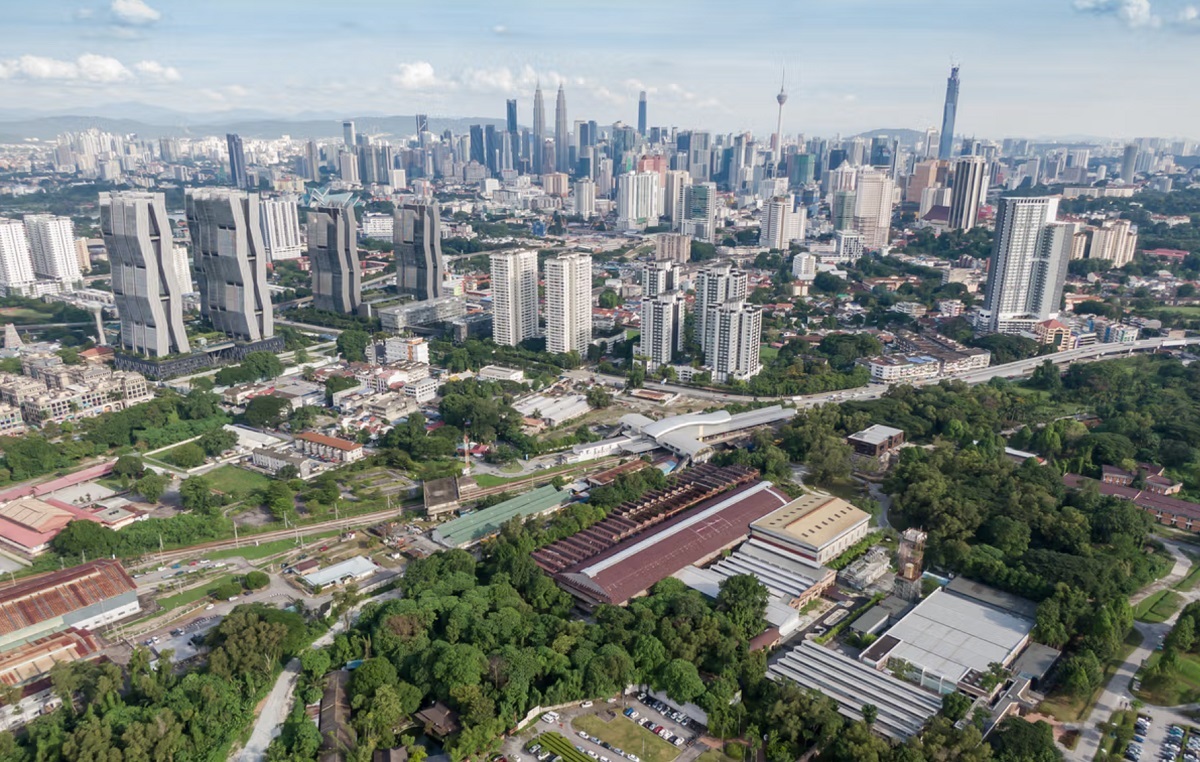
- Fire safety must never be an afterthought, a budget item or a box to be ticked. It demands long-term investment, discipline and stewardship.
The recent Hong Kong tower inferno exposed the fragility of dense urban living and reminded us—painfully—how vulnerable vertical communities are when safety is compromised, deferred or treated as a discretionary cost.
Like many, I watched in disbelief as footage circulated on social media: flames leaping from one high-rise to another, devouring homes and hopes in minutes. As investigations unfold and the true extent of losses—both human and structural—come to light, one truth is already clear: no building is immune. Past safety is not a guarantee of future resilience.
As Malaysian cities grow taller, denser and more complex, the lessons from Hong Kong’s fire tragedy cannot be ignored.
More than aesthetics: It’s about cost and consequence
In high-rise living, safety is not merely about architectural beauty, commanding views, efficient layouts or sustainable features. It is about the integrity of the fire protection infrastructure, especially in dense, integrated developments where F&B outlets, utilities, storage areas and vertical ducts form complex risk clusters.
Fire safety must never be an afterthought, a budget item or a box to be ticked. It demands long-term investment, discipline and stewardship.
The chain of responsibility—and where it often breaks
Fire safety is not the duty of one party; it is an ecosystem. It begins with the developer, who determines the quality of design, materials and firefighting systems.
It continues with the management corporation (MC), joint management body (JMB) and property managers, who are entrusted with keeping these systems fully functional and ready. They rely on the authorities to regulate, enforce and guide.
Ultimately, the fire safety system is sustained by residents through their MC or JMB, whose actions—or inaction—can make the difference between risk and resilience.
Let us unpack this.
Developers: The first gatekeepers of safety
The backbone of any high-rise’s fire resilience lies in its original firefighting infrastructure. Yet, when project costs escalate and margins tighten, fire protection systems are often the easiest component to downgrade. Buyers may be bowled over by shiny marble lobbies, facilities and number of parking bays but rarely ask about pump specifications, fire-rated shafts or pressure zoning.
That is precisely where shortcuts are hidden.
Inferior fire alarm networks, compromised sprinkler coverage, downgraded smoke ventilation systems or the use of non-fire-rated façade materials may go unnoticed—masked by glossy brochures, show units and sales galleries—but their failures are exposed in the worst possible moment.
One does not “value engineer” fire safety without inviting risk. Do this and you may live to regret it.
As for creativity, there must be limits. I recently visited a development with enclosed common areas clad in artificial turf. Aesthetically pleasing to some, perhaps, but highly combustible for sure. Such a design choice is where beauty becomes a hazard.
MCs and JMBs: Frugality must not compromise on safety
Cost control is always on the agenda. But when saving money compromises safety, frugality equals folly.
Hiring unqualified maintenance contractors, delaying equipment servicing, opting for cheap but non-fire-rated renovation materials or ignoring outdated fire certificates may shave off expenses, but they erode safety, integrity and ultimately the value of the very asset they are meant to protect.
Some mistakes are reversible. Fire safety mistakes are not. The preservation of property value cannot come at the expense of resident safety.
Property managers: Predictive, not reactive
Competent property managers do more than comply with guidelines—they anticipate failure before it occurs. Predictive and preventive maintenance is the essence of responsible property stewardship.
As chief judge of The Edge Malaysia Best Managed and Sustainable Property Awards, I have seen high-end buildings where fire control panels displayed unresolved system faults, which trigger blinking lights.
A fault indicator is a warning. It means the system may fail when needed most. It means something needs to be attended to immediately.
These are the fundamental questions every resident should ask:
Are the fire control panels actively monitored?
Are fire system faults addressed immediately, and by qualified professionals?
Are water pumps inspected and fully pressurised?
Are the firefighting systems kept in automatic mode after being switched to manual for inspections or renovation works?
A fire system that is not ready at all times may as well not exist. And, yes, there are property managers who need to be replaced.
Rising higher—new challenges for Bomba?
As Kuala Lumpur and our major city skylines climb higher, the question becomes urgent: Are our emergency response systems evolving fast enough to match vertical challenges?
Are we ready for a super high-rise fire at 70, 80 or 100 storeys? And more importantly, how much of the firefighting responsibility must lie inside the building rather than waiting outside for help to arrive?
These are not hypothetical scenarios. They are imminent realities.
The real question
The tower inferno in Hong Kong does not just pose concerns for Bomba. It challenges the entire ecosystem—developers, local authorities, MCs, JMBs, property managers and residents.
The real issue is not who is responsible. The real deal is: Will all stakeholders fulfil their responsibility before tragedy tests them?
Fire doesn’t ask for permission. It neither waits nor cares whether we are prepared.
Au Foong Yee ([email protected]) is an editor emeritus at The Edge. She is chief judge of The Edge Malaysia Best Managed and Sustainable Property Awards.
This article first appeared in Forum, The Edge Malaysia Weekly on December 1, 2025 - December 7, 2025
Unlock Malaysia’s shifting industrial map. Track where new housing is emerging as talents converge around I4.0 industrial parks across Peninsular Malaysia. Download the Industrial Special Report now.
.jpg?sCKFImEqUesBHXT_lIvjplKjBWFpqpUp)