Share
Share


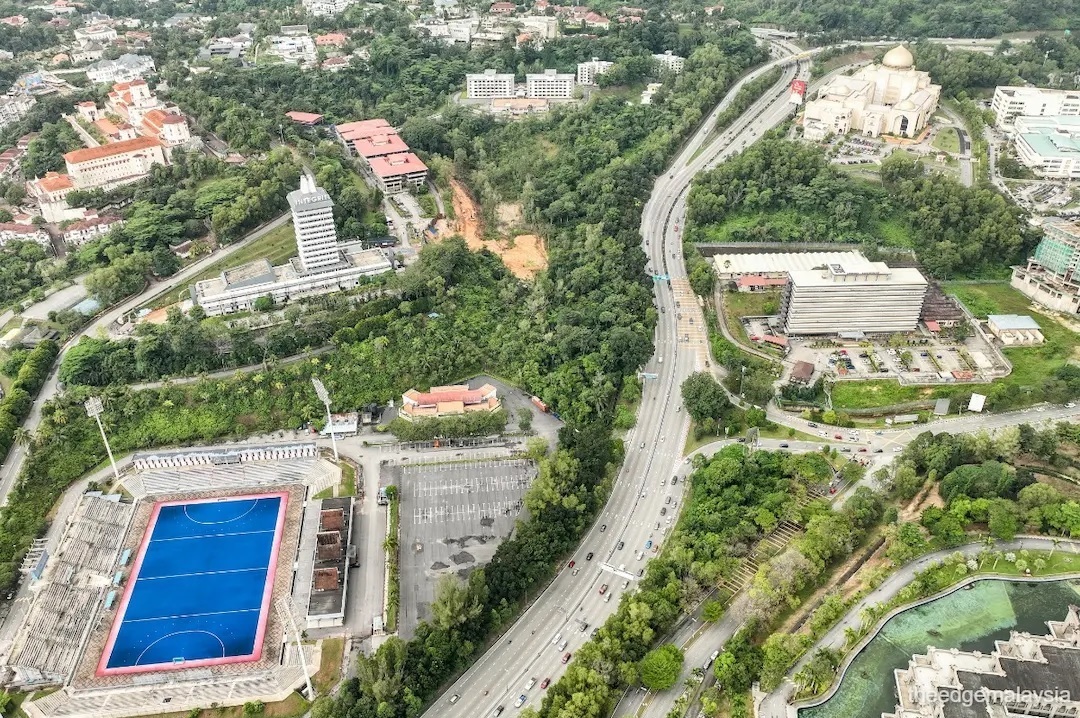
KUALA LUMPUR (March 5): Semantan Estate (1952) Sdn Bhd has filed a discovery application to obtain survey and acquisition plans from before Merdeka for its compensation hearing over the “Duta Enclave” land, which the court ruled the government had trespassed on. The survey and acquisition plans date from 1956 to 1960.
Its counsel, Janet Chai Pei Ying from Messrs Chooi & Company, told the High Court judge Roslan Mat Nor that the application, filed urgently on Feb 13, came after the court denied the liquidated company’s earlier request for more time to prepare its valuation report.
On Jan 20, 2026, Semantan Estate had applied for more time to file the valuation report and adjourn the April hearing dates for the long-standing dispute. Roslan, however, dismissed the application.
Chai said the discovery application covers two types of documents: acquisition plans for the 263.272-acre land taken by the government following three gazette notifications, and survey plans showing the land’s accessibility.
She added that these documents are needed to determine compensation under the Land Acquisition Act 1960, following a Court of Appeal ruling last June setting the assessment date at Dec 3, 1956.
Senior federal counsel Nurhafizza Azizan objected to the discovery application and sought time up to March 13 to file its affidavit.
Chai argued that the urgent discovery was served to the Attorney General’s Chambers the same day and is not meant to delay the compensation hearings on April 3 and 10.
Nurhafizza said it would be unfair to the government if it didn’t have time to file its reply to the discovery application. Chai responded that, as a private company, they have no access to the documents and are racing against time to prepare the valuation report, which is due on Thursday, March 5.
Roslan set April 1 for the discovery application and allowed the valuation reports to be filed later but kept the trial dates on Aug 3, 10, and 30.
Liquidator: Extensive searches failed to uncover key 1950s land records
Semantan Estate’s liquidator, Dr Jim Lai Chee Chuen, appointed in 2015, said in his 200-page affidavit supporting the discovery application that extensive efforts were made to obtain historical land records from government agencies, archives and libraries.
However, key documents—including 1950s acquisition plans and Revenue Survey Sheets—were not found or provided by the authorities.
“Plaintiffs (the company) [have] conducted searches at archives, libraries, and government offices from January to February 2026. Multiple requests for official plans and surveys were unsuccessful, and the defendant claims some documents are not in their possession.
“The plaintiffs' legal team wrote to government departments and the Attorney General’s Office to access relevant documents. The government confirmed some documents are available for purchase but denied possession of certain plans, citing no records in their control,” he added.
Lai said that as a private company, it does not have direct access to government documents, and obtaining them requires time for official searches and responses.
The liquidator added that the approved plans and surveys it requested are crucial for verifying boundaries, land configuration, and assessing damages or impairments.
“The available documents, mainly post-1956, are insufficient for accurate valuation and are not the original statutory acquisition plans,” he added.
Lai said the Court of Appeal ordered that the land be valued based on its 1956 market value, not its current value. The High Court must now determine fair compensation, deduct earlier payments, and apply 6% annual interest, making the old survey and acquisition plans necessary for accurate valuation.
He added that the discovery application should be allowed because the land has since been developed into public infrastructure and government facilities, making the case—including any recovery of the land—more complicated.
Last June, the Court of Appeal ruled that the company cannot reclaim the land, buildings, or title, despite a 2009 decision confirming the government had trespassed and paid only RM1.32 million in 1956. It ordered that compensation instead be paid by the government as assessed by the High Court.
A three-member Federal Court bench led by then-Chief Judge of Malaya Tan Sri Hasnah Mohammed Hashim upheld the appellate decision, rejecting the company’s application for leave.
Unlock Malaysia’s shifting industrial map. Track where new housing is emerging as talents converge around I4.0 industrial parks across Peninsular Malaysia. Download the Industrial Special Report now.