Share
Share


This article first appeared in the Industrial Special Report in November 2025.
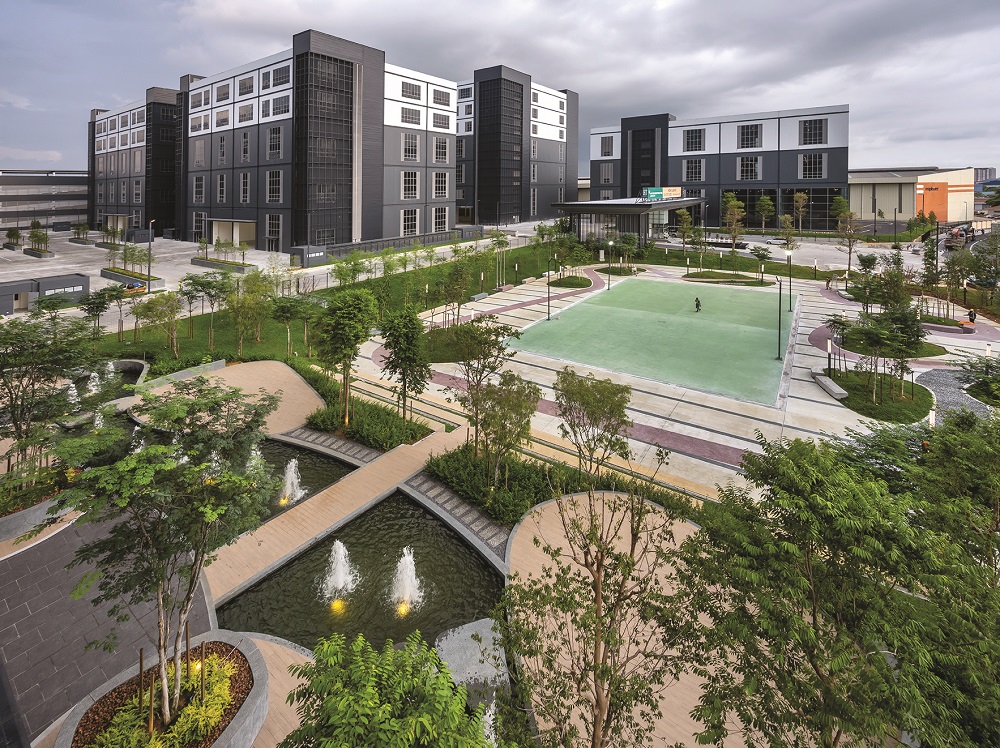
As factories, logistics hubs and data centres multiply, developers and occupiers are shifting towards green-certified facilities as part of their long-term competitiveness strategy.
From compliance to competition
According to the Construction Industry Development Board (CIDB), certification frameworks such as the Green Real Estate (GreenRE), Green Building Index (GBI), Leadership in Energy and Environmental Design (LEED) guide developments towards resource efficiency, reduced environmental impact and healthier workplaces.
These standards validate a developer’s commitment to responsible construction while improving energy savings, lowering operational costs, and enhancing marketability.
GreenRE have certified over 800 projects spanning over 400 million sq ft as of August 2025. By end-2023, the Malaysian Green Technology and Climate Change Corporation (MGTC) reported over 671 projects certified under GBI, spanning nearly 300 million sq ft.

According to PEPS Ventures Learning Resources, Malaysia’s green building market is growing at an estimated 14.3% annually, with the green materials segment projected to expand from RM280 billion in 2021 to RM520 billion by 2027. The firm added that green buildings, which typically cost about 2% more to construct, deliver 14% to 19% operational savings and higher resale and rental premiums.
The shift marks a broader evolution from compliance-driven development to a race for operational excellence and environmental, social, and governance (ESG) alignment.
Industrial segment leads the charge
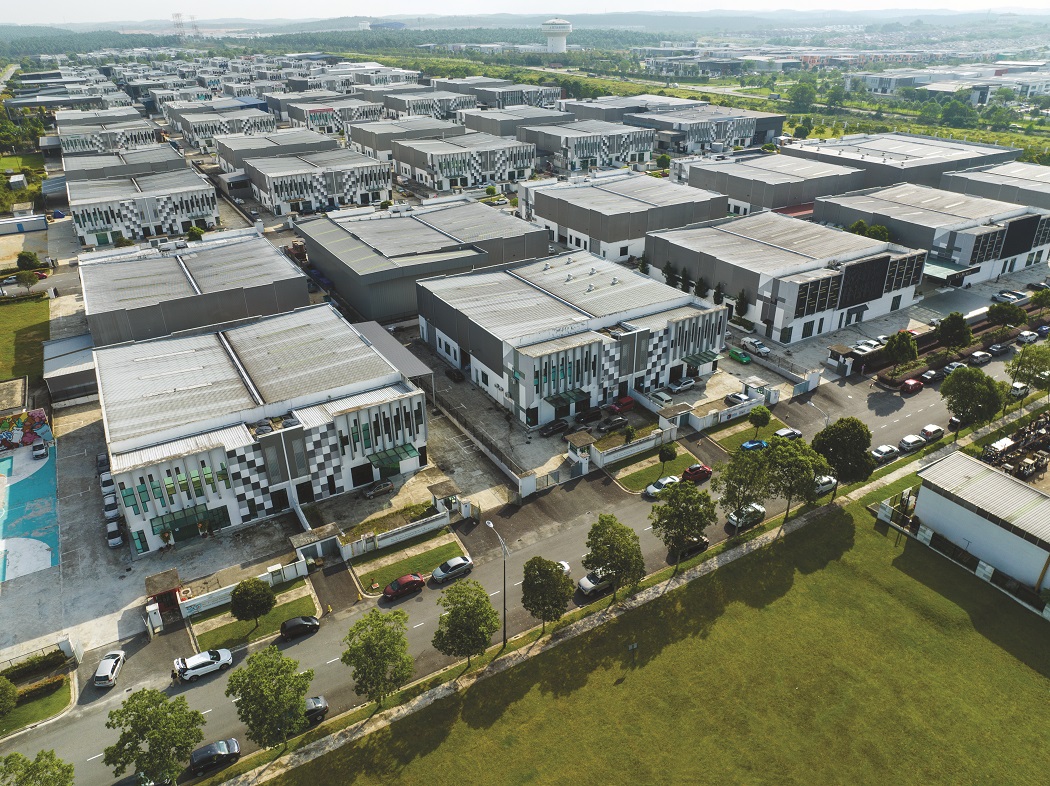
In the industrial segment, the certification wave has accelerated rapidly. GreenRE executive director Ashwin Thurairajah says the organisation has certified 70 industrial projects and 29 industrial parks, covering 35 million sq ft of built-up area and 33,000 acres, respectively.
“There are currently another 30 industrial developments registered, with more than 100 showing interest in certification,” he says.
He adds that growth within this segment has outpaced other asset classes, noting a 45% year-on-year increase for industrial projects since 2023 compared to 30% for commercial buildings, while industrial parks under its township category have surged 50% annually.
These trends reflect how sustainability has moved beyond high-rise offices and is now reshaping Malaysia’s industrial backbone.
Balancing costs and long-term returns
Green certification has often been perceived as costly, but GreenRE’s data paints a more nuanced picture.
“The incremental cost varies based on the certification tier. Generally, Bronze ratings incur a range of 0%–1%, Silver 0%–1.5%, Gold 3%–5% and Platinum 3%–8%,” he said.
Ashwin adds that most projects experience payback within two to four years, driven by reduced energy, water and maintenance costs. To ensure continued performance, recertification every three years is required, assessing energy and water usage as well as waste management.
“Certification is not static, it’s designed to instil a culture of continuous environmental improvement,” he says.
Government incentives have also supported adoption. Investment tax allowances for certified upgrades and local council rebates in several states further lower entry barriers, while multinational occupiers increasingly list green certification as a prerequisite for tenancy.
Embodied carbon: the next frontier
Operational efficiency is only part of the equation. The industry’s attention is turning to embodied carbon emissions generated during material production and construction.
“GreenRE adopts the EN 15978 framework, which assesses a building’s carbon impact across four lifecycle stages: product, construction, use, and end-oflife,” Ashwin says.
He cites CIDB’s 2019 Technical Publication No.207, which found that material selection accounts for nearly 90% of upfront carbon emissions, with concrete and steel as the largest contributors.
To address this, GreenRE has introduced prerequisites for green concrete, recycled steel and limits under its Concrete Use Index (CUI).
However, he adds that adoption of Environmental Product Declarations (EPDs) essential for verifying material carbon footprints remains limited in Malaysia.
“Calculating emissions is one thing, but benchmarking and reducing them is the real challenge,” he says.
Retrofitting for the future
Sustainability isn’t reserved for just new builds. The Wah Seng Warehouse redevelopment in Ipoh, Perak exemplifies how older facilities can be transformed.
“The project introduced a CO2-based cold room system that cuts energy use by up to 45%, solar panels generating 15% of electricity, and rainwater harvesting to reduce reliance on mains supply,” Ashwin says.
The redevelopment also integrated electric vehicle (EV) charging points, high-efficiency five-star air-conditioning, and enhanced natural daylighting.
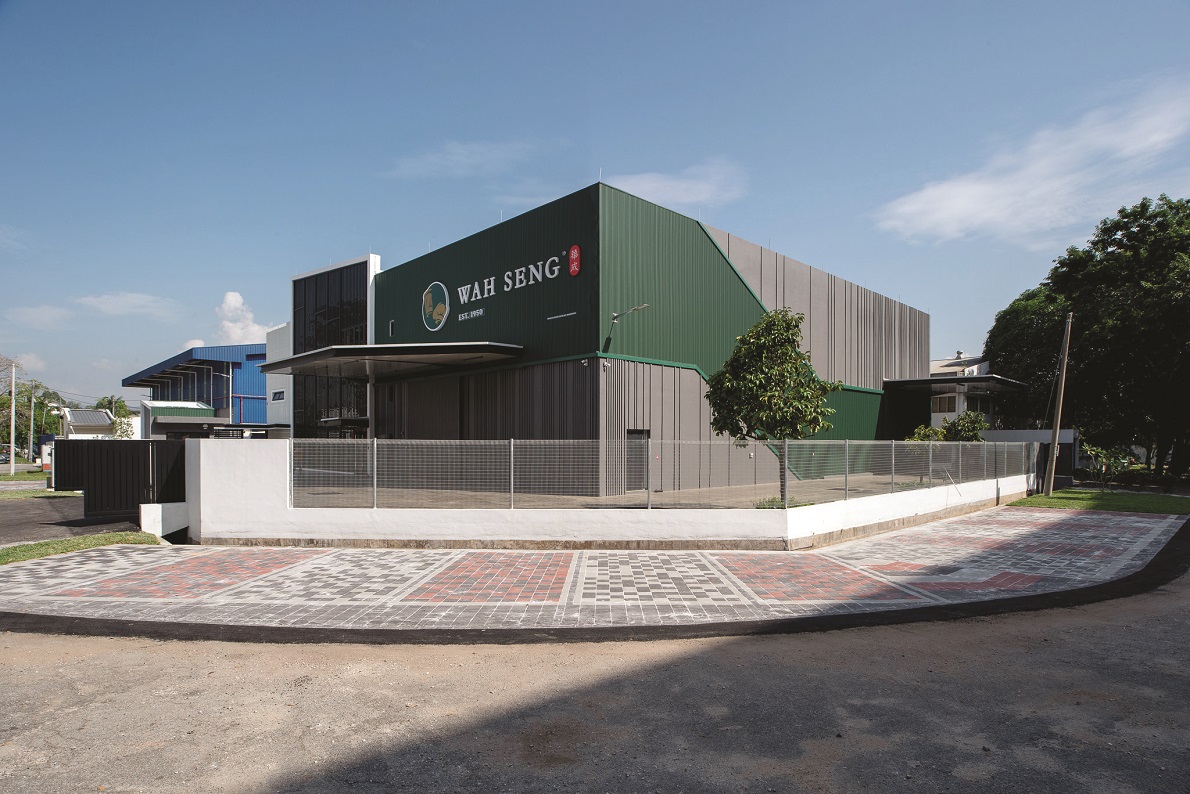
Even staff facilities were reimagined— preserved mangosteen trees provide shade for outdoor breakout areas, while inside, timber textures and softer finishes replace the cold industrial look.
Fire staircases were also brightened with colour, making the workplace more welcoming.
“This is a great example of turning an ageing facility into a productive, low-carbon workspace,” he adds.
Bridging gaps in awareness and technology
Despite rapid growth, the green industrial movement faces several hurdles.
“The top barrier is perceived higher cost. With careful design, the upfront cost can be minimal, and long-term savings far outweigh initial expenditure,” Ashwin says.
He adds that another challenge is lack of awareness among smaller developers unfamiliar with certification processes.
GreenRE addresses this through technical guides, and awareness programmes, linking developers with consultants, and technology providers.
“The third challenge lies in technology gaps. Our performance standards for cooling systems, and industrial equipment are still behind developed markets.
“The government’s upcoming Malaysian Energy Performance Standard (MEPS) 2.0 will help raise efficiency baselines for products entering Malaysia,” he says.
The road toward net zero
Looking ahead, Malaysia’s industrial facilities are expected to evolve towards net-zero readiness, integrating renewable energy, battery storage, and smart grid systems.
Ashwin says he expects energy-efficient facilities approaching net zero to become the norm.
“Battery storage, distributed energy generation and even small modular reactors for data centres will become more common,” he says.
He adds that automation, IoT-enabled monitoring and AI-driven building management systems will play critical roles in predictive maintenance, and real-time carbon tracking.
“Health and wellbeing will also be key. We’re developing a certification scheme to promote people-centric workplaces,” he says.
As Malaysia’s factories and industrial parks modernise, sustainability is no longer a luxury; it’s the new baseline, the defining spec for the next generation of industrial real estate.

What’s embodied carbon and why does it matter?
Embodied carbon refers to the greenhouse gas emissions generated during the production, transport, construction, and end-of-life disposal of building materials.
In industrial projects, materials like concrete and steel are the largest contributors, accounting for nearly 70% of upfront carbon emissions, according to CIDB.
GreenRE uses the EN 15978 framework to benchmark whole-life carbon across product, construction, use, and end-of-life stages.
Reducing embodied carbon requires careful material selection, recycled content, and transparent reporting through Environmental Product Declarations (EPDs). While adoption in Malaysia remains limited, addressing embodied carbon is essential for sustainable industrial construction and long-term climate impact reduction.
Unlock Malaysia’s shifting industrial map. Track where new housing is emerging as talents converge around I4.0 industrial parks across Peninsular Malaysia. Download the Industrial Special Report now.
.jpeg?Dc.IvzT0vI55UUTaKxAW9caca44P99nz)