Share
Share


This article appeared in the March 12, 2026 issue of the monthly print edition. Subscribe now.
Over the past decade, Malaysia’s urban transport strategy has moved decisively towards expanding transit connectivity across the Klang Valley. MRT lines, LRT extensions, and commuter transit upgrades have collectively reshaped how residents move around the region. With each new station announcement, the assumption often follows: homes near transit stations will inevitably become more valuable.
But does proximity to transit consistently translate into property price growth?
EdgeProp makes a transaction data analysis of more than 50 high-rise residential projects located within roughly 350m of transit stations across the Klang Valley to draw some findings.
A city gradually shifting towards transit
Urban planning authorities across the Klang Valley have increasingly emphasised the importance of transit-based mobility as cities attempt to reduce reliance on private cars.
In Kuala Lumpur, the KL Structure Plan 2040 (PSKL2040) sets an ambitious target of achieving 70% public transport-mode share by 2040, supported by dense developments around transport corridors, and improved pedestrian infrastructure.
Neighbouring municipalities are moving in similar directions.
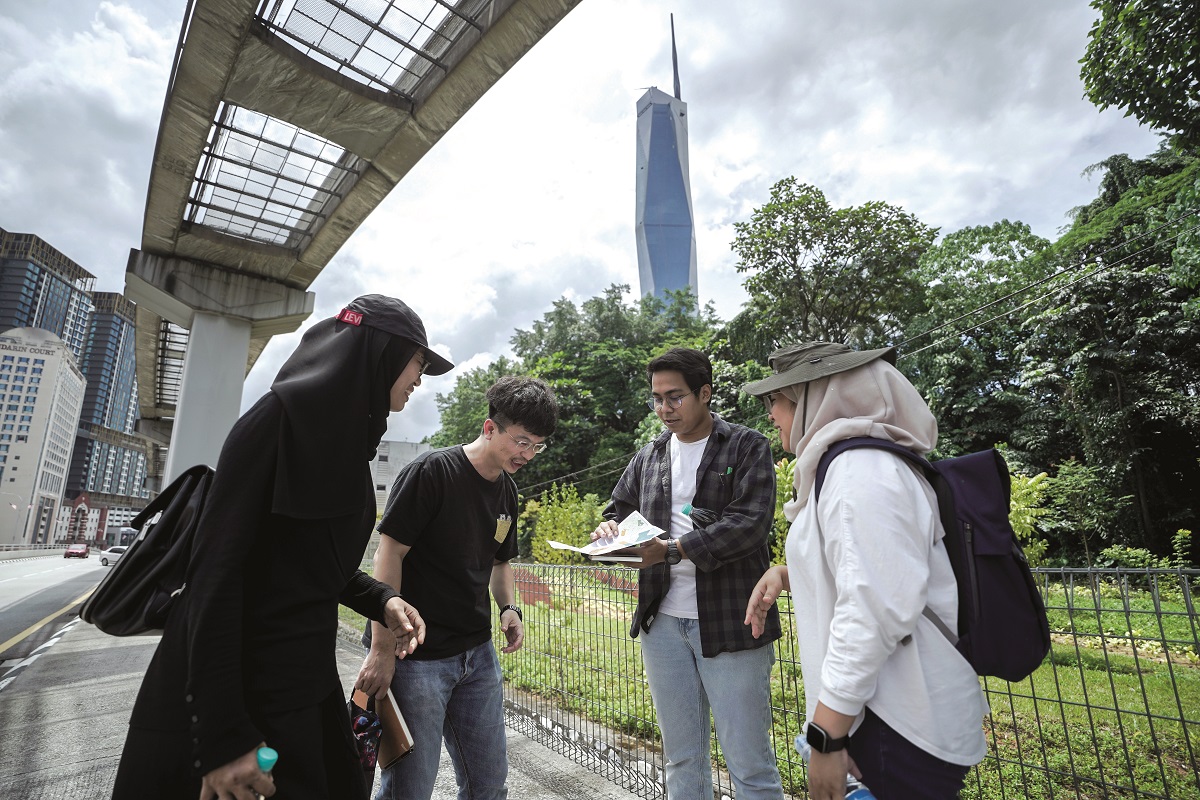
Petaling Jaya City Council (MBPJ) has introduced policies encouraging transit-oriented developments (TODs) within walking distance of transit stations, alongside goals to increase public transport usage across the city.
Subang Jaya City Council (MBSJ) has also incorporated TOD planning guidelines into its local plans, identifying areas where higher density residential and mixed-use developments can be supported by transit connectivity.
At the federal level, Town and Country Planning Department (PLANMalaysia) has issued formal TOD planning guidelines for recommended development intensities, walkable catchments, and land-use mixes within station areas.
Collectively, these policies seem to signal a long-term shift of urban growth that is increasingly expected to cluster around transit corridors rather than highway interchanges.
And developers have responded accordingly.
In recent years, a significant portion of new high-rise launches across KL, Petaling Jaya, and Subang Jaya have been marketed with proximity to MRT or LRT stations as a key selling point.
The projects seeing the strongest price growth
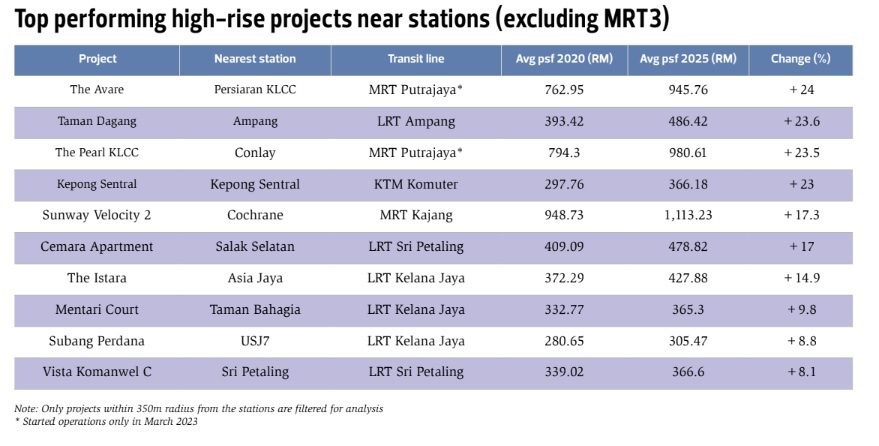
Among the high-rise projects analysed, a small group has recorded notable price appreciation over the past five years, although several variables merit closer attention. To ensure relevance, only projects with a minimum of 30 transactions were filtered; and while most of the stations were operational before 2020, MRT Putrajaya’s first and second phases only commenced in 2022 and 2023 respectively.
The strongest performers span a range of price points, from luxury city-centre developments to more affordable commuter apartments.
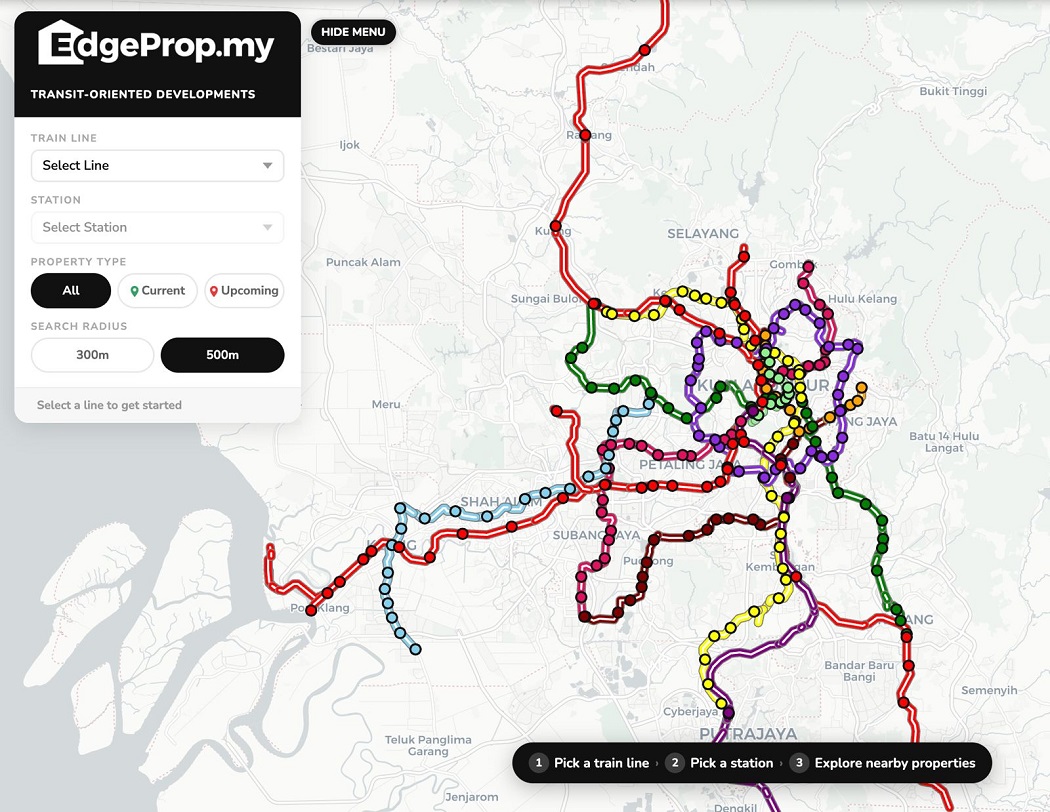
Our mapping tool is available here!
However, while these developments near stations have posted strong gains in the past five years, the overall findings suggest the relationship is more nuanced. In fact, many others have seen flat or even declining price movements, leading to a broader conclusion that transit access is not the sole contributing factor to price appreciation.
It is also worth noting that the general market in 2020, being the pandemic year, was on the downside, so the five-year growth could be further amplified by the post-pandemic spurt.
Among the top-10 list, certain projects already stand out for several other selling points. For example, luxury developments near KL’s city centre such as The Avare, and The Pearl KLCC benefitted from proximity to employment centres, retail amenities, and high-income buyer demand.

Nearby, along Jalan Stonor, The Pearl KLCC, completed in 2011, offers spacious residences within walking distance of the central business district and several MRT stations, reinforcing its appeal among buyers seeking city-centre accessibility.
Further from the city centre, projects such as Sunway Velocity TWO in Cheras, completed in 2024, illustrate a newer generation of develop-ments built around transit connectivity. Located about 200m from the Cochrane MRT station and close to the Maluri interchange, the serviced residence forms part of the integrated Sunway Velocity township.
At the same time, older apartments such as Mentari Court, and Subang Perdana, both priced below RM400 psf, have also recorded steady growth. Accessibility to the station is particularly valuable here for mid-income commuters seeking affordable homes with direct connections to job centres.
LRT stations dominate the list
Many of the projects showing consistent growth are located near established LRT lines rather than newer MRT stations. This may reflect the maturity of these corridors, where ridership patterns, and surrounding amenities have been established for years.
Proximity to LRT stations appears to have a greater impact on a particular segment of the housing market, such as mid-priced apartments, and older high-rise developments located within mature townships.
Unlike many newer MRT corridors that are still evolving, LRT lines such as the Kelana Jaya, and Ampang and Sri Petaling lines run through long-established residential and employment areas including Petaling Jaya, Subang Jaya, Ampang, and parts of KL’s inner suburbs.
Projects near these stations often cater to working professionals, young families, and tenants who rely on daily transit commutes into major employment centres such as KL Sentral, the KL city centre, and Bangsar South.
As fuel costs, traffic congestion, and parking constraints continue to influence commuting behaviour, homes within walking distance of LRT stations offer more predictable travel times, and reduced reliance on cars. In many cases, older but well-located apartments still see sustained demand, perhaps due to their relatively affordable entry prices, oftentimes allowing them to record steady price appreciation.
Walkability matters more than distance
Beyond the top 10, an analysis of 55 high-rise projects near transit stations shows that price movements over the past five years were mixed.
Some recorded significant appreciation while others experienced stagnation or decline.
A project located within 300m of a station may still be inconvenient if pedestrians must navigate highways, poor sidewalks, or unsafe crossings. Conversely, a development slightly further away but connected via sheltered walkways or integrated retail corridors may feel more comfortable for daily use.
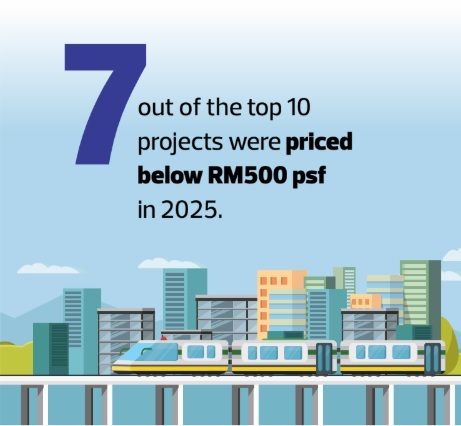
Transit destinations tend to have the strongest impact when it connects residents directly to employment clusters. Meanwhile, affordable apartments often see stronger percentage growth because they start from a lower base price. For instance, several projects priced below RM400 psf in 2020 have since recorded gains of 10% or more as buyers increasingly prioritise accessibility.
In neighbourhoods where many new high-rise projects are launched near the same station, competition can suppress price growth. On the other hand, areas with limited new supply may experience stronger appreciation as existing developments benefit from improved connectivity without facing oversupply.
Accessibility is only part of the equation
Taken together, the findings suggest that transit infrastructure remains an important factor shaping housing demand in the Klang Valley, but it is rarely the sole determinant of property value.
Instead, it appears to amplify the strengths or weaknesses of a location that already has its own market dynamics.
Projects located near stations tend to perform well when they combine transit access with strong fundamentals such as walkability, mature neighbourhood amenities, employment connectivity and balanced housing supply.
In other words, transit does not automatically create value on its own. Instead, it tends to reinforce the strengths of locations that are already desirable places to live.
As Malaysia continues expanding its transit network, the long-term impact on property markets will likely depend less on distance to the nearest station, and more on how effectively transport, urban planning, and neighbourhood design come together to create places people genuinely want to live in.
..........
EdgeProp's inaugural monthly print edition is fresh off the press! Free delivery is available for selected regions. Subscribe now.