Share
Share


This article appeared in the March 12, 2026 issue of the monthly print edition. Subscribe now.
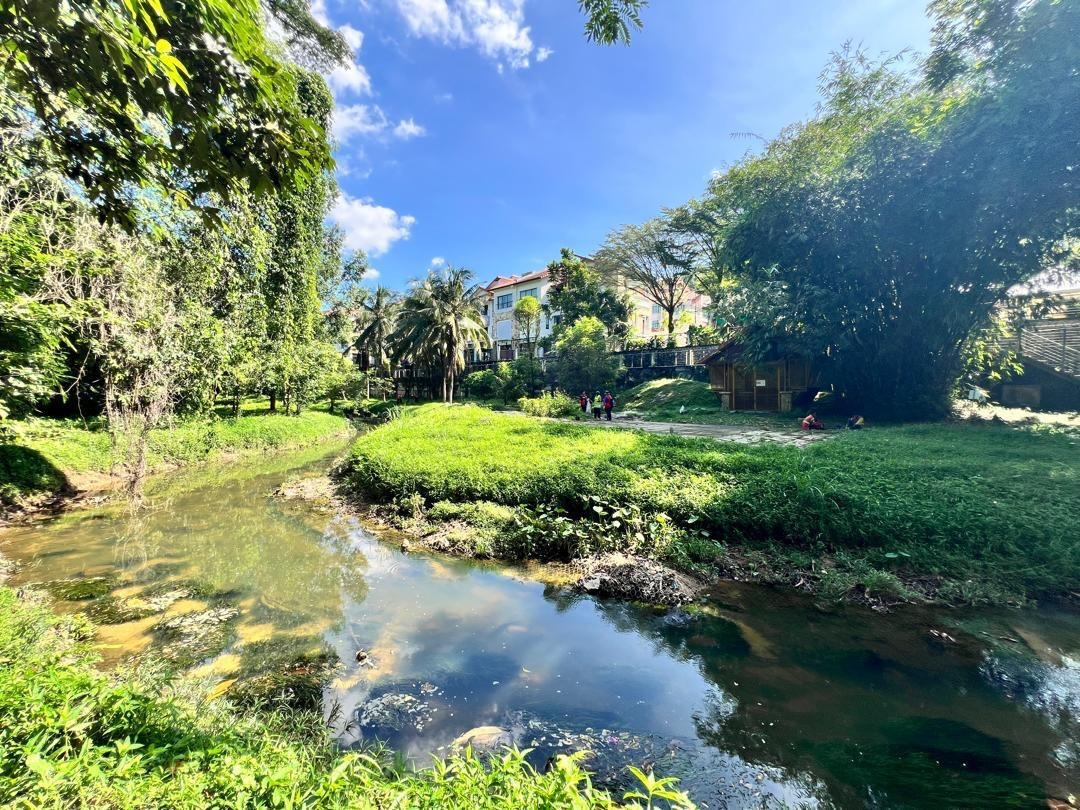
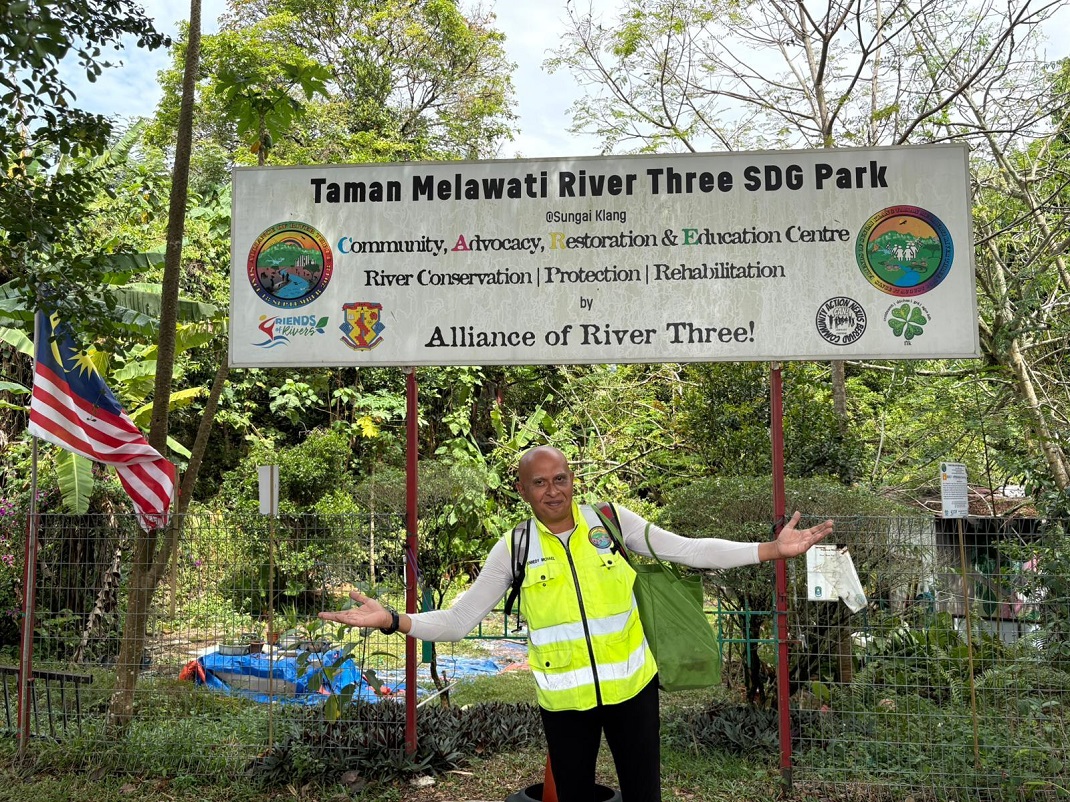
Standing along the riverine stretch of Taman Melawati River Three along the Klang River, Kennedy Michael, founder of local environmental conservation group The Alliance of River Three! (ART!), frames his efforts not as river cleaning, but as ecosystem restoration. The emphasis of the group’s endeavour, he says, extends beyond removing debris to clean the water — to actually rehabilitating the river’s ecological functions and long-term resilience.
For context, the Klang River played a crucial historical role in the foundation of the Kuala Lumpur city, but years of neglect and pollution have downgraded it to an eyesore rather than an icon of the metropolis. Stretching over 120km, the river and its 11 tributaries once served as a critical thoroughfare for trade in the Klang Valley, but almost two centuries of urban development, sedimentation, and poor waste management have taken a toll on this significant geographical landmark.
Despite a general consensus that more should be done to elevate the profile of the Klang River, ongoing beautification efforts by the authorities (since 2012) have seen slow progress due to funding and approval complexities, as well as frequently changing political dynamics.
Enter community-driven initiatives such as ART!, which mobilises residents to be proactive about river conservation efforts. Initiated in 2018, the group has been involved in sustained efforts to rehabilitate sections of the Klang River’s riverbanks, gradually transforming previously neglected stretches into accessible green community spaces.
In particular, the Taman Melawati River Three SDG Park sets a benchmark, having received the “Exemplar Award” in the inaugural Game Changing Place category at the Malaysian Institute of Planners (MIP) Placemaking Awards 2023.
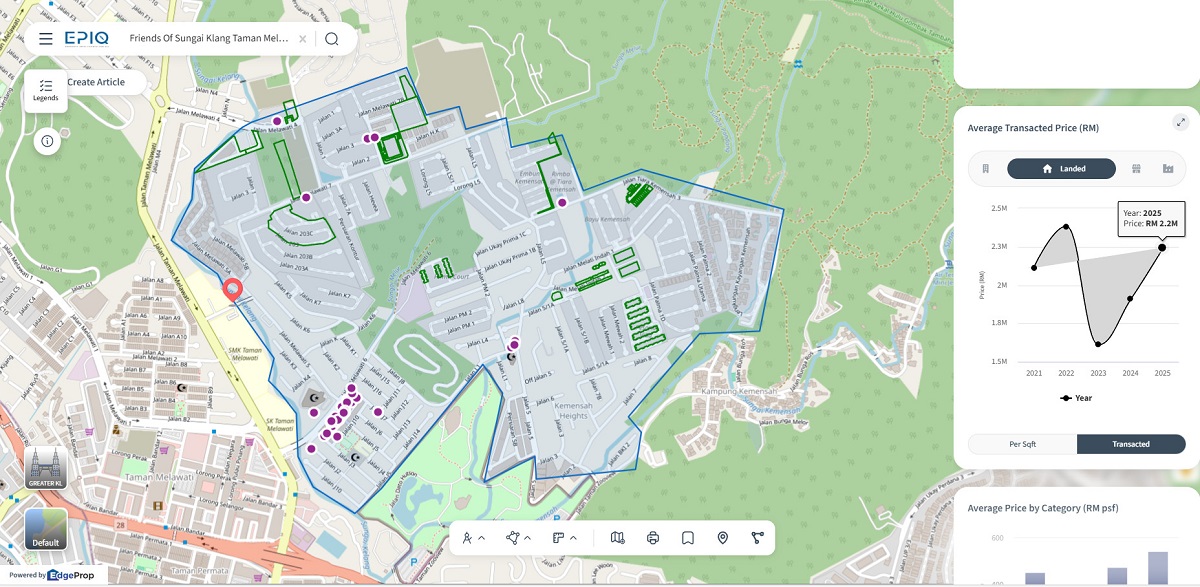
According to EdgeProp EPIQ data, the area surrounding Taman Melawati River Three comprises a total of 5,714 landed residential properties that occupy approximately 469.60 acres. Landed homes make up the majority of the property composition within the vicinity at 57.62%, while non-landed properties represent only 2.36%.
“We’ve actually seen property prices [in the area] improve after the park started receiving awards,” Michael noted, believing that the impact of community efforts can go beyond simply improving aesthetics.
While it is difficult to establish direct correlation between riverside enhancements and price movements, EPIQ can confirm that landed homes in the immediate vicinity of River Three, Taman Melawati, have indeed seen steady price increases in recent years. Data reveals that between 2023 and 2025, there has been a 37.5% increase in average transaction prices in the area, moving upwards from approximately RM1.6 million three years ago to RM2.2 million last year.
For Michael, the distinction between “cleaning” and “restoration” is fundamental. River cleaning, he says, addresses the removal of visible debris, while river ecosystem restoration seeks to re-establish the natural equilibrium of the river’s system. This is achieved through reforestation that mirrors the river’s original layers of canopy, understory and ground cover, and allowing vegetation to become self-sustaining without continuous intervention.
“What we do to the river, we do to ourselves. Restoring it isn’t just about cleaning it ... It’s really about protecting our own ecosystem and future,” says the founder and activist.
Once the water table (the boundary between groundwater and the unsaturated soil above) is undisturbed, and ecological balance returns, he explains, the system can regenerate on its own.
Michael has founded and structured the River Three programme to shift the public mentality beyond ad hoc clean-ups to address the core issue. The programme is built on three pillars: restoring access and amenities; strengthening community engagement; and ensuring circular financial sustainability.
He also notes that the group runs a programme with a school located opposite the park, SMK Taman Melawati, which engages students in various activities designed to foster a better understanding of environmental conservation. The programme also cultivates an appreciation for nature, emphasising that ecological restoration requires more than simple community clean-up efforts.
To make a difference with ART!, volunteers spend months clearing debris to reopen overgrown trails, and make the riverbank usable again. Currently, community participation extends to planting, waste collection, and education efforts. Sustainability programmes conducted for corporations help fund ongoing restoration work, reducing the conservation group’s reliance on government allocations.
However, Michael maintains that long-term success depends on more than community action, it also requires stronger governance. He points out that enforcement gaps are a critical weakness in river management, particularly in the implementation of erosion control and sedimentation plans (ECSP) when construction activities take place around the waterway.
Steps forward — larger fines, timely action
While legislative amendments have raised maximum fines for pollution, Michael questions whether proper enforcement has been applied consistently across the board.
Although a number of volunteers under the group’s umbrella have been trained to collect water samples, he notes that they are not recognised as experts by the authorities, and as such, much of the evidence gathered is inadmissible in court. This often allows polluters to evade timely accountability.
Michael advocates for trained community activists to be empowered as deputised pollution monitors, arguing that swift enforcement and meaningful fines would serve as stronger deterrents.
His concerns also extend to urban flooding, which Michael views through an ecological lens. Rivers, he says, naturally overflow into floodplains. Property development within these zones essentially convert a predictable ecological process into what is later termed a disaster.
“Sediment build-up, altered water flow, and increased runoff from upstream projects exacerbate downstream flood risks. While engineering measures such as river widening and pumping systems have been implemented, I believe preventive enforcement would be far more effective,” he stresses.
Michael explains that rivers are naturally situated within a broader ecological corridor bordering permanent forest reserves, wildlife sanctuaries, and water catchment areas.
When bordered by an urban landscape, he says the fragmentation caused by infrastructure and upstream development affects not only water quality but interconnected ecosystems.
Michael therefore monitors activities beyond the immediate riverbank of ART!’s endeavours, viewing upstream conditions as integral to downstream outcomes.
Eight years and going strong
Michael’s involvement in river conservation began eight years ago, after being introduced to local river initiatives under the River of Life Public Outreach Programme (Robop). Observing limited on-the-ground progress, he proposed a long-term initiative instead of periodic clean-ups, eventually helping establish Friends of Sungai Klang at Taman Melawati.
His connection to the area dates back to 1976, when he moved there as a child and affectionately remembers that portion of the river as part of a lush forest landscape.
When Michael first began focusing on river conservation, he admits that there was initial resistance from some residents towards restoration works. However, this gradually shifted as the initiative gained recognition. The environmental improvements coincided with an elevated profile of the neighbourhood, and rising property values, reinforcing his view that ecological stewardship and asset appreciation are complementary rather than conflicting goals.
After nearly a decade of sustained work, under a 12-year mission that is aligned with the Sustainable Development Goals’ 2030 timeline, Michael continues his frequent visits to the river.
The transformation of River Three — from an overgrown and inaccessible vicinity to an actively used public space — stands, in his view, as evidence that structured, citizen-led restoration is achievable.
Scaling such efforts, Michael suggests, will depend less on technical capability, and more on consistent civic commitment, enforceable accountability, and political will.
“To effect real change, you have to go into uncomfortable spaces, and deal with difficult things in order to get a positive outcome. Take action, even when no one else will,” he emphasises.
..........
EdgeProp's inaugural monthly print edition is fresh off the press! Free delivery is available for selected regions. Subscribe now.