Share
Share


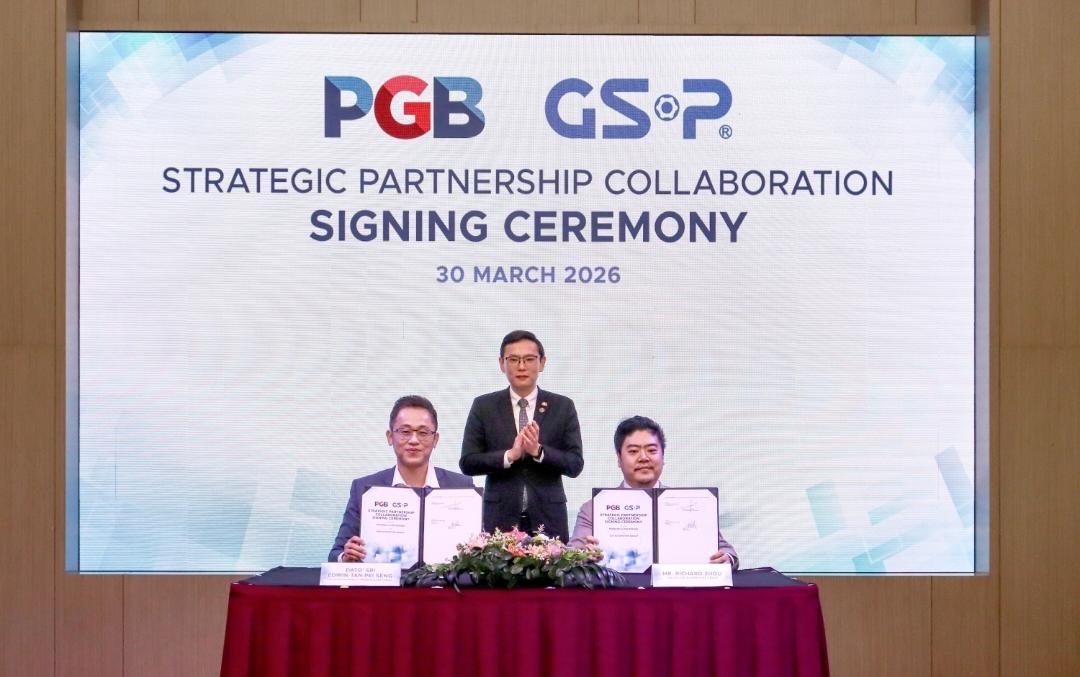
JOHOR BAHRU (March 30): Paragon Globe Bhd is advancing its industrial pivot through a strategic partnership with GSP Automotive Group to develop a 47-acre automotive-focused industrial hub (“AutoPark”) in Iskandar Puteri, Johor, with an estimated gross development value (GDV) of RM1.5 billion.
The collaboration — formalised via a strategic partnership agreement with GSP Automotive Malaysia Sdn Bhd, a subsidiary of the Shanghai-listed group — was witnessed by Johor Consumer Affairs and Human Resources Committee chairman Lee Ting Han, signalling alignment with Johor’s broader industrialisation agenda, said the press release by Paragon Globe.
From landbank to industrial platform
The AutoPark will occupy approximately 47 acres, representing about 43% of Paragon Globe’s 109-acre landbank in Iskandar Puteri, and marks a structural shift from traditional land monetisation to ecosystem-led industrial development.
As master developer, Paragon Globe will take on the role of ecosystem integrator, overseeing:
*Planning and coordination of the industrial cluster
*Regulatory facilitation
*Integration of financing access via United Overseas Bank (Malaysia) Bhd
The group will also develop and lease two GreenRE-certified factory units to GSP Automotive, aligning the project with global sustainability requirements.
“We are no longer just developing industrial properties; we are architecting complete, high-value industrial ecosystems,” said Paragon Globe executive chairman Datuk Edwin Tan Pei Seng.
“By anchoring this AutoPark with a globally recognised manufacturer, we are creating a magnet for foreign direct investment and international suppliers,” Tan added.
Anchor tenant strategy: Building ecosystem “gravity”
The entry of GSP Automotive Wenzhou Co, Ltd — a Shanghai Stock Exchange-listed Tier-1 supplier serving over 120 countries — establishes a critical anchor layer within the development.
Acting as the ecosystem anchor, GSP Automotive is expected to:
*Establish manufacturing plants, R&D centres, and automated distribution hubs
*Leverage its global network to attract component manufacturers, suppliers, and logistics players
*Create an integrated automotive supply chain cluster within the AutoPark
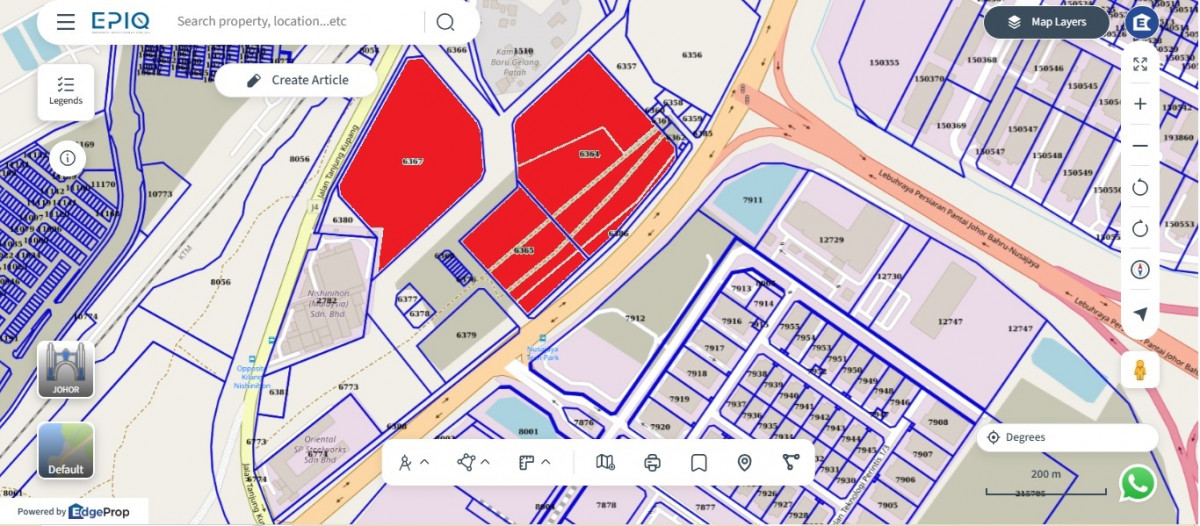
According to Paragon Globe, this anchor-led model introduces a demand-driven development structure. The group noted that by partnering with a global Tier-1 supplier like GSP Automotive, industrial take-up is supported by established tenant ecosystems rather than speculative absorption.
GSP Automotive Group chief executive officer Richard Zhou said, “as a manufacturing enterprise, we firmly believe that business growth should go hand in hand with local economic and social development. This project is expected to create employment opportunities, support talent development, and foster the growth of an automotive industry cluster in Johor.
“Looking ahead, GSP (Automotive) will continue to deepen its investment in Malaysia, working closely with partners and stakeholders to build a modern manufacturing base that contributes meaningfully to regional economic growth.”
“This collaboration is strongly aligned with the strategic direction of the JS-SEZ in accelerating cross-border advanced manufacturing. It also further reinforces Paragon Globe’s position as the preferred developer for multinational companies seeking sustainable industrial space in Johor,” he added.
Financing layer embedded into development model
A key structural component of the project is the inclusion of United Overseas Bank (Malaysia) Bhd as a strategic banking partner.
The bank will provide:
*Project financing access
*Operational banking solutions for incoming tenants
This integrated financing layer is intended to reduce entry barriers for foreign participants, particularly within the context of ongoing China+1 supply chain diversification.
Positioned within Johor’s industrial inflection point
According to Paragon Globe, the development comes as Johor enters a structural growth phase, supported by:
*The upcoming Johor–Singapore RTS Link (2026)
*The formation of the Johor-Singapore Special Economic Zone (JS-SEZ)
These catalysts are expected to enhance:
*Cross-border labour mobility
*Capital flows and investment activity
*Export-oriented manufacturing demand
Paragon Globe’s latest move highlights Iskandar Puteri’s emergence as a key industrial node. The group noted that the development is strategically aligned with the Johor-Singapore Special Economic Zone (JS-SEZ) to tap into regional logistics and advanced manufacturing flows.
From GDV expansion to yield-driven development
The AutoPark reflects a broader shift in Paragon Globe’s development approach — from residential-led GDV expansion to industrial, occupancy-driven assets.
Key characteristics of this repositioning include:
*Tenant-backed revenue visibility
*Reduced reliance on market-driven residential absorption
*Long-term asset value linked to supply chain activity
At the same time, the focus on GreenRE certification aligns the project with ESG requirements increasingly demanded by multinational occupiers.
Beyond industrial land sales
Rather than a conventional land development, the AutoPark is structured as a closed-loop industrial ecosystem, where:
*Land functions as a production platform
*Anchor tenant drives initial demand
*Ecosystem clustering supports long-term value creation
The project also builds on Paragon Globe’s track record of integrating international tenants across its industrial developments, including:
*Bridge Data Centres (Desa 100)
*Hunter Amenities and ACE Battery (Desa Cemerlang)
*Shimano Components (Pekan Nanas Industrial Park)
Structural repositioning underway
As outlined in the group's strategic roadmap, the AutoPark underscores a broader repositioning of Paragon Globe’s landbank strategy.
Within a market where residential demand remains uneven, the move reflects a measured pivot toward industrial resilience, anchored by:
*Supply chain alignment
*Foreign direct investment inflows
*Ecosystem-based value creation
“This agreement marks a strategic and structural evolution for Paragon Globe. We are no longer just developing industrial properties; we are architecting complete, high-value industrial ecosystems," said Tan.
..........
Get EdgeProp's inaugural monthly print edition! Free delivery is available for selected regions. Subscribe now.
.jpeg?Dc.IvzT0vI55UUTaKxAW9caca44P99nz)