Share
Share


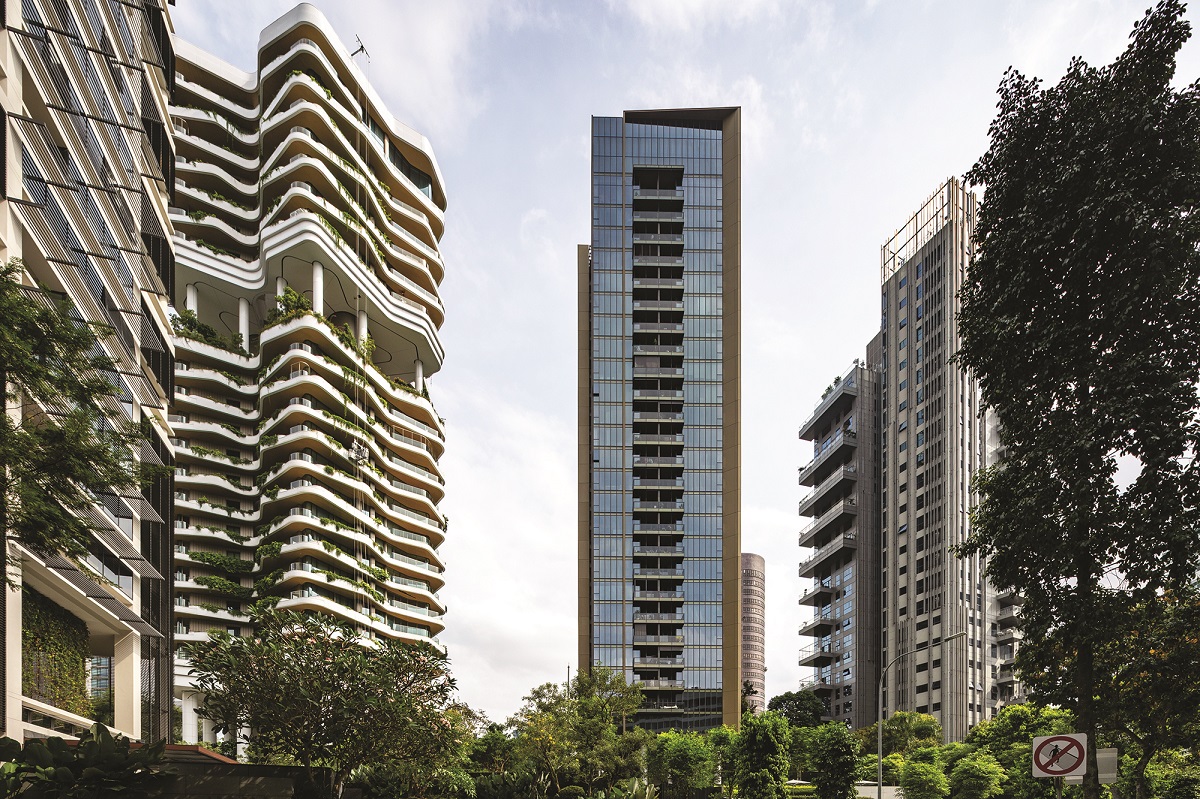
This article appeared in the May 12, 2026 issue of the monthly print edition. Subscribe now.
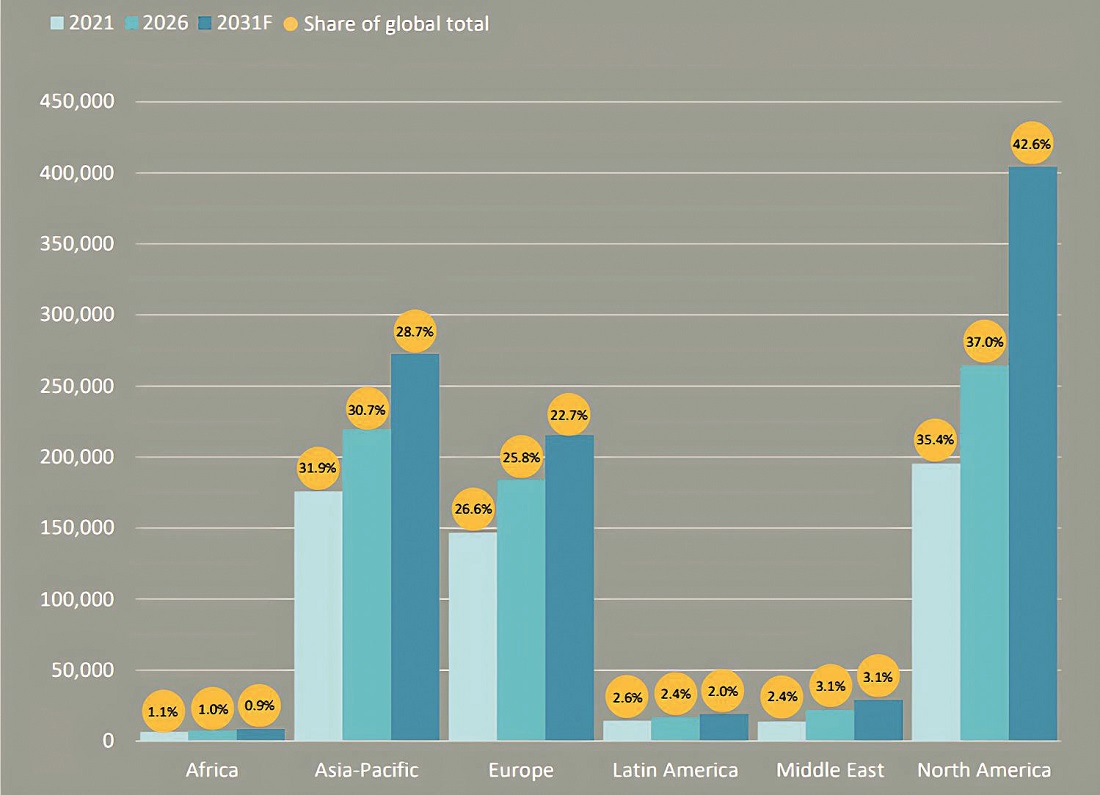
As the Asia Pacific (Apac) continues to cement its place as a dominant global wealth hub — nearly 31% of the global ultra-high-net-worth individual (UHNWI) population now sits within the region — Singapore helms an important chapter.
The number of UHNWIs in Singapore has increased by 55% in the past five years, from 4,642 in 2021 to 7,171 in 2026, and is forecast to climb a further 46% in the next five years.
Global property consultancy Knight Frank expects the city-state’s ultra-wealthy population — those with US$30 million (RM118.7 million) or more — to reach 10,497 by 2031, according to the global property consultancy’s latest edition of The Wealth Report released on April 23.
Meanwhile, the number of billionaires in Singapore has gone up from 28 in 2021 to 63 this year, and could further increase by 35% to reach 85 by 2031, Knight Frank notes.
That said, the spending power ofUS$1 million has also fallen sharply in many prime l ocations around the globe, with overall prices of luxury homes increasing worldwide and in Apac.
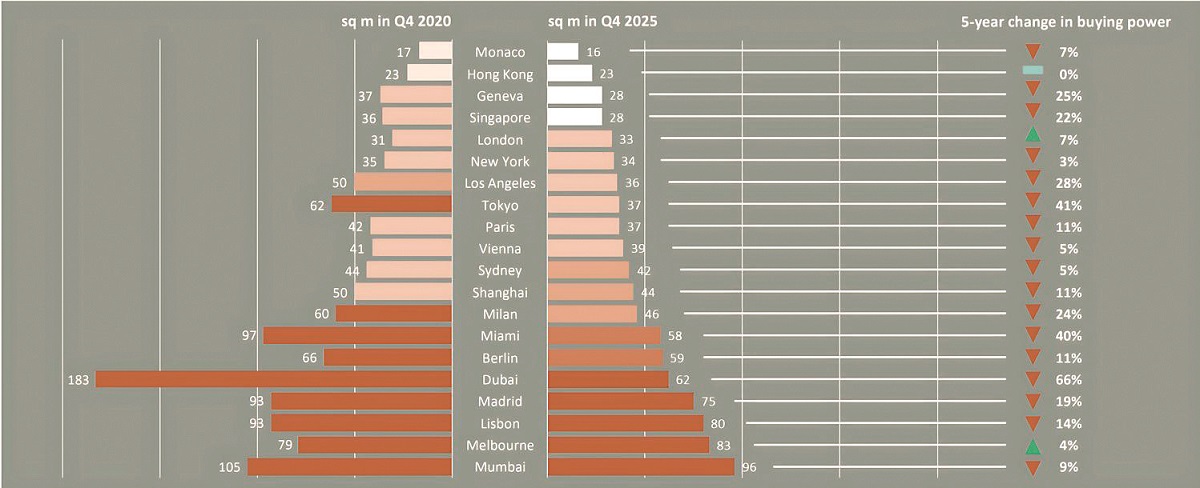
Between 2020 and 2025, the amount of square footage that a US$1 million budget could secure shrank across many markets, with the steepest contractions in Dubai (–66%), Tokyo (–41%), Miami (–40%), and Los Angeles (–28%). That is according to Knight Frank’s Prime International Residential Index 100 which is included in the wealth report. It reflects intense appreciation in global prime residential markets, the consultancy says.
In Singapore, this buying power declined by 22% over the same five-year period. Back in 4Q2020, US$1 million could have purchased 36 sq m (388 sq ft) of prime residential space in the country. That fell to 28 sq m (301 sq ft) as at 4Q2025.
Despite this, Nicholas Keong, head of residential and private office at Knight Frank Singapore, notes that demand for well-located projects remains resilient, driven by local homebuyers backed by generational wealth.
This is underpinned by the view that prime properties continue to offer long-term value, despite the additional buyer’s stamp duty on multiple homeownership.
He adds that owners of prime homes in Singapore “can look forward to potential recurring income from the luxury leasing market”, as globally mobile UHNWIs increasingly adopt a “dip-in, dip-out” lifestyle, spending fewer than 90 days a year in any single location.
Luxury home prices climb in Tokyo, Manila, Seoul and Singapore
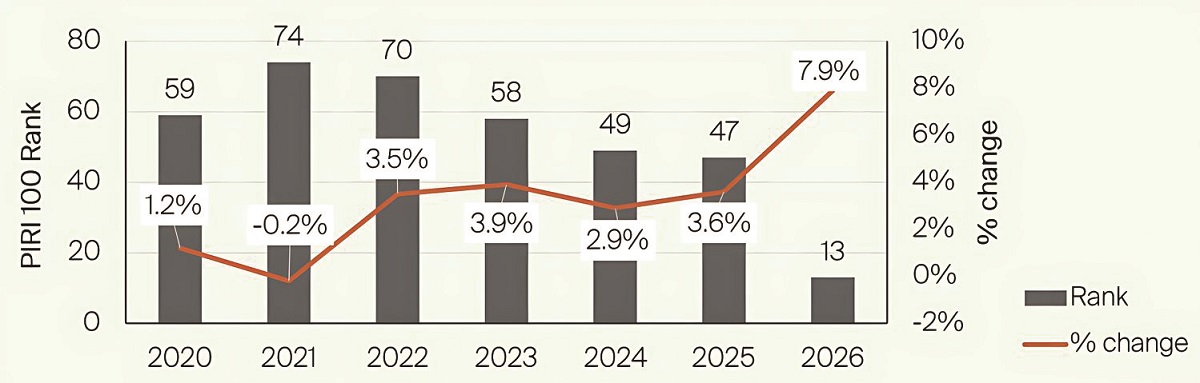
Prices of prime residential property in Apac rose by 3.7% in 2025, little changed from 3.6% in 2024, though performance varied widely by market. “Prime residential markets across Apac continue to demonstrate a high degree of differentiation, underlining the region’s diverging market cycles,” says Christine Li, head of research, Apac, at Knight Frank.
Topping the global rankings for increases in luxury home prices was Tokyo — its luxury homes became 58.5% more expensive over the year, as the city’s newbuild apartment market was boosted by scarcity, low interest rates and strong inward demand from Apac buyers.
Manila was the next Apac market on the list, with average prices climbing 17.5%, followed by Seoul with 14.7%, and Bengaluru with 9.4%.
Mumbai prices surged 8.7% on strong prime and super-prime demand, with record newbuild sales above US$2 million last year.
In Singapore, prime residential prices grew by 7.9% in the 12-month period, the index shows.
Meanwhile, prime residential prices in mainland China’s tier-one cities softened, with Shanghai and Guangzhou posting declines of 5% and 12.2%, respectively, the report notes.
“This mix of resilience and recalibration points to a prime landscape increasingly shaped by domestic demand and structural rather than cyclical drivers,” adds Li.
Private wealth to continue dominating commercial real estate
On the global commercial real estate front, the consultancy expects a turning point in 2026, with US$144 billion of institutional capital set to re-enter the market.
This follows four consecutive years in which private capital has dominated, with UHNWIs and family offices remaining the largest buyers of global commercial real estate. In 2025, private capital deployment reached US$464 billion, compared with US$347 billion from institutional investors.
In Apac, cross-border HNWI investment rose to its highest level since 2019. Mainland Chinese capital accounted for 46% of buying interest, supported by pricing resets and evolving investor behaviour.
Daniel Dixon, head of capital markets at Knight Frank Apac, notes that the region is poised to capitalise on emerging opportunities given its “deep private capital pools, an openness to a range of capital structures, and investors with a track record of deploying across the risk curve”.
Affluent families turn to targeted strategies
In the global family office sector, there has been a shift away from capital preservation towards a more structured approach.
Many family offices are now professionalising by employing internal specialists in private equity, venture capital and real estate.
Some are also building their own operational capabilities, such as by acquiring development, planning or construction businesses to support real estate investment strategies.
Direct ownership of property remains attractive to affluent families, as it allows them to shape development strategies, manage risk and capture the full upside rather than sharing returns through fund structures, according to the Knight Frank Family Office Survey 2026.
The study draws on interviews in 1Q2026 with more than 40 family offices across London, New York, Dubai, Singapore, Hong Kong and other cities.
In terms of diversification, their portfolios are increasingly combining traditional liquid assets with private equity, venture capital, infrastructure and direct property investments.
A key reason for this is family offices are pursuing durable, long-term returns across economic cycles.
Real estate aligns well with long-term horizons. With no pressure from external investors or fund lifecycles, family offices can weather market volatility and focus on steady income and intergenerational wealth preservation, the survey found.
As real estate remains a cornerstone of many portfolios, investment strategies are also becoming more targeted and thematic. Interviewees in the family office survey highlighted interest in data centres, value-add projects and operational real estate sectors where income is supported by underlying demographic or economic trends.
For instance, student accommodation continues to appeal due to resilient demand in global education markets. Logistics and distribution assets are benefitting from the continued expansion of e-commerce. Healthcare-linked real estate is also gaining attention as populations age.
Southeast Asia wealth creation to quicken
The Apac region continues to host the world’s largest concentration of billionaires, while wealth creation has expanded across an increasing number of its markets.
This is most notable in Southeast Asia, where the growth of the ultra-rich population is expected to quicken in the next five years, says Craig Shute, CEO at Knight Frank Apac.
“The broadening wealth base in the region’s emerging markets reflects profound economic shifts driven by entrepreneurship, maturing capital markets and expanding domestic economies,” Shute adds.
Singapore in particular sits at the crossroads of Southeast Asia, China, India and Australia — in the centre of economies that are together driving a substantial share of global wealth creation.
The city-state offers the wealthy proximity to opportunity with mitigated exposure to jurisdictional risk, says Galven Tan, Knight Frank Singapore CEO.
Through Singapore, investment teams can access the growth markets of Indonesia, Vietnam and India while holding assets, structures and governance in a neutral, internationally trusted base, Tan remarks.
With additional reporting by Kalynskye Adrian
..........
EdgeProp brings you another month of data-driven insights, exclusive interviews, and market commentaries. Subscribe now for your free copy!