Share
Share


This article appeared in the June 11, 2026 issue of the monthly print edition. Subscribe now.
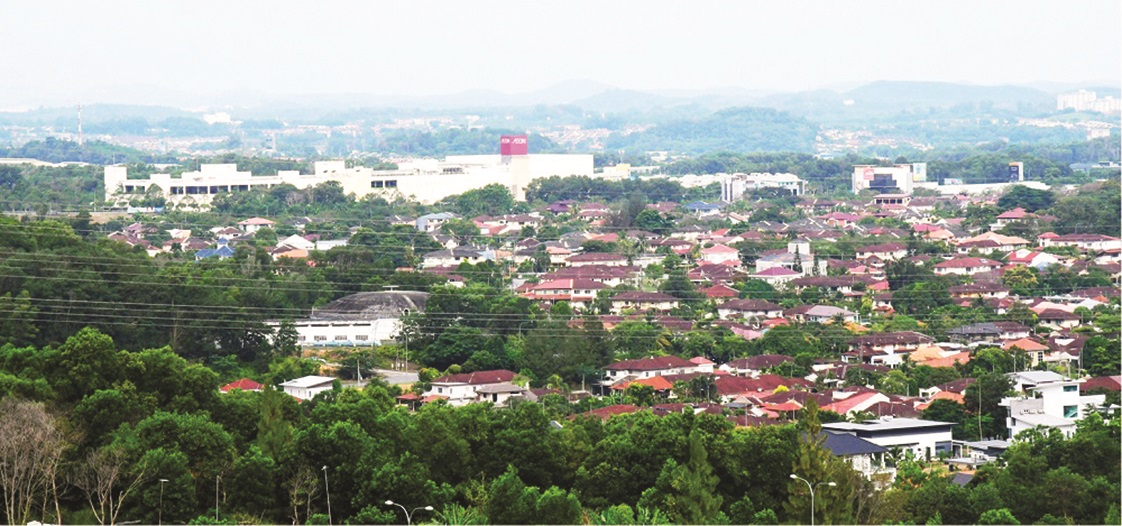
Seremban and the wider Nilai corridor in Negeri Sembilan are increasingly being framed within a broader “conurbation of connectivity” narrative, where urbanisation is no longer defined by isolated city boundaries but by interconnected infrastructure, industrial clustering, and long-term regional integration.
Positioned close to Putrajaya, Kuala Lumpur International Airport (KLIA), and the wider central region economic belt, the area is gradually being shaped by connectivity-led urbanisation, where growth is expected to be inevitable as the Klang Valley expands outwards.
The neighbouring state is evolving beyond its long‐held image as a mere spillover beneficiary of the Klang Valley. Today, its trajectory is being shaped with intent — positioned as a structured industrial growth corridor that reflects a deliberate shift from passive expansion to a purposeful economic strategy.
Interestingly, it is Negeri Sembilan’s historical evolution from a hub for tin mining settlements in the 1870s in Sungai Ujong, later shaped by river trade routes and early rail connectivity such as the 1891 Port Dickson line, that has laid the foundation for today’s infrastructure-led growth.
Residential expansion in the 1990s marked a major turning point as Seremban and Nilai began absorbing population outflows from the Klang Valley, supported by new township developments, the completion of the North-South Expressway, and improved KTM Komuter rail access.
Seremban and its surrounding urban communities are unfolding into a single, self-sustaining growth hub, with real economic drivers, and a population nearing 700,000, comparable to what Subang and Shah Alam in Selangor represented two decades ago. Today, Seremban is already a mid-sized city with critical mass. More than 60% of Negeri Sembilan’s population resides in the Seremban area, supported by a substantial working population base.
Industrial demand driven by higher-value transactions
The investment narrative is increasingly being shaped by how industrial space is being absorbed, rather than just how much is being built or transacted.
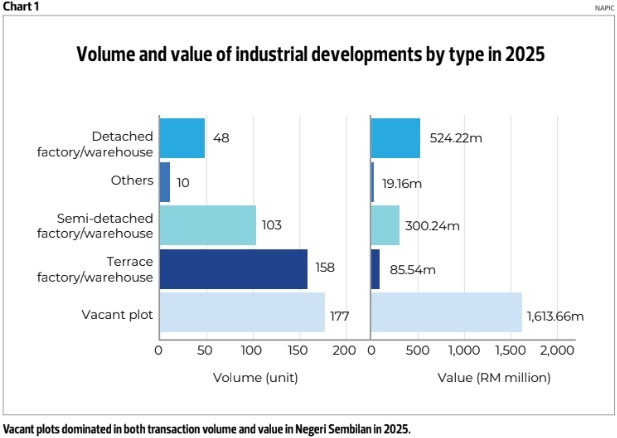
According to the National Property Information Centre (Napic), industrial activity across Negeri Sembilan is being driven by higher-value transactions, with industrial transaction activity totalling more than RM2.5 billion in 2025 (Chart 1).
Custom-built spaces dominated, with businesses acquiring vacant land for tailored facilities, while terrace factories made up the second most-active segment with a total recorded volume of 158 units and value of RM85.54 million, followed by semi-detached units with a total recorded volume of 103 units and value of RM300.24 million (Chart 1).
Custom-built facilities signal more advanced occupiers optimising layouts for production and logistics workflows, while terrace and semi-detached factories continue to serve small and medium enterprises (SMEs) and expanding manufacturers.
Across Negeri Sembilan’s industrial ecosystem, established clusters reinforce this demand pattern, including Nilai Techpark @ Enstek (Halmas), Nilai Industrial Park, Sendayan TechValley, Senawang Industrial Estate, and Oakland Industrial Park, hosting a mix of multinational manufacturers, logistics operators and engineering players spanning sectors such as automotive, semiconductors, fast-moving consumer goods (FMCG), and food processing.
This pattern is also starting to spill over into the residential market as industrial growth brings in more workers, supports relocation, and increases housing demand in the area.
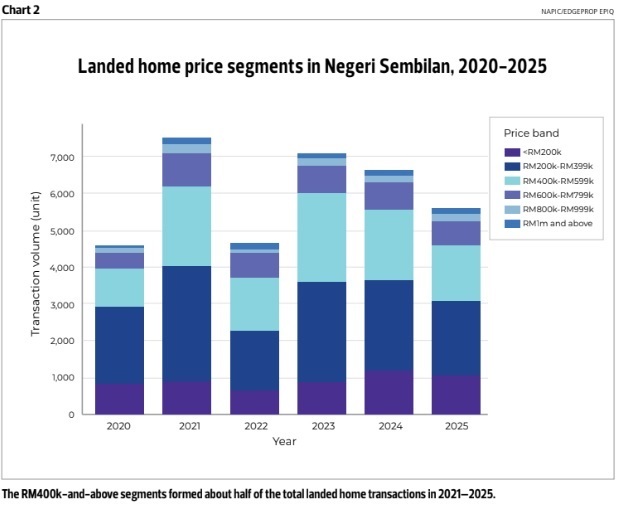
An EdgeProp analysis of landed homes in Negeri Sembilan highlighted that the RM400,000and-above segments had formed about half of the total landed home transactions over the past few years from 2021 to 2025 (Chart 2), driven by upgrading families, longer ownership cycles, and stronger value retention trends.
MVV 2.0 as the structural backbone of growth
According to Negeri Sembilan Corporation, the Malaysia Vision Valley (MVV) 2.0 framework remains a key structural driver of transformation, spanning Seremban, Nilai and Port Dickson as a long-term high-tech industrial corridor.
The corridor is positioned as a 153,000-hectare growth zone with RM294 billion in projected investments and over 600,000 jobs by 2035, anchoring long-term industrial expansion. This positions MVV as a structural pipeline linking land use, industrial expansion, investment inflows and employment creation across the corridor.
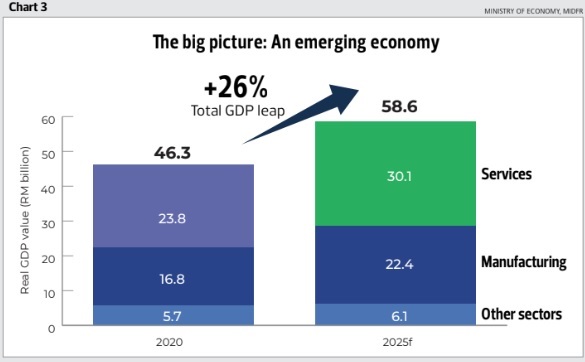
According to data from the Economy Ministry, which underlined Negeri Sembilan’s strengthening economic structure under the mid-term review of the 12th Malaysia Plan, the state recorded a +26% GDP expansion from 2020 to 2025 (Chart 3).
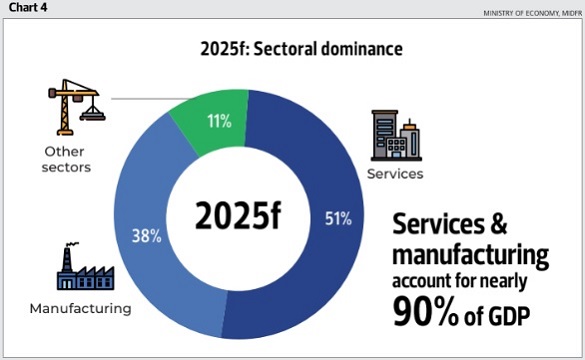
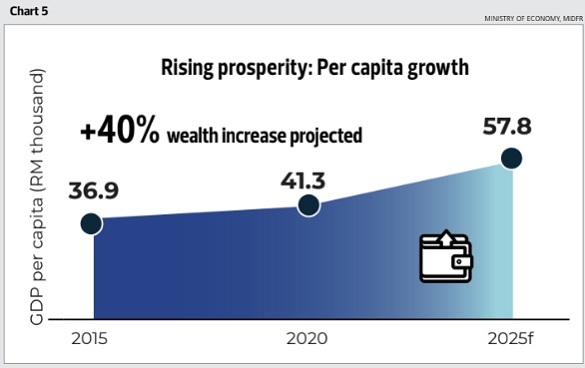
Services and manufacturing collectively account for nearly 90% of the state’s economic structure (Chart 4) in 2025, reinforcing a dual-engine growth model that aligns with the state’s ongoing industrialisation agenda and rising services-driven urban economy. GDP per capita was also projected to rise by around 40% from 2020 to 2025 (Chart 5).
Why industries are choosing Negeri Sembilan
Negeri Sembilan Malaysian Investment Development Authority (Mida) director Azizul Hakim Abu Haniffa explained the state is attracting a diversified mix of high-growth industries.
“We do have a lot of high-growth, high-value industries such as semiconductor, E&E (electrical and electronics), automotive, aerospace, pharmaceutical, as well as halal food processing products in Enstek Halal Hub.
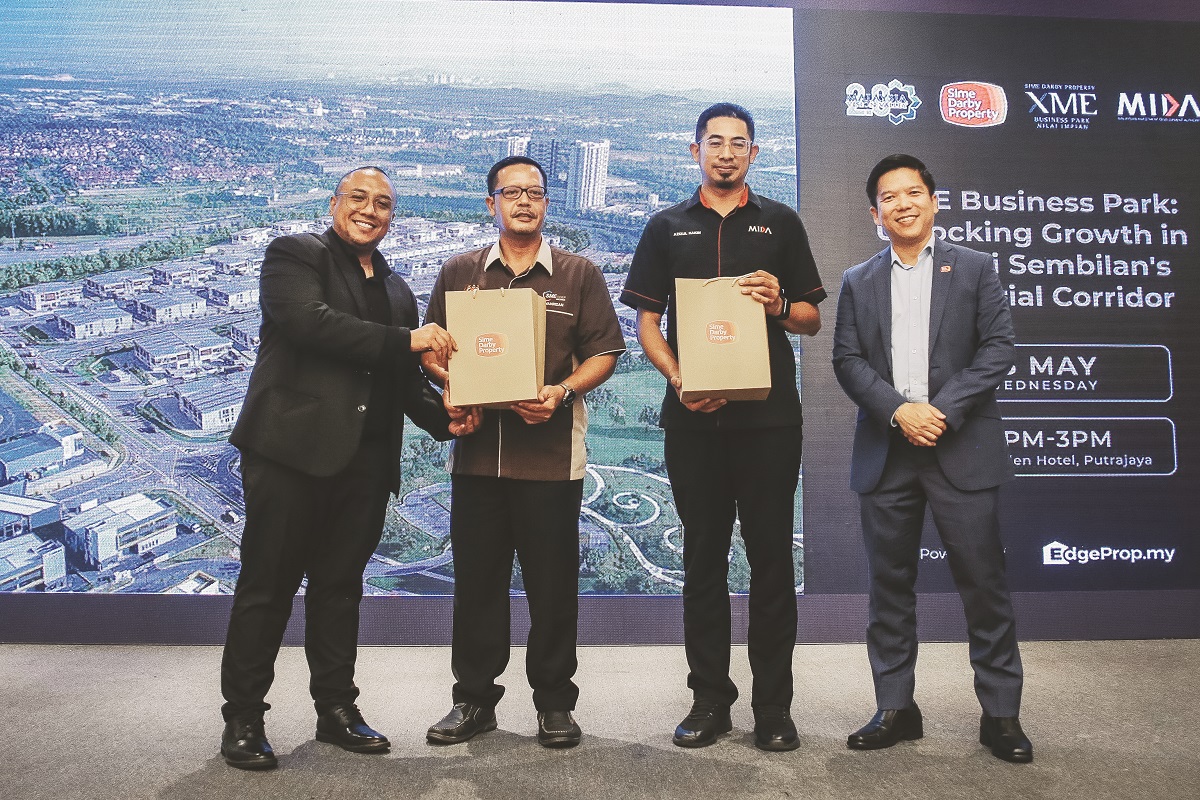
“These are among the major industries in Negeri Sembilan and we want more here,” he told EdgeProp during the “XME Business Park: Unlocking Growth in Negeri Sembilan’s Corridor” forum held at Palm Garden Hotel in Putrajaya recently. The event was jointly organised by EdgeProp and Sime Darby Property Bhd.
Azizul stated that the state’s central location and logistics cost remain key drivers for investment decisions.
“One is the location — very strategic, very near to KLIA and Port Klang. So, because of the strategic location with competitive logistics, a lot of quality potential investors are coming into Negeri Sembilan. In addition, the competitive price of the land here, established infrastructure, and the efficient services provided by the state government are ultra investor-friendly, and are equally crucial,” he said, adding that there is also enough supply of local talent.
Azizul also highlighted that the state is improving approval efficiency through a fast-track approval mechanism undertaken by local authorities such as Seremban City Council.
Besides that, the broader strategy is anchored under the MVV 2.0 2045 blueprint, where the state’s positioning is in line with the Central Region Cluster initiative which was announced last year by Prime Minister Datuk Seri Anwar Ibrahim.
SMEs scaling within the industrial ecosystem
SME Corp Malaysia (Negeri Sembilan) deputy director Syahrizan Fikri Mohd Hashim said SMEs are scaling through structured government support under the 13th Malaysia Plan (13MP).
“Companies can grow through capital expenditure, automation, IR (Industrial Revolution) 4.0 adoption, ESG integration and digitalisation,” he told EdgeProp in the same event.

SMEs are increasingly integrated into supply chains, particularly in manufacturing and engineering. He cited examples of expansion-driven relocations from Rantau to Pedas, reflecting capacity scaling within industrial zones.
SME activity remains concentrated in F&B, manufacturing and engineering, supported by proximity to key hubs such as the Halal Hub, KLIA-linked logistics routes, and Sendayan Tech Valley.
Logistics node between central and southern regions
Sime Darby Property head of business unit 4 and head of department’s office general manager Jack Pan said the corridor is increasingly functioning as a logistics midpoint between Klang Valley and Johor.
Industrial demand in the area is concentrated in automotive, logistics and F&B sectors, with early phases of XME Business Park in Nilai Impian developments seeing strong uptake from food processing operators and logistics players, he told EdgeProp.
Smaller link factories tend to attract a mix of investors and occupiers, while larger semi-detached factories are primarily end-user driven.
Along with that, Pan said that industrial growth is directly influencing population inflows into Seremban, particularly from the Klang Valley.
MVV remains a key catalyst for long-term transformation, with early signs of data centre activity further strengthening momentum.
Market validation: demand already materialising
Sime Darby Property’s XME Business Park 2 follows the success of earlier phases.
“We started XME Business Park in 2019 and have launched over 186 units, and we have already sold everything,” said Sime Darby Property Nilai Impian Township person-in-charge Adzim Azizi.
The XME Business Park 2 spans 15 acres with 59 industrial units, comprising link and semi-detached factories, scheduled for completion in 2029.
It is designed with logistics-oriented features, including back-lane access, 40ft container truck loading capability and floor loading capacity for heavy machineries, alongside ESG elements such as solar installation readiness, EV charging infrastructure and rainwater harvesting systems.
He added that Nilai Impian is the gateway to East Nilai, with its positioning strengthened by connectivity advantages including the North–South Expressway (NSE) and upcoming infrastructure upgrades, as well as Sime Darby Property’s industrial real estate pipeline backed by more than 2,600 hectares of future landbank.
Residential expansion following industrial growth
Beyond industrial expansion, residential developments within the wider Seremban corridor are also positioned to capture population inflows driven by industrialisation and connectivity-led urbanisation.
As employment nodes expand and more businesses establish operations within the corridor, townships surrounding key industrial zones are expected to benefit from rising housing demand and longer-term community growth.
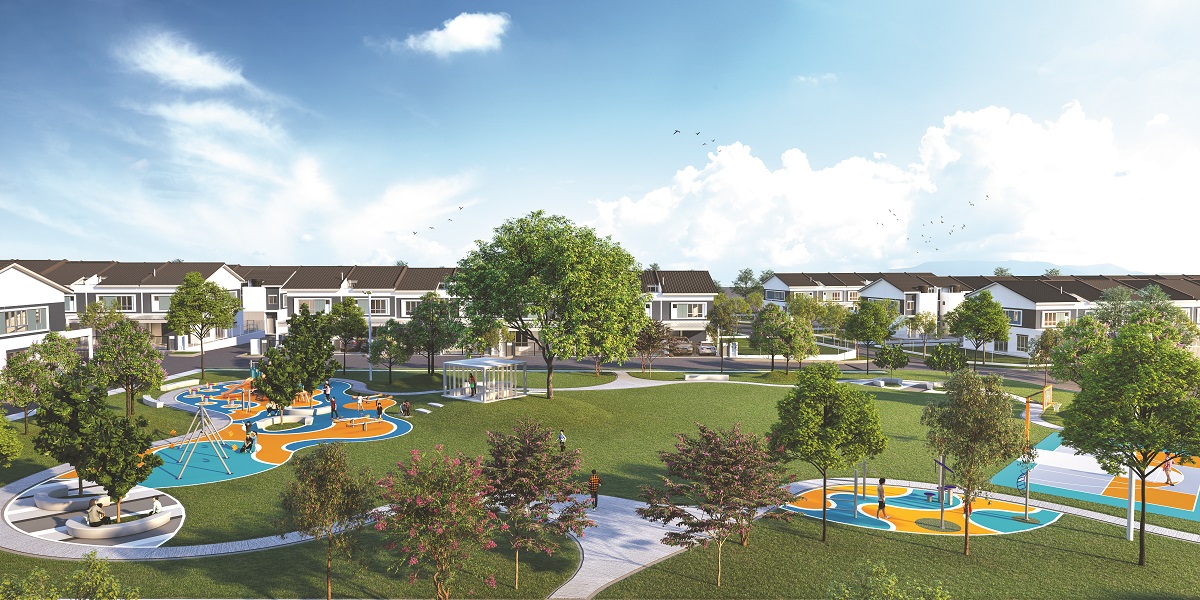
Sime Darby Property’s Bandar Ainsdale, Seremban is among the developments positioned within this broader growth ecosystem.
Expanding in tandem with rapid growth in the vicinity, Arina 2 is the most recent development within Bandar Ainsdale, introducing 123 single-storey linked homes under Phase BA-R1A.
Situated within the 562-acre freehold township, the development offers built-ups between 1,010 sq ft and 1,137 sq ft, with prices starting from RM431,888.
Bandar Ainsdale is directly connected via the North–South Expressway (NSE) through its toll interchange, providing access to KL, Putrajaya, KLIA, and Melaka, while remaining approximately 7km from Seremban town centre.
The township is supported by existing amenities including schools, healthcare facilities, retail centres, and transport links, alongside green spaces such as the 11-acre Ainsdale Lake Park.
Arina 2 features three-bedroom, two-bathroom layouts with open-plan living, backyard garden space, and access to a 2.4-acre in-phase green area.
The development also includes perimeter fencing and a dedicated guardhouse.
Meanwhile, Sime Darby Property is preparing to launch Avira Hills 2, a double-storey linked home development comprising 102 units with built-ups starting from 1,754 sq ft, featuring multigenerational design elements and enhanced security infrastructure.
..........
Read about emerging trends, data-backed insights, growing subsectors, and expert commentaries in EdgeProp print. Subscribe now for your free copy!
.jpg?sCKFImEqUesBHXT_lIvjplKjBWFpqpUp)