Share
Share



KUALA LUMPUR (July 30): Homeownership among Malaysia's middle-income (M40) households fell below that of the lower-income B40 group in 2024 despite the country's record-high overall homeownership rate, prompting calls for more data-driven housing policies and stronger coordination across government agencies.
The findings were released in Housing for All: Co-creating a Needs Driven Framework, a joint study by Rehda Institute and Universiti Malaya launched at the Rehda Institute Regional Housing Conference 2026. The study found that M40 homeownership fell to 75.9% in 2024, below the 76.3% recorded by B40 households, even as Malaysia's overall citizen homeownership rate reached a record 78%. Speakers at the conference called for housing policies to be guided more closely by demographic trends, affordability and actual demand rather than supply-driven targets.
Unsold stock and shifting demographics
Rehda Institute chairman Datuk Jeffrey Ng Tiong Lip said the findings pointed to structural weaknesses in Malaysia's housing market rather than a simple shortage of homes.
“The challenge today is no longer just about building more houses, but ensuring the right homes are built in the right locations, at prices households can genuinely afford,” he said in his opening address.
Ng said the persistence of unsold completed homes illustrated the mismatch between supply and demand. More than 32,000 completed residential units worth RM16.37 billion, together with 19,263 serviced apartments valued at RM16.52 billion, remained unsold in the first quarter of 2026.
He added that demographic changes were also reshaping housing demand. Malaysia's average household size declined to 3.7 persons in 2024, while people aged 65 and above now accounted for 8% of the population, suggesting future demand would increasingly come from smaller households, ageing residents and young working adults rather than traditional family units.
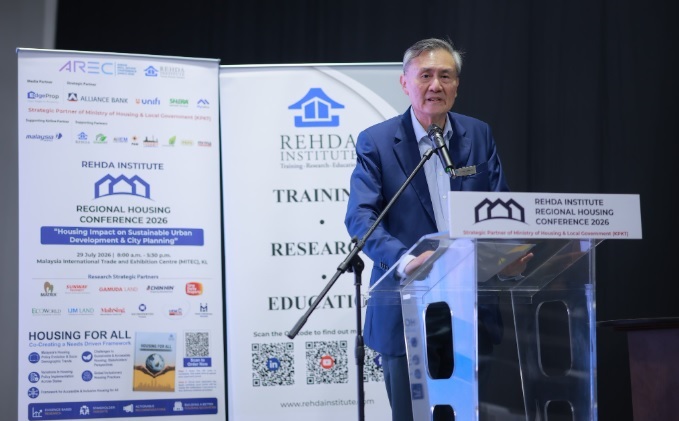
Housing affordability should be assessed beyond house prices, Ng said, noting that housing and utilities accounted for 23.5% of household expenditure in 2024, while transport made up another 11%, underscoring the importance of location and connectivity in determining the true cost of homeownership.
Report calls for integrated data and quota reviews
The Housing for All: Co-creating a Needs Driven Framework report recommends creating an integrated national housing database, regularly reviewing affordable housing quotas and aligning future housing supply more closely with demographic and market trends to improve policy outcomes.
Beyond policy design, conference speakers argued that better use of data would also be critical to future urban planning. Professor Jennifer Schooling, professor of digital innovation and smart places at Anglia Ruskin University, said better housing outcomes depended less on adopting new technologies than on improving how governments collect, manage and share data.
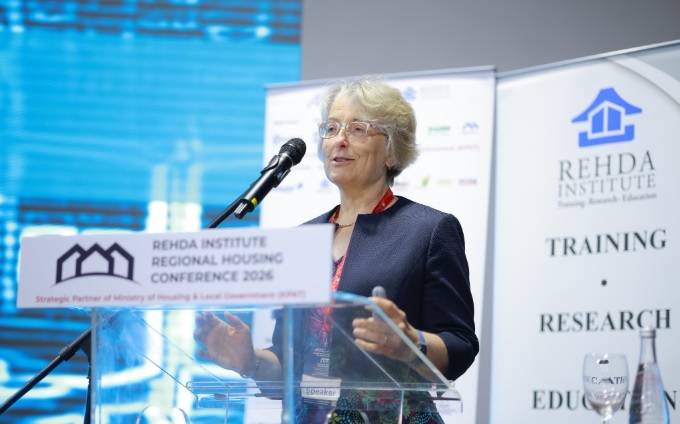
She said digital twins — digital representations of physical assets and infrastructure — could support better planning only when underpinned by trusted governance, reliable datasets and collaboration across agencies. Drawing on the United Kingdom's National Underground Asset Register as an example, she said common data standards, clear governance frameworks and trust between participating organisations were essential before digital tools could deliver meaningful public value.
Rather than embarking on large-scale digital transformation programmes immediately, Schooling suggested Malaysia begin with a practical pilot project that brought together datasets from multiple agencies to address a clearly defined planning challenge.
International perspective on TOD and land value capture
Offering an international perspective on housing and land-use planning, Professor Li Wan of the University of Cambridge's Department of Land Economy said planning reforms should likewise focus on creating frameworks that enable markets to function efficiently while addressing market failures.
In an interview with EdgeProp Malaysia, Li cautioned against viewing transit-oriented development (TOD) as a standalone solution to housing affordability.
“Housing close to public transport improves accessibility, but affordability ultimately depends on both housing supply and access to employment,” he said.
He said concentrating housing around rail stations without increasing overall supply or expanding employment opportunities elsewhere could simply shift demand and inflate prices around transport hubs. Instead, he advocated a broader planning approach that combined transport investment with sufficient housing supply, employment growth and appropriate land-use policies.
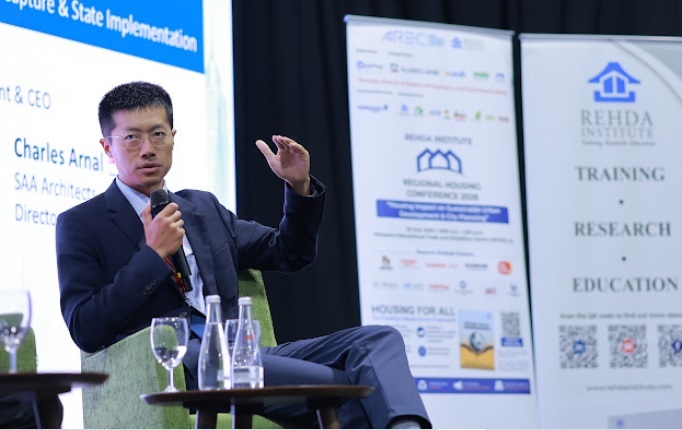
Li also highlighted land value capture mechanisms, whereby part of the increase in land values generated by public infrastructure investment was reinvested into transport networks and surrounding communities. If implemented effectively, such approaches could help governments finance infrastructure while supporting more sustainable urban development.
Next steps for collaboration and planning
The conference concluded with a panel discussion on strengthening collaboration between government, industry and academia to improve housing policy and planning. Speakers agreed that better integration of housing, transport and demographic data would enable more responsive policymaking and help reduce mismatches between housing supply and demand, while stronger data governance would underpin future digital planning tools, including digital twins and predictive modelling.
The conference also introduced the proposed Malaysia–Cambridge Urban Platform (MCUP), which organisers said would support research, knowledge exchange and capacity building between Malaysian institutions and the University of Cambridge.
“The role of planning is to enable markets to work better, not to replace markets,” Li said.
The programme featured three thematic sessions covering smart and urban cities, transit-oriented development (TOD), and housing finance.
Presentations included Anglia Ruskin University professor of digital innovation and smart places Professor Jennifer Schooling on digital twins for planning, infrastructure and liveability; National Property Information Centre (Napic) deputy director (Property Inventory Division) S. Zulifahalila Abbas @ Ahmad on the use of national property data and artificial intelligence to address housing overhang; PNB Merdeka Ventures Sdn Bhd CEO Datuk Dr Izwan Hasli Mohd Ibrahim on collaborative approaches to developing liveable neighbourhoods; PLANMalaysia director general Datuk Dr Alias Rameli on aligning land policy with transit-linked development and affordable housing; University of Cambridge, department of land economy professor of planning Professor Li Wan on comparative TOD and land policy frameworks; SAA Architects director Charles Arnal on global TOD implementation models; PR1MA Corp Malaysia group CEO Brian Iskandar on PR1MA's demand-driven mixed-use TOD model; Railway Assets Corp (RAC) chief operating officer, property Lena Ng Hwei Ling on unlocking strategic railway land for TOD-led growth; Rehda Institute director of research and education Malathi Thevendran, who presented the Housing for All report; Global Asia Consulting managing partner Dr Wan Zokhri Idris on blended finance for affordable housing; Public Policy Institute, Our Hong Kong Foundation (OHKF) executive director Ryan Ip on public and private financing for housing affordability; Cagamas Bhd president and CEO Kameel Abdul Halim on secondary mortgage markets and housing finance liquidity; and PropertyDoctors (Singapore) Pte Ltd director Dr Lee Nai Jia on data-driven finance and blended capital for housing development.
Unlock Malaysia’s shifting industrial map. Track where new housing is emerging, as talents converge around Industry 4.0 parks across Peninsular Malaysia. Download the Industrial Special Report now.
..........