Share
Share


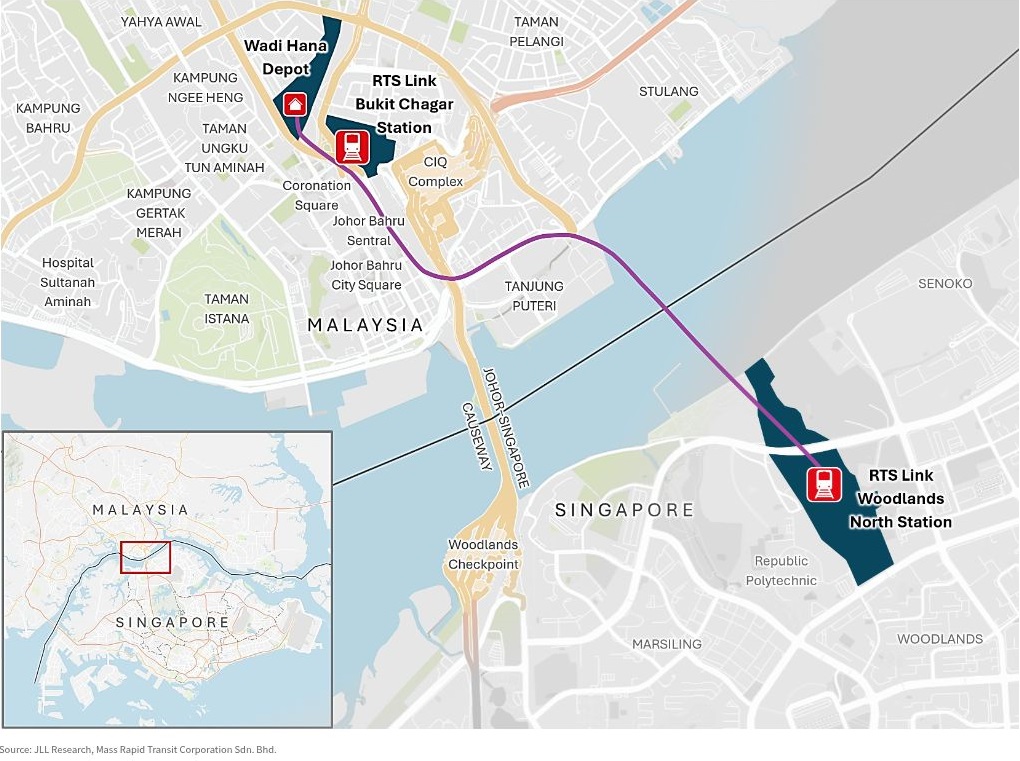
PETALING JAYA (July 31): Paragon Globe Bhd (PGB) is positioning itself to capitalise on Johor's next phase of growth, underpinned by the Johor-Singapore Special Economic Zone (JS-SEZ), the Johor Bahru-Singapore Rapid Transit System (RTS) Link, expanding industrial activity and rising demand for digital infrastructure and data centres, as it broadens its business beyond property development into a stronger recurring-income platform.
In a Bursa Malaysia filing on Thursday (July 30), the property developer said — in its FY2026 annual report — that Johor's long-term prospects remain supported by improving cross-border connectivity, manufacturing investments and the state's growing role as a regional hub for industrial and digital infrastructure, leveraging its proximity to Singapore and established industrial corridors such as Iskandar Puteri and Kulai.
For the financial year ended March 31, 2026 (FY2026), PGB said it had recorded revenue of RM154.85 million, profit before tax of RM93.83 million and profit attributable to owners of the parent of RM73.35 million, while maintaining a gross profit margin of 49.63%. The board described FY2026 as "a year of transition, capital deployment and pipeline strengthening" following the exceptionally strong FY2025, which benefited from significant land monetisation.
Paragon Globe FY2026 at a glance
1) Revenue: RM154.85 million (FY2025: RM306.26 million)
2) Profit before tax: RM93.83 million (FY2025: RM140.15 million)
3) Profit for the year: RM73.70 million (FY2025: RM105.64 million)
4) Profit attributable to owners: RM73.35 million (FY2025: RM105.62 million)
5) Gross profit margin: 49.63% (FY2025: 50.66%)
6) Total assets: about RM1.14 billion (FY2025: RM780.64 million)
7) Investment properties: RM370.51 million
8) Inventories (including development land): about RM664.16 million
9) Borrowings: RM506.03 million
10) Net assets per share: RM0.64
Total assets surpassed the RM1 billion mark during the year, rising to approximately RM1.14 billion as at March 31, 2026, driven mainly by investment properties and inventories. Shareholders' equity attributable to owners increased to RM477.06 million, while borrowings rose to RM506.03 million as the group funded development activities, investment assets and landbank commitments.
Property development remained PGB's principal business and main revenue contributor, supported by its commercial and industrial projects in Johor, while its in-house construction arm continued to undertake selected developments. The group said its pipeline of commercial, industrial and future serviced apartment projects will continue to be rolled out in a measured, demand-driven manner, with emphasis on location, connectivity, pricing discipline and market absorption.
Alongside its development business, PGB continued expanding its recurring-income platform through investment properties including Selgate Specialist Hospital Sepang, PGB Hostel and Desa 27. The group said these assets are expected to provide more stable income streams over time, complementing earnings from property development. Investment-related income, including fair value gains on investment properties, also contributed to stronger performance from the investments segment during FY2026.
Johor-focused pipeline and assets
a) Commercial and industrial: Ongoing phases at Pekan Sentral and detached factory developments supporting near-term revenue.
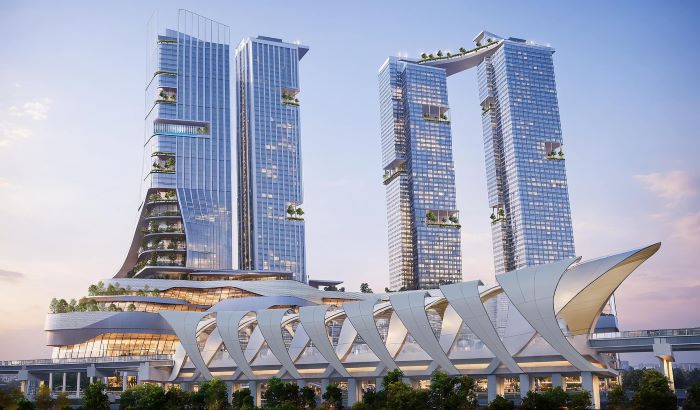
b) Serviced apartments: Calia Residences by PGB under development, with planned launches including The Iconic by PGB and Kensington Parkview by PGB.
c) Healthcare and accommodation: Selgate Specialist Hospital Sepang completed, while PGB Hostel and Desa 27 continue strengthening the group's investment property portfolio.
d) Industrial collaboration: PGB–GSP AutoPark, a proposed 47-acre automotive-focused industrial development in Iskandar Puteri with GSP Automotive Malaysia Sdn Bhd, targeting opportunities arising from the JS-SEZ.
e) Landbank optimisation: Proposed disposal of land parcels in Tanjung Kupang to an established data centre operator, reflecting the group's strategy of unlocking land value while capitalising on Johor's growing digital infrastructure ecosystem.
Landbank optimisation remains a key pillar of the group's capital strategy. During FY2026, PGB entered into a strategic collaboration with GSP Automotive Malaysia Sdn Bhd to develop an automotive-focused industrial cluster in Iskandar Puteri. Subsequent to the financial year-end, it also announced the proposed disposal of land parcels in Tanjung Kupang to an established data centre operator, underscoring its strategy of positioning selected assets within areas benefiting from digital infrastructure investment while preserving financial flexibility.
Looking ahead, the board said the focus is not on replicating FY2025's exceptional earnings, but on strengthening the group's financial position and deploying capital into developments and investment assets aligned with Johor's long-term growth corridors. It said PGB will continue to align its development and investment activities with structural demand arising from cross-border economic integration, industrial expansion and the state's evolving digital infrastructure ecosystem.
The board did not recommend a dividend for FY2026, preferring to retain capital to support the group's development pipeline, investment property portfolio and future landbank opportunities. It said future dividend payments will be considered based on the group's financial position, cash flow requirements and capital commitments.
Unlock Malaysia’s shifting industrial map. Track where new housing is emerging, as talents converge around Industry 4.0 parks across Peninsular Malaysia. Download the Industrial Special Report now.
..........