Share
Share


KUALA LUMPUR (July 31): Malaysia’s data centre sector continues to outperform international peers, with developments in Johor setting the pace across numerous regional benchmarks, according to the Knight Frank Data Centre Atlas 2026 report released in a press statement on Thursday.
The state achieved regional firsts in incoming pipeline capacity at 8,542 megawatts (MW) and co-location vacancy rates at 0.7%, with a total market value of US$39.11 billion (RM159.9 billion) second only to Japan.
Johor’s 0.7% co-location vacancy rate significantly outperformed regional peers such as Singapore at 4.9%, Bangkok at 23.3%, and Jakarta at 20.5%.
Furthermore, Johor features a live IT capacity of 1,110MW, placing it third within the Asia-Pacific region after Tokyo’s 1,473MW and Singapore’s 1,118MW.
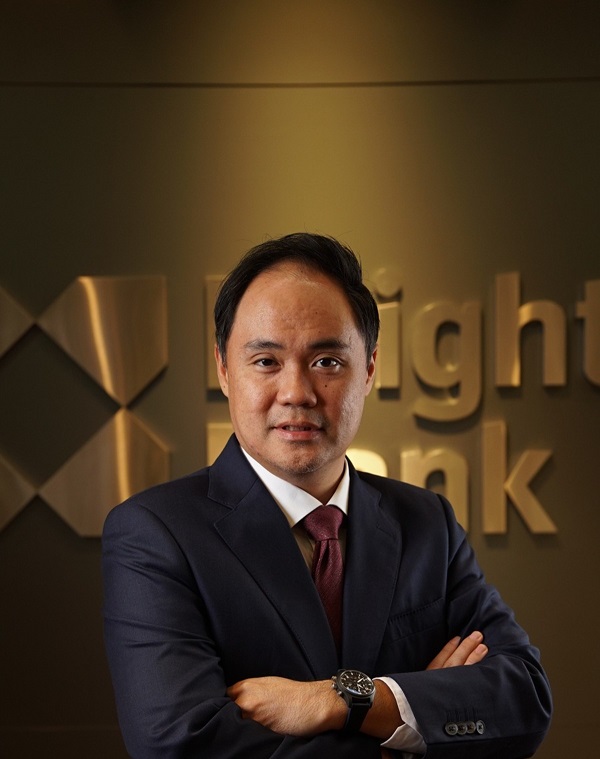
"Malaysia’s emergence as a regional data centre hub comes as ongoing tensions in the Middle East place emphasis on policy stability, predictable investment conditions and operational resilience for investors, particularly as operators review regional deployment risk," said Knight Frank Malaysia group managing director Keith Ooi.
Disclosed data centre-related transactions in Johor totalled RM1 billion involving 163.6 acres in the first half of 2026 (1H2026), alongside notable announcements including a RM12.7 billion investment commitment by an Australian hyperscale specialist for two new data centres to add 280MW in capacity.
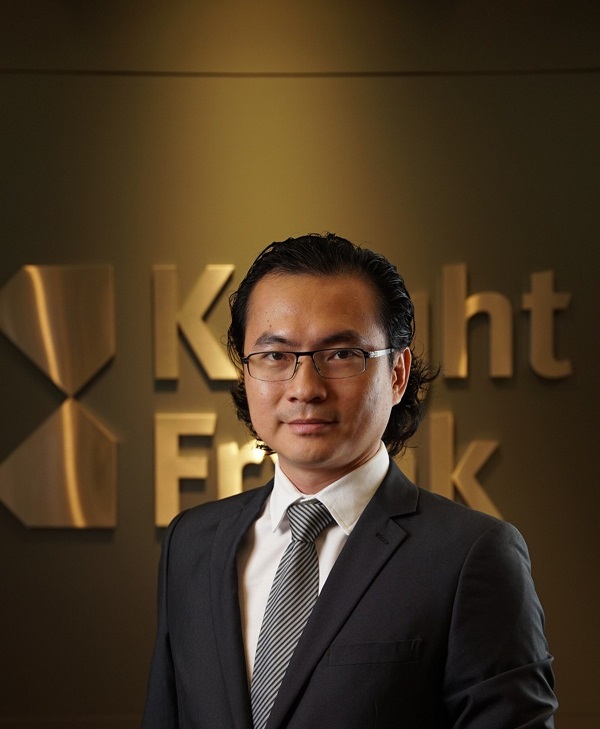
"What began as a secondary market to Singapore has matured into a fully institutionalised market, supported by significant regional and global capital inflows. Johor continues to enjoy relative cost advantages, particularly around land and power. However, rising electricity and water tariffs are narrowing the cost gap, adding up to RM120 million in power costs annually for a 50MW facility and driving operators to invest more heavily in renewable energy and alternative power solutions," said Knight Frank Malaysia valuation and advisory executive director Justin Chee.
To manage ongoing development, Johor has established a Special Technical Committee to evaluate data centre developments based on water requirements, electricity demand, utility infrastructure, and site suitability.
In the Klang Valley, data centre demand remained healthy with RM1.4 billion in disclosed transactions involving 293.1 acres in 1H2026 following subdued activity in 2H2025, supported by catalytic policies such as the RM160 million Digital Future Action Plan 2026-2030 launched in October 2025.
"New and ongoing data centre developments in Selangor and Kuala Lumpur reflect strong demand by operators and tenants, as well as the broader involvement of local developers and state-linked corporations in developing, constructing and investing into these new data centre locations as new data centre urban nodes," said Chee.
Investment interest has also spilled over to other states, with recent announcements including a proposed US$1.1 billion (RM4.1 billion) artificial intelligence (AI) data centre project and a RM9 billion data centre proposal in Melaka, alongside a RM1.0 billion AI park development in Perak.
..........
Read about emerging trends, data-backed insights, growing subsectors, and expert commentaries in EdgeProp print. Subscribe now for your free copy!