Share
Share


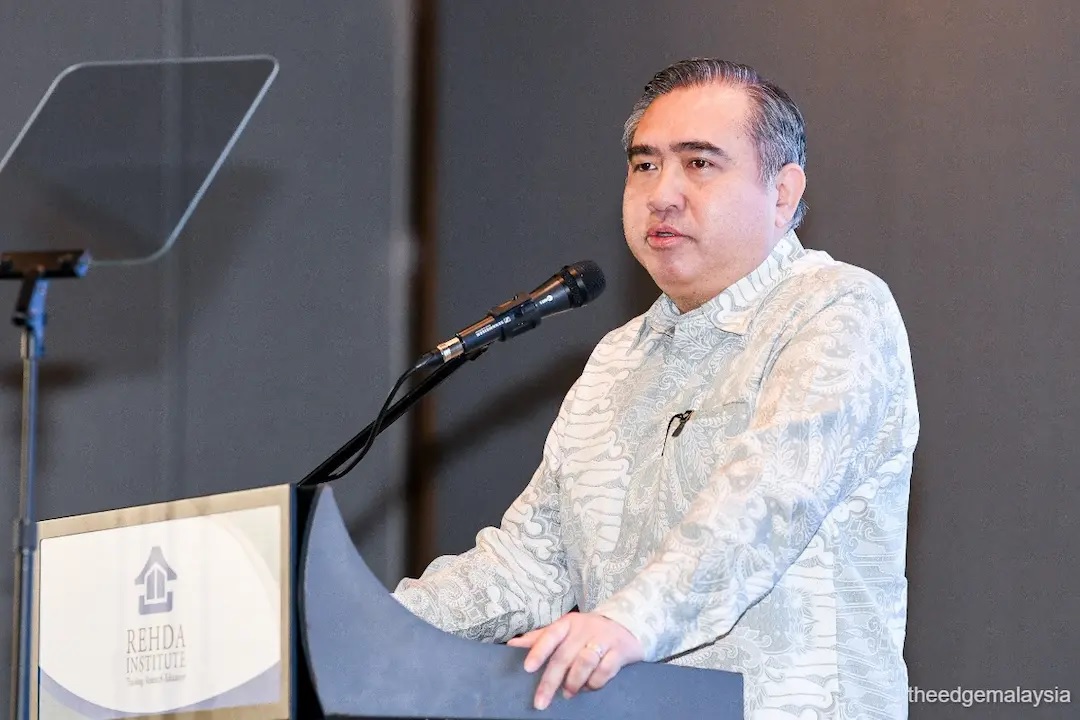
KUALA LUMPUR (Jan 15): A bill to facilitate border control arrangements for the Johor Bahru-Singapore Rapid Transit System (RTS) Link will be tabled in Parliament next month, Transport Minister Anthony Loke Siew Fook (pictured) said.
He said the legislation is necessary to enable the co-location of Customs, Immigration and Quarantine (CIQ) facilities for the RTS Link. The bill is expected to be debated in February and completed within the year, he told reporters on Thursday.
“One of the key steps for the government is to introduce legislation to enable the co-location of Customs, Immigration and Quarantine (CIQ) facilities for the RTS Link,” he said on the sidelines of the Rehda CEO Series 2026 conference on Thursday.
“Singapore immigration officers will be stationed at the Bukit Chagar station, while Malaysian immigration officers will be stationed at Woodlands. This reflects the close cooperation and mutual understanding reached between the two countries,” he added.
The RTS Link, a 4km light rail transit system jointly developed by Malaysia and Singapore, will connect Bukit Chagar in Johor with Woodlands North in Singapore.
With a capacity of up to 10,000 passengers per hour per direction, the system is expected to be fully operational by January 2027 and help ease border congestion, reduce travel time uncertainty and lower productivity losses from daily commuting, Loke said.
The RTS Link is a key infrastructure component supporting the Johor-Singapore Special Economic Zone (JS-SEZ), enabling it to function as an integrated labour and business ecosystem by improving cross-border workforce mobility.
Beyond rail connectivity, Loke said existing cross-border transport services such as buses and taxis remain critical for daily commuters and tourists, particularly as Malaysia targets 22 million visitors from Singapore this year.
Citing data from the Department of Statistics Malaysia, Loke said Singapore was Malaysia’s largest destination for services exports in 2024, contributing RM58.5 billion, largely from travel and transport services.
"This clearly demonstrates that efficient transport connectivity directly underpins tourism, services trade and broader domestic economic activity".
Unlock Malaysia’s shifting industrial map. Track where new housing is emerging as talents converge around I4.0 industrial parks across Peninsular Malaysia. Download the Industrial Special Report now.