Share
Share


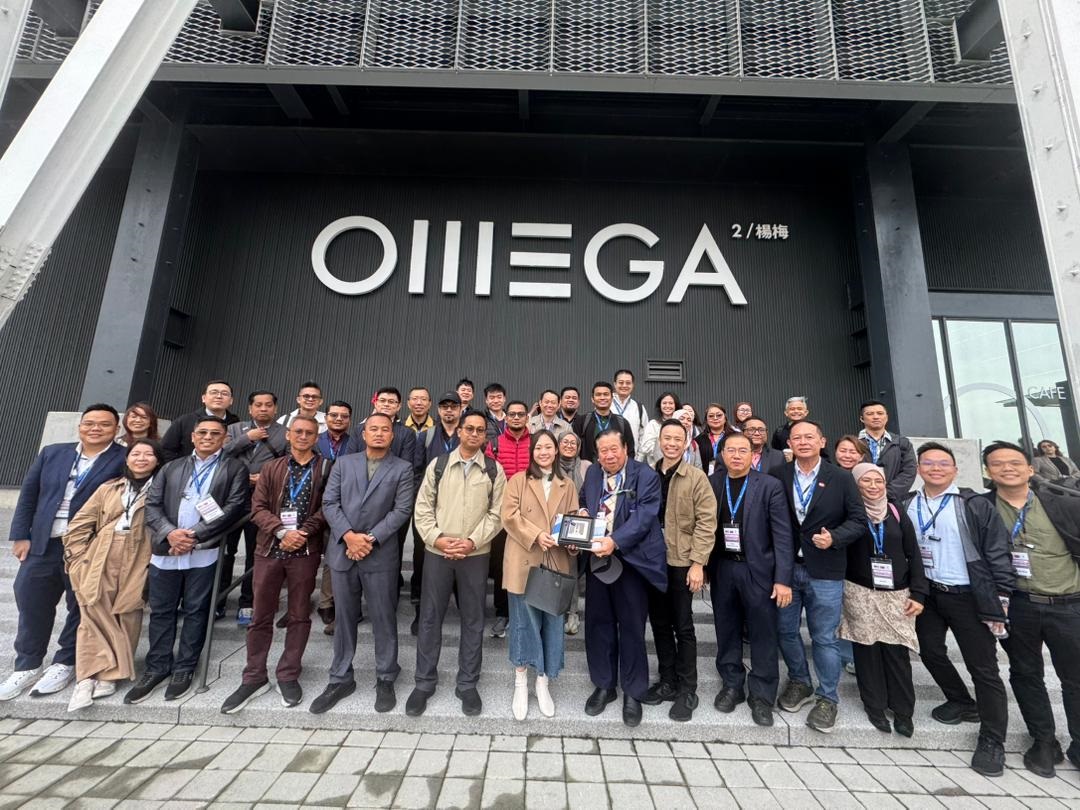
TAIPEI (Jan 22): In a dense corner of Taoyuan, Taiwan, autonomous AGV (automated guided vehicle) robots glide through a smart warehouse with surgical precision, processing high-tech components from the second a sale is recorded, to final packing— all in under 12 minutes.
An hour away, in the heart of the Zhonglu District, a Gold-certified social housing ecosystem showcases solar panels and rainwater harvesting systems woven into a landscape of lush vertical gardens. Its wide, pedestrian-friendly boulevards present a beautiful case of urban planning harmony, where high-tech infrastructure and the natural world exist as one.
These scenes formed the backdrop of a four-day study tour organised by the Real Estate and Housing Developers’ Association (Rehda) Institute late last year, which brought together a Malaysian delegation of developers and government officials from the Housing and Local Government Ministry (KPKT), and district planners to witness Taiwan’s operational model for urban resilience.
The group arrived to find a city riding a historic economic surge, fuelled by its role in the global AI (artificial intelligence) supply chain. Yet, moving through Taoyuan’s industrial corridors and Taipei’s vertical neighbourhoods simply revealed that this growth was not built on technology alone. Resilience, both in urban infrastructure and industrial strategy, serves as a primary competitive advantage in a volatile global market.
'Malaysia Madani' meets Taiwanese innovation
Taiwan’s economy is driven by exports that account for roughly 70% of its gross domestic product (GDP). This momentum sustained a 4.45% growth rate in 2025, fuelled primarily by foreign trade.
“Malaysia and Taiwan are important business partners. In 2024, total trade amounted to approximately US$34 billion (about RM137.29 billion), making Taiwan the fifth largest global trading partner for Malaysia,” said Rehda Institute trustee Datuk Ng Seing Liong in his welcoming remarks to officiate Day 1 of the business networking session.
“Our goal is to strengthen collaboration, industry exchange, and expand opportunities ... in the areas of industrial development, sustainability, advanced manufacturing, and smart logistics," said Ng.
According to REPro Knight Frank managing director Cliff So, InvesTaiwan (a government-backed investment strategy) has been instrumental in successfully attracting investors back to Taiwan from 2019 to 2025.
“These programmes focus on repatriating major Taiwanese businesses, and modernising local small and medium enterprises (SMEs), providing the steady capital flow needed to sustain a high-velocity industrial sector,” he said.
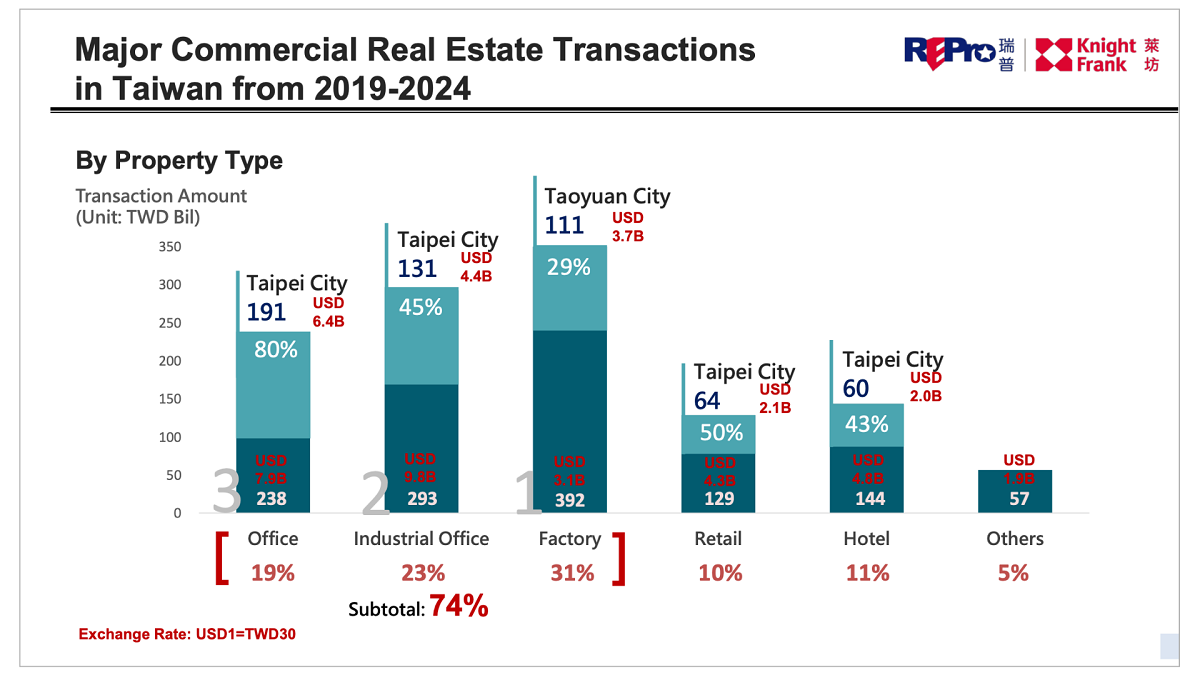
Malaysian Friendship & Trade Centre president Aznifah Isnariah Abdul Ghani noted that the strength of the bond lies in "practical, business-driven cooperation" rather than diplomatic formality.
"Too often, our industries move in parallel, but not always in conversation with one another," Aznifah observed. "When we talk about industrial development, it's also important to remember why we build in the first place: our people."
With Malaysia projected to reach "aging nation" status by 2030, the delegation looked to Taiwan as a laboratory for survival. The challenge, as Aznifah framed it, is to design cities that support health, wellbeing, and dignity, as these are values central to the "Malaysia Madani" vision of a compassionate society.
Will a ‘12-minute industrial speed’ be our next frontier?
The industrial focus centred on the Farglory Free Trade Zone (FTZ) and Ally Logistic Property’s (ALP) OMEGA 2 facility, two sites that redefine "time-to-market". In a domestic economy where exports account for 70% of the GDP, Taiwan treats logistics with the same urgency as the semiconductors it supports.
At Farglory, the delegation observed a regulatory masterclass. To entice the 122 Taiwanese manufacturers currently in Nvidia’s supply chain, the FTZ has condensed the standard 45-day application process for business establishment into just weeks. Its 24-hour "C1" customs clearance allows high-compliance companies to bypass physical inspections entirely, functioning as a seamless extension of the global factory floor.
Meanwhile ALP’s OMEGA 2 Yangmei, located further inland, operates as a high-tech distribution engine. By employing a fleet of autonomous robots, this Yangmei facility provides logistics as a subscription-based utility, allowing multiple brands to share the same automated infrastructure. For the e-commerce and medical sectors, where static inventory is a liability, ALP has achieved a benchmark of 12 minutes from order to dispatch.
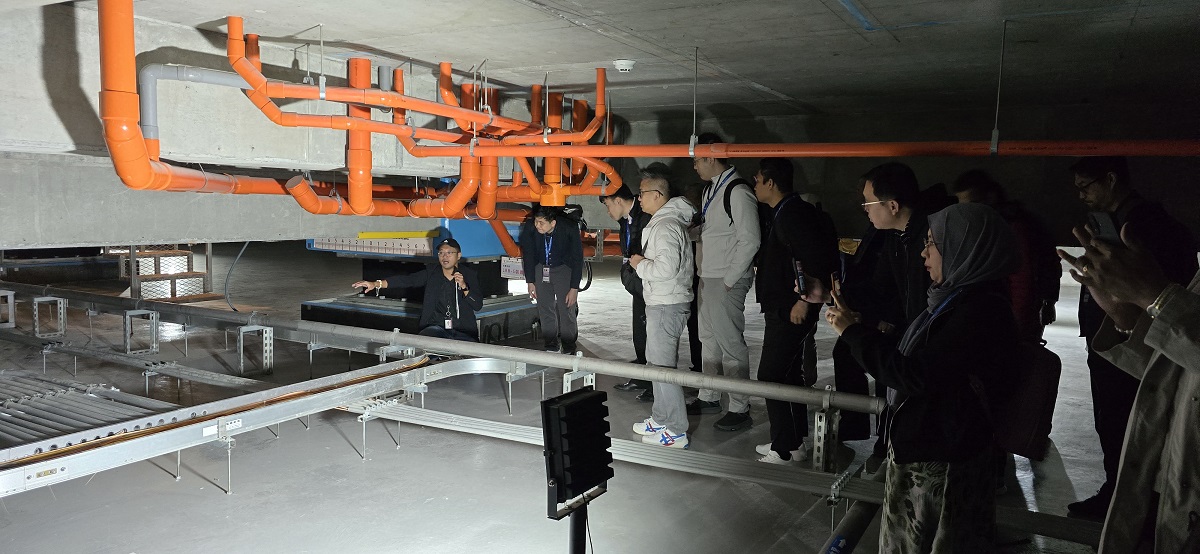
Knight Frank Malaysia senior executive director Allan Sim observed that the potential for vertical warehousing and Automated Storage and Retrieval Systems (ASRS) is particularly relevant as land becomes scarcer.
“However, the real takeaway is the need for digital integration, moving away from conventional communication with customs towards the seamless, system-to-system data exchange we witnessed in the FTZ. For Malaysia to scale, we must move beyond traditional business parks and embrace this high-tech, stakeholder-driven model,” said Sim.
“Dignity by Design” is a social housing reality
In the social housing sector, the delegation visited the Zhonglu 3 Residence, a 2025 Fiabci World Gold Winner, and an urban regeneration success. Costing US$57.5 million to construct, Zhonglu 3 offers 417 units over a 68,774-sq ft site in Taoyuan, the fastest-growing city in Taiwan with the youngest average age (42.4 years).
The project embodies the "15-minute living circle" concept, a planning masterstroke that treats a residential building as a microcosm of a city. Designers meticulously co-located essential social services within the complex, ensuring that a resident can access childcare, elderly, and medical consultation without ever crossing a major intersection.
This inclusive social housing approach is specifically designed to reduce social stigmatisation by creating a high-quality environment that neighbours envy rather than avoid.
The "people-led" approach extends into the digital and behavioural realm. Residents manage their communal lives via a smart app-based points system. For example, a 3-bedroom unit is allocated 37 points monthly; where a 30-minute session in the library or gym costs 1 point, encouraging a self-regulating, high-utility sharing economy. To maintain a standard of living that rivals private luxury condos, the planning integrates touch-free recycling and vacuum-sealed trash systems, ensuring that "affordable" never equates to "unhygienic".
Perhaps the most forward-thinking planning element is the inclusion of the Skyline International Accelerator. By dedicating ground-floor space to a startup incubator, the Taoyuan government has turned social housing into a ladder for economic mobility.
Young entrepreneurs don't just live in Zhonglu 3; they build businesses there, ranging from antibiotic-free poultry solutions to smart energy startups, creating a "live-work" synergy that anchors the youth to the community.
In Taipei, the Guangci Social Housing project proved that urban regeneration can win over even the fiercest sceptics. In a city where 70% of homes are over 30 years old, the project initially faced local protest. The city responded by turning the development into a "Positive Asset" for the entire neighbourhood, adding public clinics, a massive urban park, and an on-site MRT station. By the time of the visit, the narrative had flipped: social housing was the catalyst for the district's rebirth.
The invisible architecture of survival
While the aesthetics of these buildings impressed the Malaysian delegates, the most critical planning happens below the surface. At the National Science and Technology Center for Disaster Reduction (NCDR), the delegation saw how Taiwan’s housing is integrated into a high-tech safety net.
The NCDR utilises a 5D Smart City Platform, a digital twin of the entire urban landscape. This is not just a map; it is a predictive tool that integrates real-time data from the P-Alert Seismic Sensor Network. These sensors are installed in the basements of social housing projects and schools, providing a critical "Earthquake early warning" that can automatically trigger the shutdown of gas lines and elevators seconds before the shockwaves arrive.
At the Matsuzawa site in Yilan, planners built the Lead Rubber Bearings (LRB)—square-type base isolation units—that allow a building to withstand an 80cm shift during a 7.0 Richter earthquake. These systems, designed to last over 100 years, treat the building's foundation as a shock absorber, ensuring that even in the most violent tremors, the residents inside, and the high-value industrial assets nearby, remain undisturbed.
The trip concluded at Taipei 101, the ultimate symbol of this philosophy. From its 660-tonne tuned mass damper that keeps the tower steady in typhoons to the refrigerated storage that keeps food waste odourless, the tower proved that excellence lies in the details of the human experience.
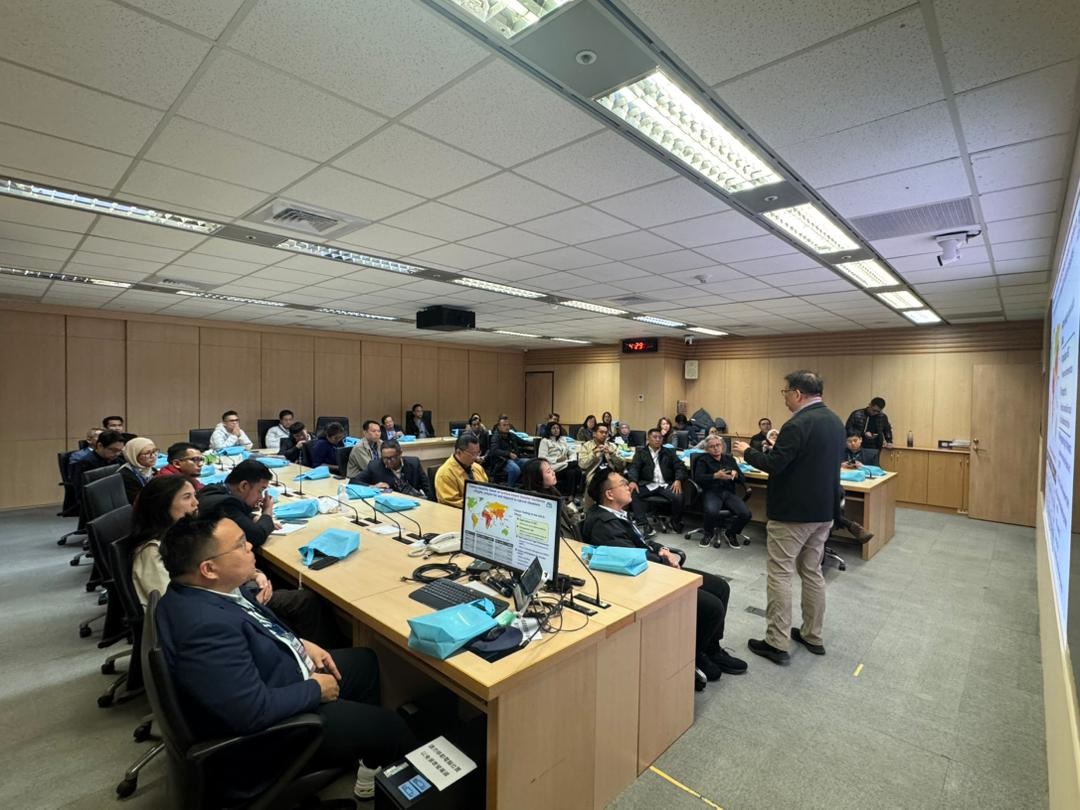
A delegate participating in the trip, Salt & Realty Sdn Bhd director Norman Soo, said the programme was enlightening as it exposed how Taiwan’s precision in technology and design enable smarter logistics solutions that are shaping the future of industrial real estate.
“We gained some valuable lessons that are adaptable to Malaysia’s evolving industrial sector,” said Soo. “Our visit to Lee Shinn Construction was equally eye-opening. Taiwan integrates seismic engineering and structural resilience into their buildings, and while Malaysia is not exposed to earthquakes, the engineering mindset is admirable as advanced industries increasingly seek buildings with sound structural quality, compliance, and long-term resilience.”
At the end of the delegation’s study trip, Ng summarised the path forward: “The future of Malaysian industrial real estate lies in cost-sharing and high-velocity automation. For Malaysia to remain competitive in the global export-import market, owners and developers must shift away from traditional structures towards automated, shared-resource environments that leverage the same legal and investment frameworks that have made Taiwan a magnet for foreign capital".
EdgeProp Malaysia was an exclusive media partner for the AREL (Asia real estate leaders) Industrial Business Matching and Sustainability Study Tour to Taipei, Taiwan, organised by think-tank organisation Rehda Institute on Nov 18–21, 2025.
Unlock Malaysia’s shifting industrial map. Track where new housing is emerging as talents converge around I4.0 industrial parks across Peninsular Malaysia. Download the Industrial Special Report now.