Share
Share


This article first appeared in the Industrial Special Report in November 2025.
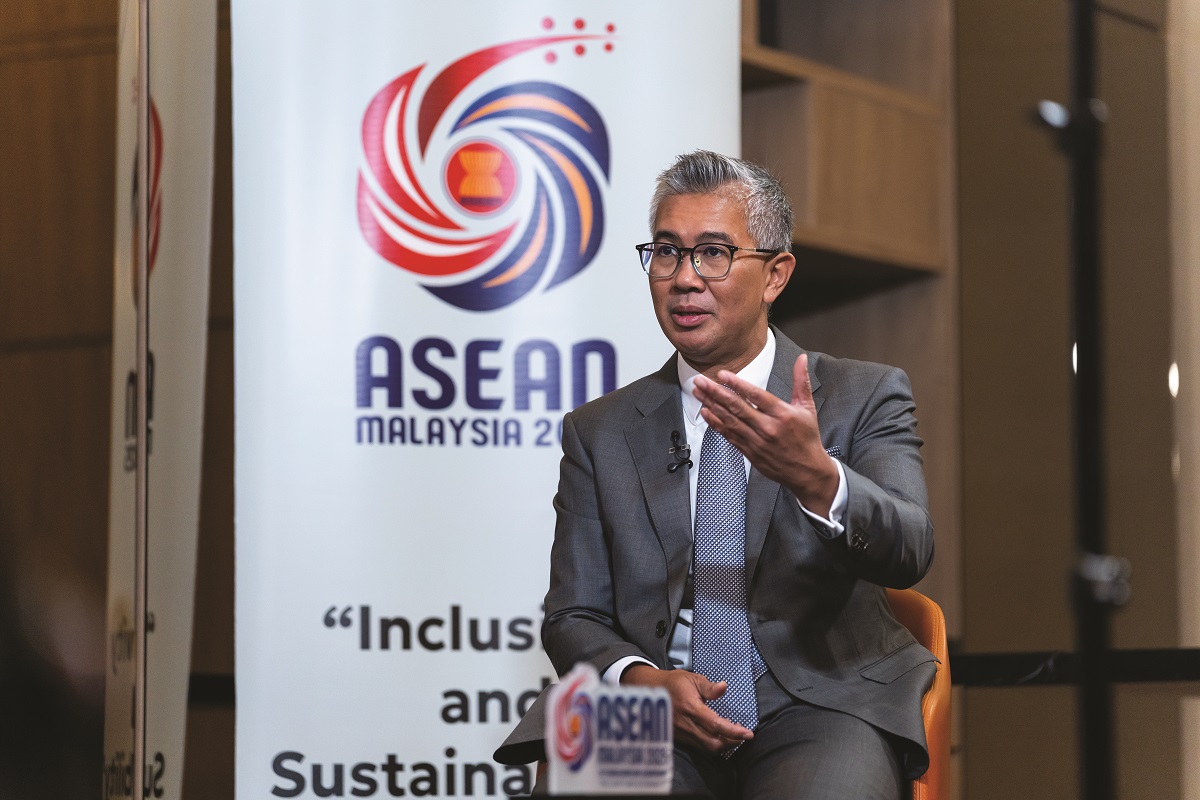
How has the electric vehicle (EV) advancement transformed Malaysia’s industrial journey? What will shape Malaysia’s next industrial cycle? Zafrul gives his take on EVs, foreign direct investments (FDIs), and the country’s competitive edge in an exclusive with EdgeProp.
What is Malaysia’s foreign direct investment (FDI) target for the EV value chain over the next five years—from assembly to batteries, and R&D?
Malaysia aims to attract high-quality strategic investments across the full EV ecosystem, including vehicle production, battery manufacturing, charging infrastructure, and recycling.
Based on current trends and announced projects, Malaysia could potentially bring in at least RM60 billion in new EV-related investments over the next five years.
However, the focus is not just on investment value but on quality—particularly projects that deliver technology transfer, build local supplier capabilities, create high-skilled jobs, and deepen Malaysia’s integration into regional and global EV supply chains.
Ongoing policy support under the National Automotive Policy (NAP) 2020, and the National Energy Transition Roadmap (NETR), supported by the Malaysian Investment Development Authority (Mida)’s facilitation, will continue positioning Malaysia as a preferred location for sustainable, innovation-driven EV investments.
What gives Malaysia an edge over regional competitors such as Thailand, or Indonesia as an EV hub?
While Thailand leads in EV production, and Indonesia has upstream advantages due to nickel reserves, Malaysia’s edge lies in its established high-tech manufacturing base, and deep integration into the global electronics supply chain.
Key advantages include our semiconductor and electronics strength. Malaysia is a major global player in outsourced semiconductor assembly and testing (OSAT), giving it an advantage in producing the “brain” of the EV.
We also have an established automotive sector, with over four decades of automotive manufacturing experience.
Malaysia has a skilled workforce, proven standards, and an existing component-supplier network. We are also strengthening our mid-stream capabilities such as battery assembly, and vehicle-control software, complementing Thailand’s assembly strength, and Indonesia’s upstream materials.
Another advantage is that Malaysia currently offers targeted tax exemptions and incentives for EV manufacturing, and charging infrastructure, supported by clear national targets such as achieving 20% EV penetration of total industry volume by 2030.
Such competitive incentives are supported by policy clarity, which is attractive for investors.
With China’s BYD slated to open in Tanjung Malim, Perak, how can local players move up the value chain, and integrate into the EV manufacturing ecosystem?
Local companies can strengthen their position in the EV value chain by becoming part of original equipment manufacturer (OEM) supply networks, supplying components such as battery packs, wiring harnesses, thermal systems, power electronics, and e-drives. This also requires upgrading technological capabilities in areas like battery management systems, inverters, and vehicle-control software to meet global standards. Many can accelerate this shift by forming joint ventures or technical partnerships with OEMs and tier-1 suppliers, enabling deeper technology transfer and skills development.
To support industry needs, companies should also invest in testing, validation, and R&D facilities, especially battery-testing capabilities, which are increasingly important as the EV sector expands. Leveraging government incentives, and operating within dedicated industrial parks such as the Automotive High-Tech Valley (AHTV) in Tanjung Malim, and Kulim HiTech Park (KHTP) in Kedah can further provide the infrastructure and ecosystem support required for EV-related growth.
At the same time, exploring opportunities in battery recycling, and critical-materials processing will help position local players within a more sustainable, circular economy.
What has the experience been so far for foreign EV and automotive players? Are there major hurdles, and how is Malaysia working to address them?
Malaysia has brought together all relevant ministries and agencies under a dedicated governance structure—the EV Steering Committee chaired by the deputy prime minister—to spearhead the development of the EV ecosystem.
Through a whole-of-government approach, clear targets and policy directions have been established to give investors the clarity they need before setting up operations here.
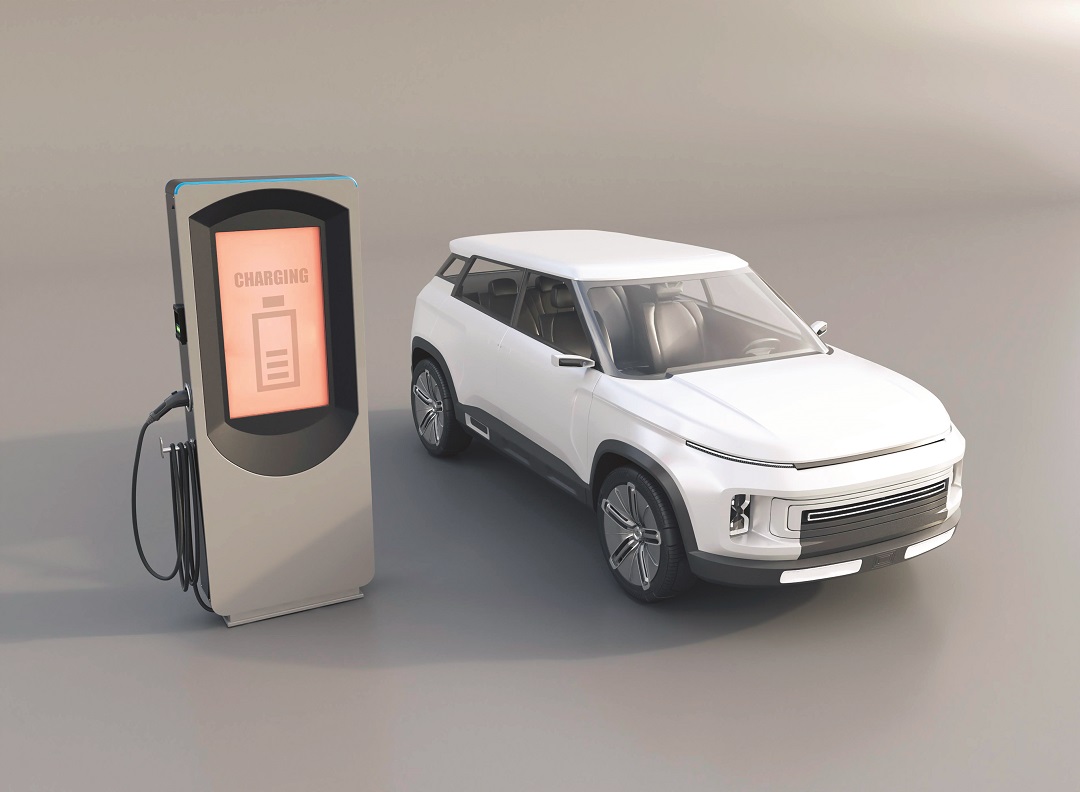
The government has also introduced multiple incentives to stimulate both demand and supply for EVs, while committing resources to strengthen charging and supporting infrastructure. Collectively, these efforts have helped build investor confidence in Malaysia’s longterm EV potential.
Which other segments can Malaysia leverage to accelerate its Industrial Revolution (IR)4.0 transformation?
Malaysia can focus on high-impact technologies such as artificial intelligence (AI)-driven manufacturing, robotics, advanced automation, industrial Internet of Things (IoT), and digital twins.
Building on its strong semiconductor foundation, Malaysia can move deeper into chip design, edge computing, and 5G-enabled industrial zones to support data-rich, automated operations.
Complementary growth areas include cybersecurity, smart-energy systems, EV-related mobility technologies, and advanced materials. Industry-driven Technical and Vocational Education and Training (TVET) programmes, and innovation hubs will also play a key role in ensuring a consistent pipeline of digital talent. Together, these facets position Malaysia to build a more advanced, resilient, and innovation-centric industrial economy.
Unlock Malaysia’s shifting industrial map. Track where new housing is emerging as talents converge around I4.0 industrial parks across Peninsular Malaysia. Download the Industrial Special Report now.