Share
Share


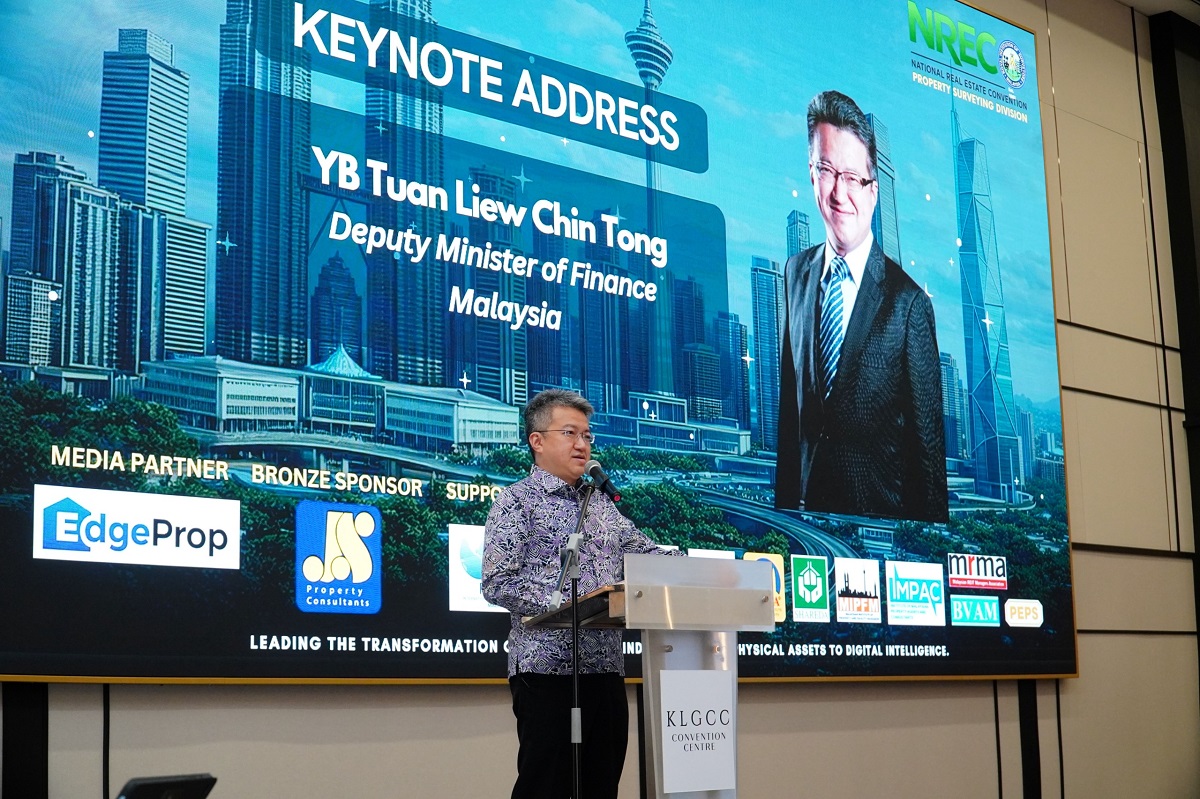
KUALA LUMPUR (April 23): The current global energy crunch has highlighted that Malaysia’s long-standing development model — characterised by suburban living and car-dependent commuting — may no longer be viable.
Rising energy costs and uncertainties in global supply could further strain this model, said Deputy Finance Minister Liew Chin Tong.
Delivering his keynote address at the 33rd National Real Estate Convention (NREC) on Tuesday, Liew said that the global economic landscape is undergoing unprecedented shifts in both pace and scale, requiring Malaysia to adapt its development priorities accordingly.
Liew highlighted several structural imbalances within Malaysia’s property landscape. He pointed out that inner-city residential developments, particularly in Kuala Lumpur, are often priced for high-income buyers and foreign investors, while many young Malaysians are pushed to suburban areas, resulting in long commutes and increased reliance on private vehicles. This, he said, contributes to congestion and inefficiencies in urban productivity.
He also noted an oversupply of certain property segments, including high-rise office buildings and retail space, with many properties in central KL remaining vacant. At the same time, housing affordability continues to deteriorate. Data cited in his speech showed that while median wages have increased over time, house prices have risen at a faster rate, making homeownership increasingly unattainable for younger Malaysians without family support.
“Malaysia’s household debt, currently estimated at 84% of GDP, is largely driven by housing loans and car loans,” Liew said, flagging it as a concern. He questioned the sustainability of encouraging homeownership through long-term borrowing, particularly as property prices continue to outpace income growth.
Given these challenges, Liew called for a shift towards more balanced and sustainable urban development strategies. He proposed revitalising inner cities by repurposing underutilised buildings, including converting vacant office spaces into residential units. He also suggested expanding rental and alternative housing models, rather than relying solely on homeownership.
He called for a fundamental reassessment of the role of the real estate sector, cautioning against treating property development as the central driver of economic growth amid a rapidly changing global order.
“I call on the top leadership of this audience to see the large purpose of nation building and work together to ensure that Malaysian people, Malaysian companies, and Malaysia’s destination benefit from our collective effort,” said the minister.
The real estate sector should not be viewed as “the centre of the universe”, but rather, as a supporting pillar in broader national development, Liew said.
He said that economies overly reliant on property risk severe long-term consequences, citing historical examples such as Japan’s asset bubble in the 1980s, which took decades to recover from, and the Asian Financial Crisis of 1997, which significantly impacted Malaysia’s economic trajectory. More recently, he noted that China continues to grapple with the fallout of its property sector excesses, affecting domestic demand and broader economic stability.
The minister further urged developers to play a more active role in supporting emerging economic sectors, particularly through technology and innovation. With Malaysia positioned to benefit from global supply chain shifts and growing competition between major economies, he described the current moment as a “once-in-a-generation” opportunity to strengthen the country’s technological capabilities.
To support this transition, he encouraged the development of housing tailored to skilled workers, such as engineers, rather than focusing predominantly on high-end units aimed at foreign buyers.
On the topic of data centres, Liew described them as “hotels for data”, emphasising that they should serve as enablers of broader digital transformation rather than ends in themselves. He cautioned against overbuilding and underutilisation, noting that excess capacity could impose financial risks on utilities and the wider ecosystem.
He stressed the importance of ensuring that investments in digital infrastructure generate meaningful spillover effects, including job creation, local supply chain development, and increased adoption of digital technologies.
Data centres emerge as key catalyst in Malaysia’s evolving industrial ecosystem
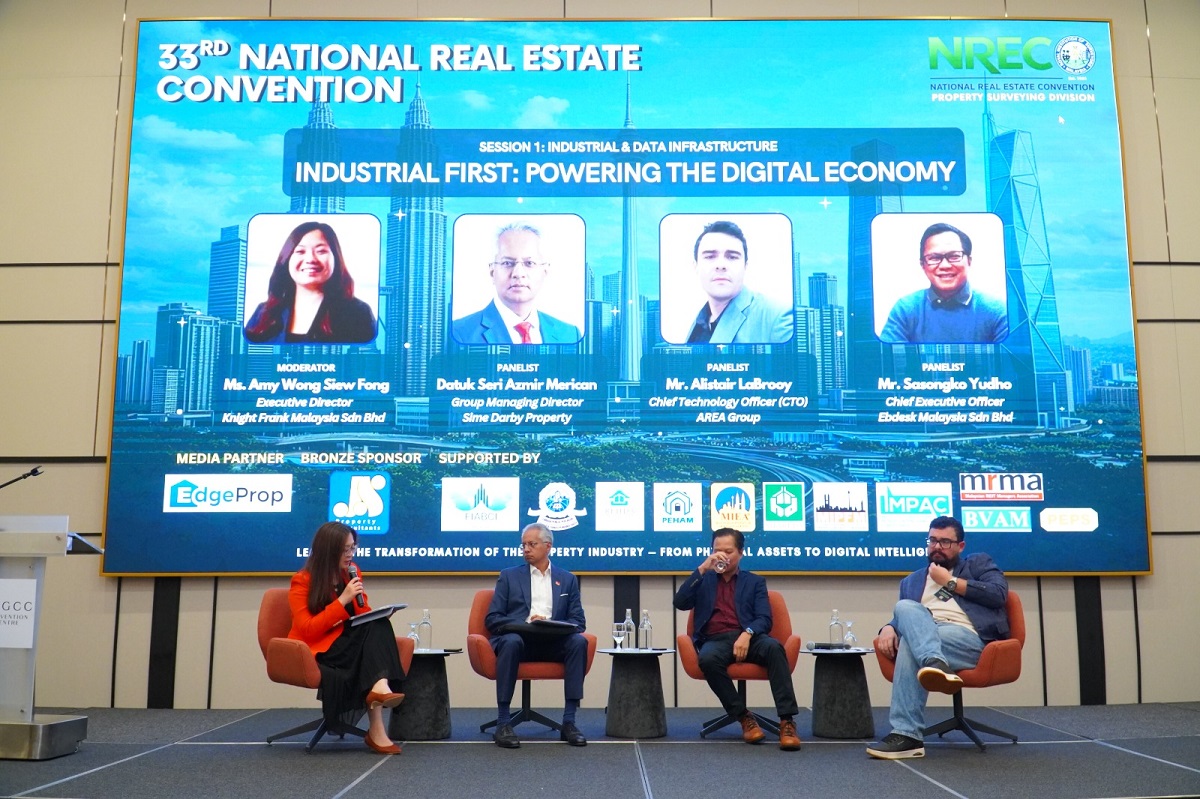
Following the keynote, a panel discussion moderated by Knight Frank executive director Amy Wong explored evolving trends in industrial property, digital infrastructure and artificial intelligence, highlighting increasing demand for high-quality, technology-enabled developments and the growing role of data centres and digital ecosystems in shaping the sector’s future.
The discussion involved Sime Darby group managing director Datuk Seri Azmir Merican, AREA Group chief technology officer Alistair LaBrooy, and Ebdesk Malaysia Sdn Bhd CEO Sasongko Yudho.
A key theme emerging from the panel discussion was the growing role of hyperscale data centres as catalytic anchors for broader industrial and digital ecosystems, rather than functioning as standalone tenants.
The speakers noted that the entry of major global technology players is not only raising infrastructure standards and connectivity requirements, but also accelerating the formation of digital clusters that attract AI, analytics, software, and related service industries.
Azmir said that data centres generate significant “data gravity”, where large-scale data creation and storage naturally draw in additional application services, engineering support, cybersecurity firms, and energy-related industries. This, in turn, creates a reinforcing cycle of economic activity and ecosystem expansion around industrial parks.
However, panellists also pointed to the need for coordinated infrastructure planning, particularly in energy and sustainability systems, to support this growth trajectory. The broader implication raised was that industrial developments are increasingly shifting from traditional property assets to interconnected, technology-driven ecosystems shaped by data and compute demand.
Juwai IQI group chief operating officer and chief information officer Nabeel Mungaye noted the transformation occurring in real estate agency operations, particularly through end-to-end digitalisation of transactions, agent workflows, and customer engagement. citing how integrating all business functions into a unified data ecosystem has enabled scale, efficiency, and automation across multiple markets, with operations spanning 34 countries, 65,000 agents, and annual transaction values in the billions.
The shift, he noted, goes beyond reporting and dashboards towards predictive analytics, operational decision-making, and AI-enabled services embedded directly into daily workflows.
The discussion also underscored how AI and data infrastructure are reshaping industry standards in areas such as marketing automation, lead management, valuation, compliance, and transaction processing.
Tools such as AI-powered marketing systems, automated customer response agents, digital onboarding, and compliance screening were cited as examples of how technology is reducing friction while improving speed and transparency.
“Do not underestimate the power of data. Don’t just have spreadsheets — have them and put them to use,” said Nabeel.
The NREC was organised by the Royal Institution of Surveyors Malaysia (RISM)’s Property Surveying Division, led by Datuk Firdaus Musa, vice president & organising chairman, with EdgeProp as the official media partner. Held at the KLGCC Convention Centre (Sime Darby Convention Centre), the event brought together corporate leaders, policymakers, industry practitioners and property professionals. Themed "From Land to Cloud: New Blueprint for the Property Industry", it explored how digitalisation, data integration and technology are transforming property assets across development, valuation, transaction, and management.
..........
EdgeProp's monthly print edition is out! Free delivery is available for selected regions. Subscribe now.