Share
Share


This article appeared in the April 9, 2026 issue of the monthly print edition. Subscribe now.
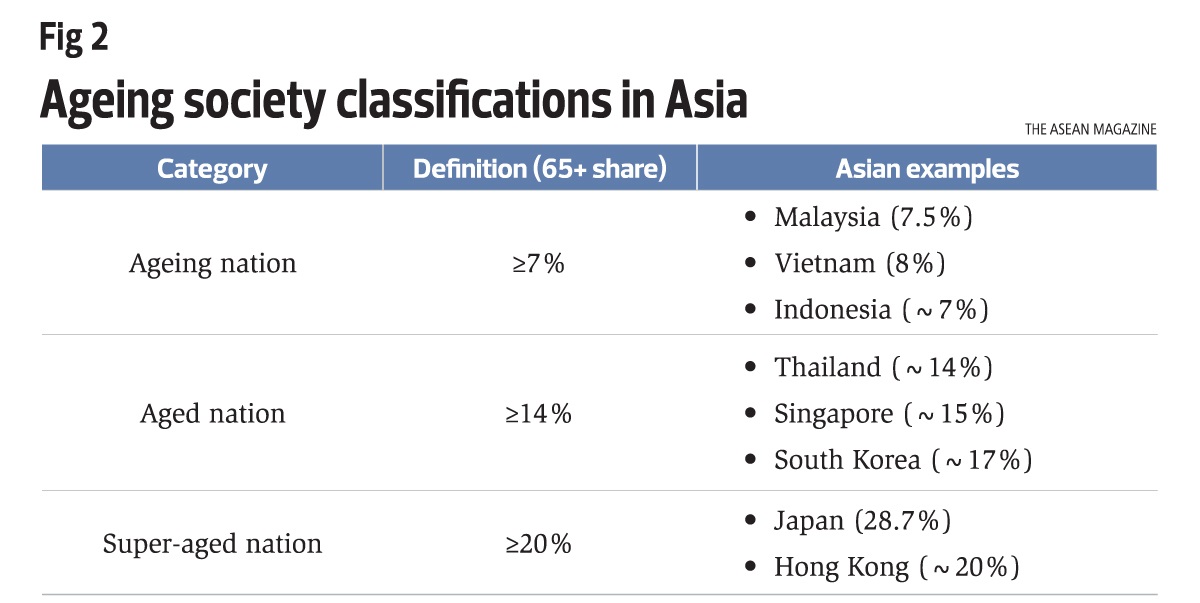
Malaysia is greying. Quietly, and somewhat unceremoniously, we crept past a demographic milestone which now defines us as an “ageing nation” — with more than 7% of our population aged 65 years and above. What’s more, the country is ageing at an accelerating rate and the Department of Statistics Malaysia (DOSM) forecasts that more than 14% of our population will be aged 65 and above by 2048, crossing the threshold into the “aged nation” category.
How have we got here? In recent years, population growth has slowed, fertility rates have declined, and life expectancy has continued to rise. These are, in many ways, part of the hallmarks of a developed nation — along with stronger healthcare, better education, and a more resilient economy. Yet the challenge of an ageing population calls for more than dignified acceptance. It requires foresight, innovation, and a willingness to rethink how society supports its citizens across every stage of life.
From healthcare and pensions to housing and family life, the ripple effects of demographic change will touch every corner of the economy and society. As populations age, the balance between workers and retirees shifts, placing unprecedented strain on systems built for a younger nation.
Ageing societies face a shrinking workforce, slower economic growth, and rising healthcare costs. Pension funds risk falling short, leaving older citizens vulnerable to poverty and isolation. At the same time, the traditional safety net of filial piety is under pressure: smaller families and heavier financial burdens make it harder for the next generation to shoulder the responsibility alone.
Importantly, the built landscape must adapt to an ageing society too. Cities and towns will need to rethink housing design, public spaces, and transport systems to ensure a better quality of accessibility and safety. Wider walkways, barrier-free buildings, and age-friendly transit are not luxuries, but necessities in a society where mobility challenges become more common. At the same time, integrating healthcare facilities, community hubs, and green spaces into residential areas can help older citizens remain active, connected, independent, and relevant to society for longer.
The underlying question we urgently need to ask ourselves now is: are we ready for this new reality?
Where we sit on a tipping scale
In truth, we are not alone. Several Asean countries are facing a similar situation, with Thailand and Singapore already classified as aged nations (≥14% elderly). Vietnam, Brunei and Indonesia are rapidly approaching ageing thresholds. According to The ASEAN magazine (Issue 44, June 2025), every Asean member state will likely be classified as ageing, aged or super-aged (≥20% elderly) by 2050.
On the home front, Malaysia crossed the 7% threshold at the start of the decade, and by 2025, 7.5% of its 34.2 million people were aged 65 and above. According to DOSM, Malaysia’s ageing demographic will pick up pace over the next 10 years, as the average life expectancy has risen to 76 years (72.7 years in 2000), while the fertility rate has dropped to 1.8 children per woman (from 2.7 per woman in 2000). Overall population growth moderated to 0.5% in 2025, having gradually decreased over the last decade from 1.55% in 2015.
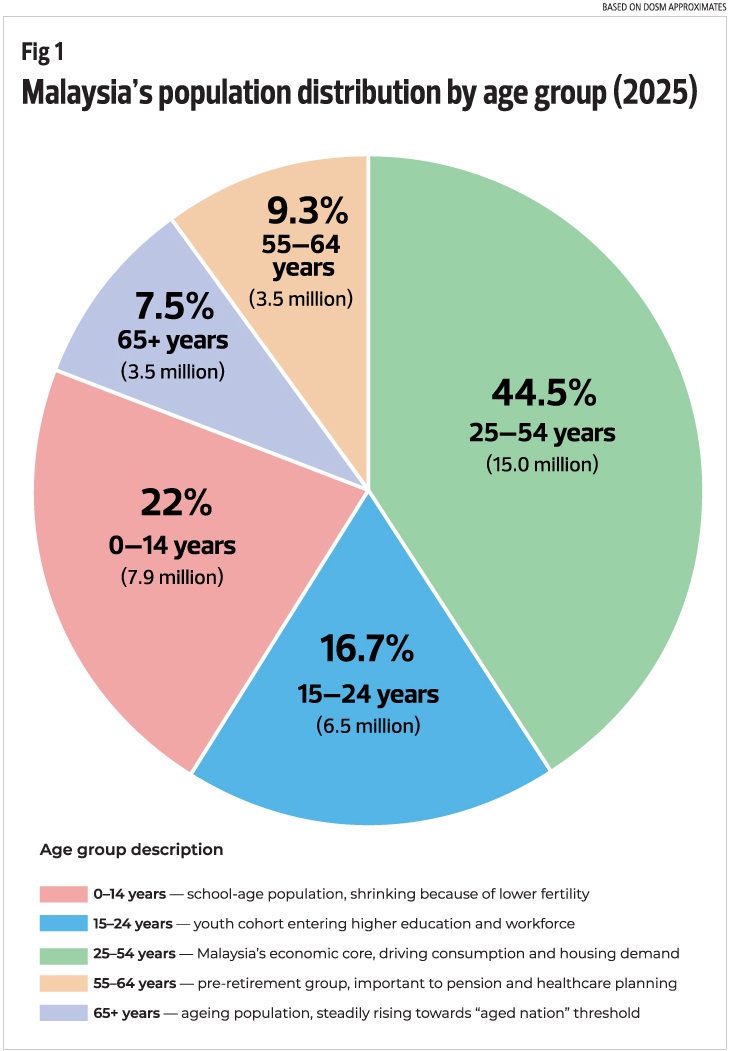
At present, 12 of Malaysia’s 13 states and three federal territories are classified as ageing.
Perak has the highest proportion of elderly residents at 10.3%, while Kuala Lumpur, Melaka, Pahang, and Johor each record between 7.1% and 7.3%. Most other states have either just crossed, or are rapidly approaching the 7% threshold that defines an ageing population.
Drawing lessons from our neighbour, Singapore offers valuable insights — its low-fertility demographic decline closely mirrors the trajectory of densely populated urban hubs like the Klang Valley.
Singapore has reshaped its built environment to become one of the world’s most elder-friendly cities, focusing on barrier-free design, accessible housing, and community-centric urban planning. By 2030, one in four Singaporeans will be over 65, and the city has already embedded ageing considerations into transport, housing, and public spaces.
Malaysia has made some progress in preparing for an ageing society, with private nursing homes, specialist clinics, and premium retirement villages gradually emerging across the landscape. Yet these efforts remain far from sufficient, leaving a sizeable gap between current provisions and the scale of demand expected from a rapidly expanding elderly population.
If Malaysia were to emulate Singapore’s more holistic approach to elder-friendly urban design, the most impactful starting point would be its highest-populated urban cluster, the Klang Valley, where demographic pressures are already most acute.
A fundamental distinction, however, is that Singapore is a city-state largely shaped by government initiatives, while Malaysia’s landscape is still very much shaped by the effort of private developers. As such, it will take forward-thinking on their part to initiate significant change.
A challenge that comes with opportunity
Developers can play a surprisingly powerful role in helping a nation cope with an ageing population. Beyond government policy, housing and community designs directly shape how older adults live, work and age with dignity. Developers are therefore uniquely positioned to influence and enrich the lifestyle quality of seniors by embedding accessibility, inclusivity and innovation into their projects.
Housing remains the most immediate frontier. Age-friendly homes designed with universal accessibility (step-free entrances, wider doorways, grab bars, and smart lighting) enable a longer period of independent living for elderly citizens. The integration of smart home technologies can further simplify the living experience and improve safety, from fall-detection sensors to remote monitoring systems that enhance a sense of independence.
Looking ahead, collaborations with tech firms to pilot robotics, AI, and smart devices in residential projects can also serve to transform eldercare into a more proactive, responsive system.
Multigenerational housing models, where seniors live alongside younger families, foster social cohesion and reduce the risk of isolation. Developers can partner with hospitals and clinics to embed medical facilities within residential projects, ensuring healthcare is within easy reach. Digital infrastructure, including high-speed internet and digital literacy programmes, allows seniors to access telehealth and online services.
Alternatively, well-conceptualised retirement villages can integrate healthcare, recreation, and social spaces to offer a holistic model of senior living. Mixed-use developments can blend residential, healthcare, retail, and leisure facilities, so older individuals can access essential services without long travel.
Besides that, by adopting adaptive reuse strategies, developers can transform unsold units into senior housing, simultaneously addressing oversupply in the property market while catering to evolving demographic needs Urban planning and user-friendly infrastructure are equally critical. Walkable neighbourhoods with safe sidewalks, shaded paths, benches, and barrier-free public spaces encourage mobility and social interaction. Transit-oriented design ensures that public transport hubs are accessible, with elevators, ramps, and clear signages. Multipurpose community hubs, meanwhile, provide spaces where seniors can socialise, volunteer, and access services, reducing isolation and strengthening community ties.
Economic and social integration must also be part of the equation. Senior-friendly workplaces with ergonomic designs and flexible layouts enable older workers to remain active contributors to the economy. Similarly, retail and leisure spaces designed with accessibility features, quiet zones and healthcare kiosks create inclusive environments for seniors.
Overall, the private sector can make a critical contribution towards shaping a nation that is inclusive, accessible, and supportive of senior citizens. This not only meets pressing social needs, but also taps into the growing “silver economy”, positioning elder-friendly development as both a moral imperative and a market opportunity.
Identifying areas of high demand
Since location lies at the core of property considerations, the most strategic starting point for addressing ageing needs is in areas with the largest concentration of residents aged 65 and above.
Keeping our attention on the Klang Valley — Malaysia’s most urbanised region with a population exceeding 8.4 million — data from EdgeProp EPIQ helps us identify key districts where senior citizens are already clustered in significant numbers.
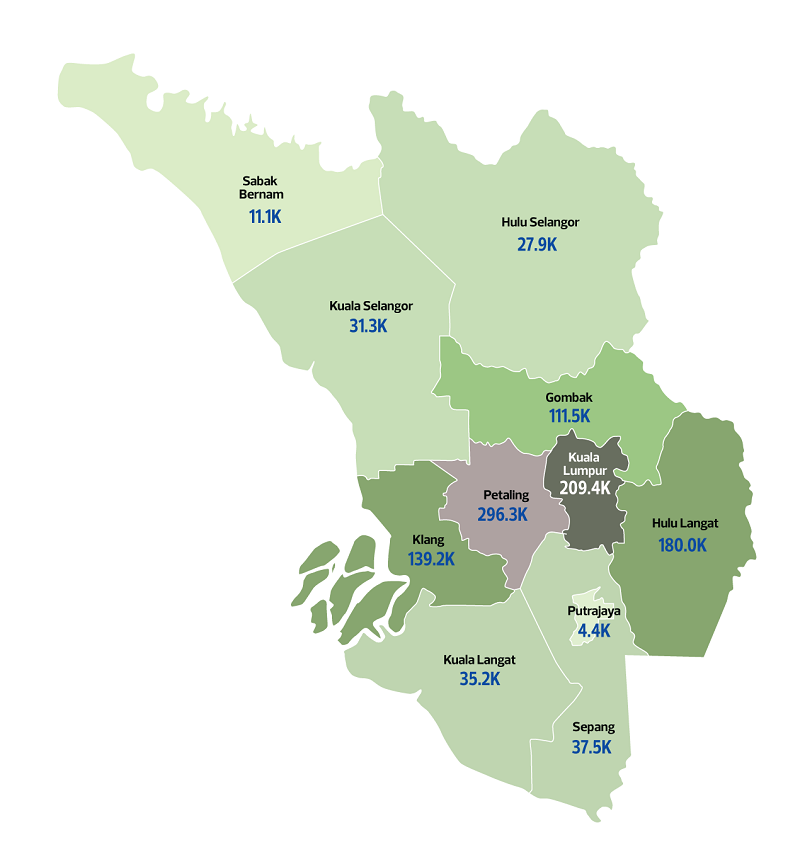
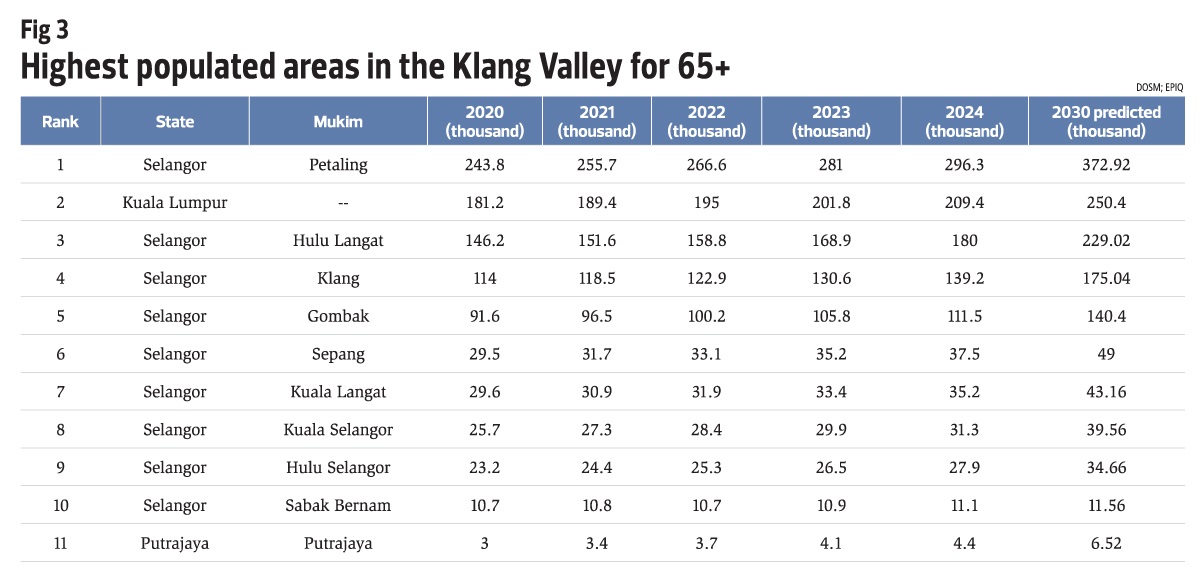
According to EPIQ, the Petaling district hosts the highest number of denizens aged 65 and over, with approximately 296,300 senior individuals living in the area in 2024. Between 2020 and 2024, this senior population grew by 21.53%, and is projected to reach approximately 372,920 by 2030.
Petaling is a large district in Selangor, comprising highly urbanised centres such as Petaling Jaya, Subang Jaya and the state capital of Shah Alam. Despite a matured landscape, opportunities exist in terms of available land for fresh developments, as well as repurposing prospects for older buildings to meet emerging demand. Existing commercial conveniences and a large number of private and government medical facilities also make it a viable hub for retirement communities.
Similarly, KL’s ultra-urbanised landscape, despite a saturated skyline, offers a number of opportunities in terms of the redevelopment and repurposing of older dated buildings or even communities. Next on the list, the nation’s capital had an ageing population of approximately 209,400 in 2024, which had grown by 15.56% since 2020. It is expected to hit 250,400 by 2030.
KL has already seen numerous gentrification and redevelopment projects that have revitalised communities and breathed new life into iconic landmarks. Building on this momentum, developers could now channel their efforts into creating residential, commercial, and institutional facilities tailored for older adults. This ensures that they remain active, engaged, and visible contributors to the city’s evolving landscape.
The Hulu Langat district is another emerging cluster with approximately 180,000 ageing residents in 2024, predicted to grow to over 229,000 by 2030. It also saw its ageing population grow by 23.12% between 2020 and 2024.
Hulu Langat is a large and diverse area situated southeast of KL, known for its mix of urban centres such as Kajang and Bandar Baru Bangi, as well as lush natural attractions such as Broga Hill in Semenyih, and surrounding waterfalls. Being both a residential hub and a popular eco-tourism destination, it offers serene surroundings that are an ideal location for traditional retirement villages. About 20km from the city centre, it offers an escape from the city, while being conveniently connected to family and friends who still live in it.
Klang is ageing too. Its population of senior citizens stood at about 139,200 in 2024, but will surpass 175,000 by 2030. Selangor’s nostalgic “royal town” has also witnessed a growth rate of 22.11% since 2020. While industrial surroundings and traffic congestion don’t immediately identify it as a potential retirement destination, it does boast elements that may appeal to more traditional Malaysians.
The district offers cultural richness with colonial-era buildings, vibrant temples and mosques, and it is a local food haven. It offers a number of medical facilities as well as a growing number of eldercare facilities spread out across its landscape. Importantly, it also features a relatively affordable property market, making it a potential target for lower- to mid-income retirement homeseekers.
The Gombak district offers a similar cultural appeal and greener surroundings, but it is advantageously situated closer to the KL city centre, located at its northwestern border. It had an ageing population of 111,500 in 2024 — a 21.72% growth from 2020. It is expected to grow to 140,400 by 2030.
Famed for landmarks such as Batu Caves and Templer Park, Gombak is a key residential hub in the Klang Valley. Despite its proximity to the city, it still features a semi-rustic landscape. In fact, a key challenge is its reliance on better medical facilities and commercial amenities within KL city itself and not in its immediate surroundings. Addressing this gap will also ultimately enhance the district’s potential as a retirement destination.
Tapping into the silver economy
The silver economy refers to the system of goods, services, and innovations designed to meet the needs of older adults. It is increasingly recognised as a major driver of global growth, innovation, and social policy, especially as populations age.
In age-advanced nations such as Japan, where nearly 30% of the population is over 65, the silver economy has transformed the property industry by fuelling demand for retirement housing, age-friendly urban design, and healthcare-integrated developments. Across ageing societies worldwide, industries are increasingly targeting the expanding 60+ demographic with specialised housing, wellness facilities, and smart-home technologies
For Malaysian developers, embracing a silver economy perspective is increasingly important, not only to anticipate the needs of an ageing population, but also to ensure the property industry evolves in step with broader social and demographic change.
The test lies in transforming demographic pressure into a platform for innovation, resilience and inclusive growth. Yes, addressing an ageing nation is a challenge, but it can also be a catalyst.
PROGRESS MADE, BUT GLARING GAPS REMAIN
The Malaysian landscape is not devoid of initiatives that respond to the challenges of an ageing society. At the upper end of the market, pioneering developments have already set the benchmark — such as the Green Acres Retirement Village in Ipoh, Perak; Eden at Botanica in Penang; Sunway Sanctuary in Selangor; and ReU Living in Kuala Lumpur.
At the more affordable end of the spectrum, seniors typically rely on community-driven homes, non-profit or charity-based facilities, and modest assisted-living centres. While such options do exist, they remain limited in number and often operate at full capacity.
However, changing demographics now urgently demand a more comprehensive and coordinated approach to senior living, ensuring a growing population of older citizens will not only have access to residential options, but also access to integrated healthcare, social support, and community engagement.
The federal government is beginning to show signs that it is doing its part — the Women, Family and Community Development Ministry has drafted a Senior Citizens Bill, which is expected to be tabled in Parliament this year. It has also launched a Senior Citizens Action Plan 2026–2030, which serves as an operational roadmap to handle the transition into an ageing nation, focusing on active and productive ageing.
Other government initiatives include the National Ageing Blueprint addressing a shrinking workforce, and the Kuala Lumpur Structure Plan 2040, which provides for special housing for the elderly, including independent living and nursing care facilities.
However, among the first to admit that there remains a sizeable bridge to gap are industry players themselves, who acknowledge that there is currently growing awareness, but not enough urgency.
The Real Estate and Housing Developers’ Association of Malaysia (Rehda) is calling for a fundamental reset of the nation’s housing policies.
Through its think-tank arm, the Rehda Institute, it is advancing a “Housing for All”agenda that acknowledges the pressures of shifting demographics. While the framework highlights the growing importance of age-friendly housing, it has yet to translate into specific policies for the country’s ageing population.
Offering a property management perspective, Henry Butcher Malaysia (Mont Kiara) Sdn Bhd managing director Low Hon Keong notes that while awareness of Malaysia’s ageing demographic is rising, it remains uneven across the industry.
“Developers of newer projects are beginning to adopt age-inclusive features such as wheelchair access, wider doorways, larger bathrooms, and handrails.
Yet many elderly residents still live in older developments where the infrastructure was never designed for their needs,” he tells EdgeProp, adding that this creates a mismatch between evolving requirements and existing capabilities.

Low cautions that even new projects may overlook long-term ageing needs.
“If this continues, we risk building homes that quickly become unsuitable as residents grow older,” he warns.
He suggests reviewing the Strata Management Act to give management corporations more flexibility to fund age-friendly upgrades, while urging future developments to prioritise accessible site planning — minimising steep terrain and reducing reliance on staircases.
Executive advisor at Nawawi Tie Leung Property Consultants Sdn Bhd Eddy Wong notes that some property owners are already upgrading homes for ageing residents.
“Installing stairs or platform lifts for wheelchairs is not unusual, though typically done on a case-by-case basis,” he tells EdgeProp.
For developers, however, the challenge extends beyond basic features like grab bars, wider lifts and doorways, step-free access, non-slip flooring, lever handles, and emergency call systems.

“It is equally important to design spaces that integrate healthcare, recreation, community support, shared dining, and activity areas to foster social connections, alongside easy access to medical care, shops and public transport,” Wong explains.
He adds that current offerings largely target upper-income seniors, leaving lower- to mid-market segments underserved.
“This is where the model becomes most difficult, as revenue must remain viable despite higher construction and operating costs,” he says.
Wong emphasises that elderly housing requires a longer-term “build-operate-manage” approach, akin to hotels or healthcare facilities.
For those who already successfully operate and provide elderly care facilities, there still exists the challenge of changing current mindsets.
ReU Living CEO Estee Tan tells EdgeProp that those who choose long-term stay at its facility in Taman U Thant are looking for a blend of premium hospitality and professional integrated care services.
“We integrate hospitality service with professional care service in our premium suites to elevate senior living into a lifestyle choice. We shift the narrative from ‘sending parents to a nursing home’ to providing them a premium wellness resort lifestyle, because a mindset barrier absolutely still exists in Asian culture.
Placing a parent in a care facility is often labelled as abandonment largely because traditional nursing homes are viewed as depressing and sterile,” Tan says, highlighting the importance of raising the bar when providing such services.
“With many adults working demanding jobs or overseas, families require reliable, professional care in a safe and secure environment, and ensure their seniors are living dignified and active lives,” she says, referring to the realities of modern life.

As such, ReU Living provides professional care, daily vitals tracking, wellness programmes, and active social activities that improve seniors’ social, physical and emotional wellbeing.
“By taking over the heavy lifting of caregiving, we allow adult children to go back to simply being sons and daughters, enjoying quality time with their parents again. We also emphasise that we are not replacing the family’s care and love, but rather, we are supporting them,” Tan says.
Henry Butcher’s Low believes the private sector can begin closing the gap between current reality and future necessity through practical, immediate measures.
“For property managers, the priority is safe, accessible buildings. Simple steps — good lighting, non-slip surfaces, reliable lifts, and basic emergency preparedness — go a long way. Even annual evacuation drills help elderly residents know what to do in a crisis,” he says.
“For developers, future-ready design is key. Mixed developments should integrate healthcare facilities, convenient access to daily needs, and quiet retreats to enhance elderly comfort,” he adds.
Low stresses that age-friendly environments need not be complex — they begin with awareness, thoughtful planning, and small but impactful actions.
..........
EdgeProp's monthly print edition is out! Free delivery is available for selected regions. Subscribe now.