Share
Share


This article appeared in the April 9, 2026 issue of the monthly print edition. Subscribe now.
Set within Sungai Penchala, Kuala Lumpur, this 2.5-storey detached home now occupies what was once an empty plot — reimagined as a modern interpretation of the traditional Malay house.
Completed and occupied in 2022, the house was built from scratch, with design decisions guided less by trend, and more by how the family moves through every day.
“We did it all — from the ground up,” IDent_3 Sdn Bhd managing director Nik Ida Juliana Nik Mohamed declares proudly.
That statement becomes apparent almost immediately upon entering the house.
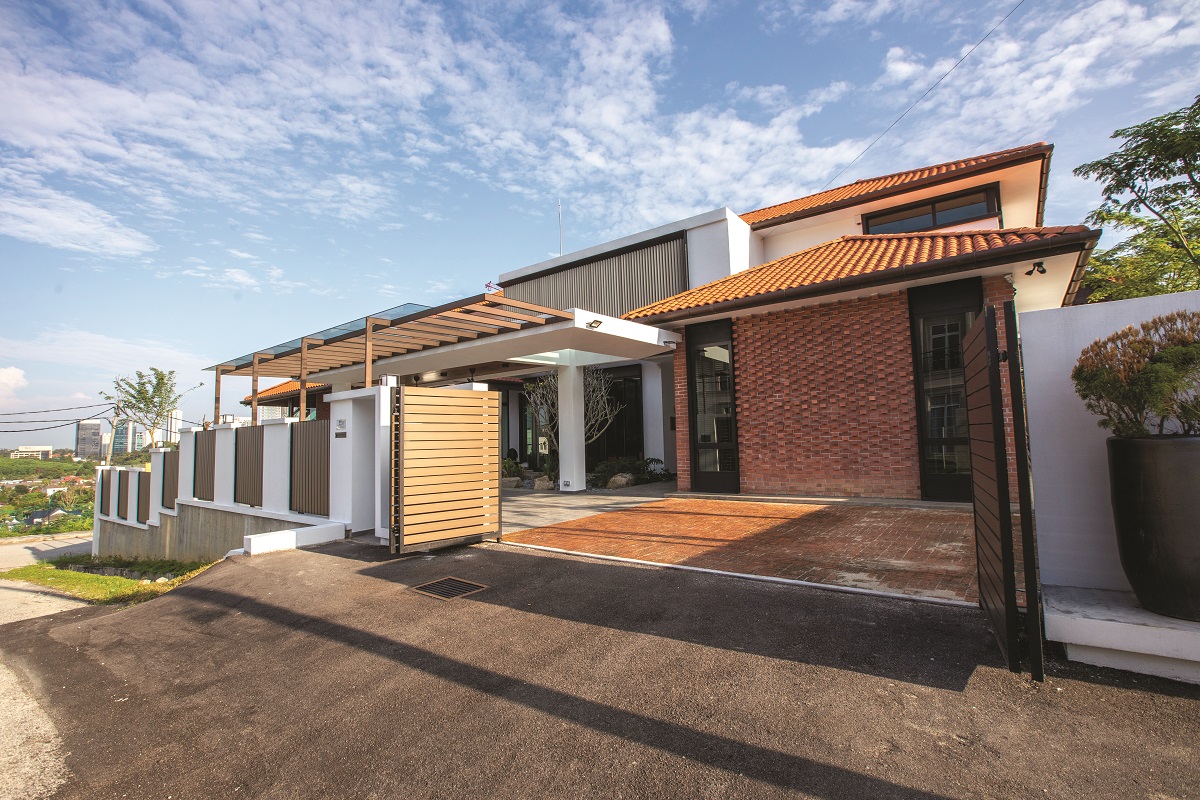
“The idea is actually modernising the old Malay house,” Ida said.
From a glance, there are no overt stylistic imitations or direct references to a kampung house. Instead, the approach is more subtle — a translation of spatial ideas reworked into a contemporary setting.
Private and shared spaces separated, yet joined
The house comprises six bedrooms and an audio-visual room, accommodating a family of five across multiple generations.
While the scale allows for flexibility, the planning was driven by practical needs rather than excess.
A key requirement from the homeowner was a clear separation between shared and personal areas, especially the master bedroom, which is downstairs.
However, the limits must not hinder accessibility to daily routines.
This is resolved through the home’s dual entrances.
One leads into a formal living area, marked by a tall entrance door to welcome guests.The other more frequently used entrance opens into the informal living zone, where the kitchen, dining and TV area are located.
This is where the family spend most of their time, moving seamlessly between cooking, dining and relaxing.
“Everything for everyday living is here — you don’t have to go left and right,” Ida says.
A spine that connects everything
Central to the layout is what Ida describes as a “spine” — a main axis that organises movement through the house.
“From the spine, you offshoot to the other spaces,” she explains.
This configuration creates a pattern of compactness and openness at the same time — bigger shared spaces balanced with more intimate corners — creating an expansiveness larger than its footprint might suggest.
“You have a big space, combined with several small spaces. That makes the overall space feel bigger,” Ida says.
Light, air and the reinterpretation
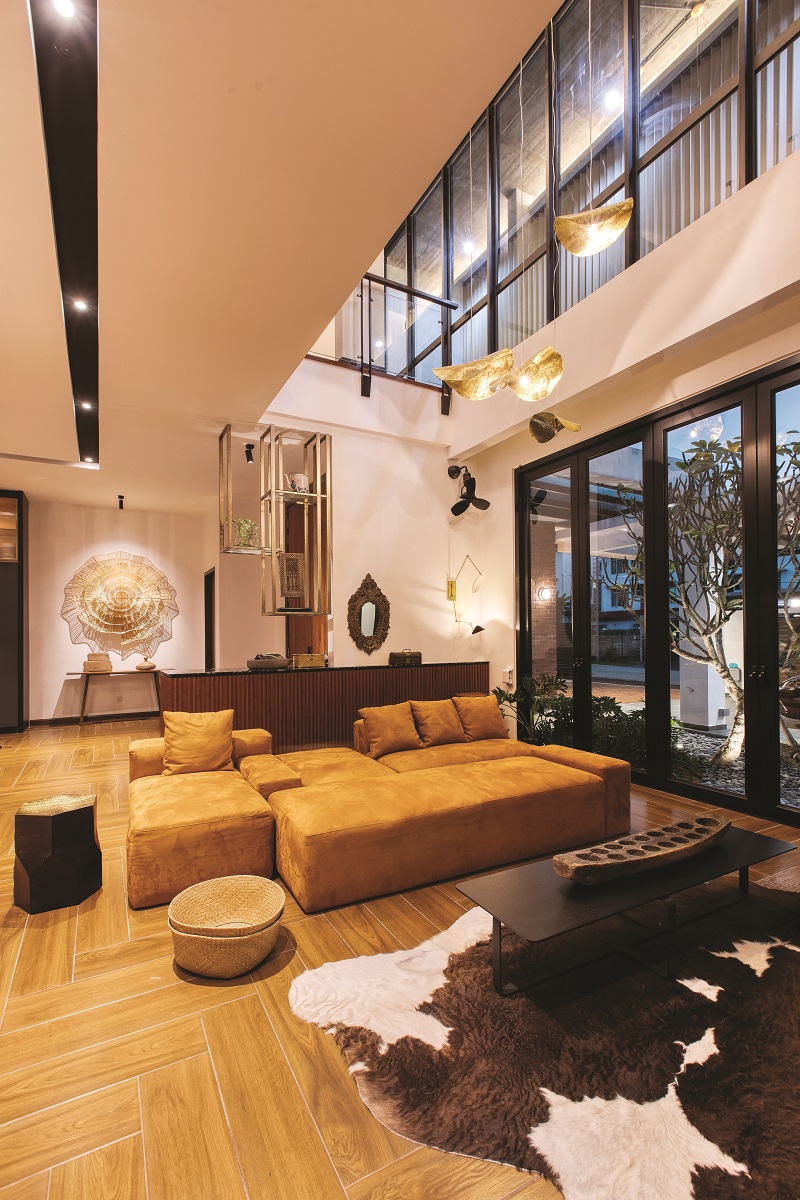
Natural light plays a defining role throughout the home, most noticeable in the informal living area — the space the family uses the most.
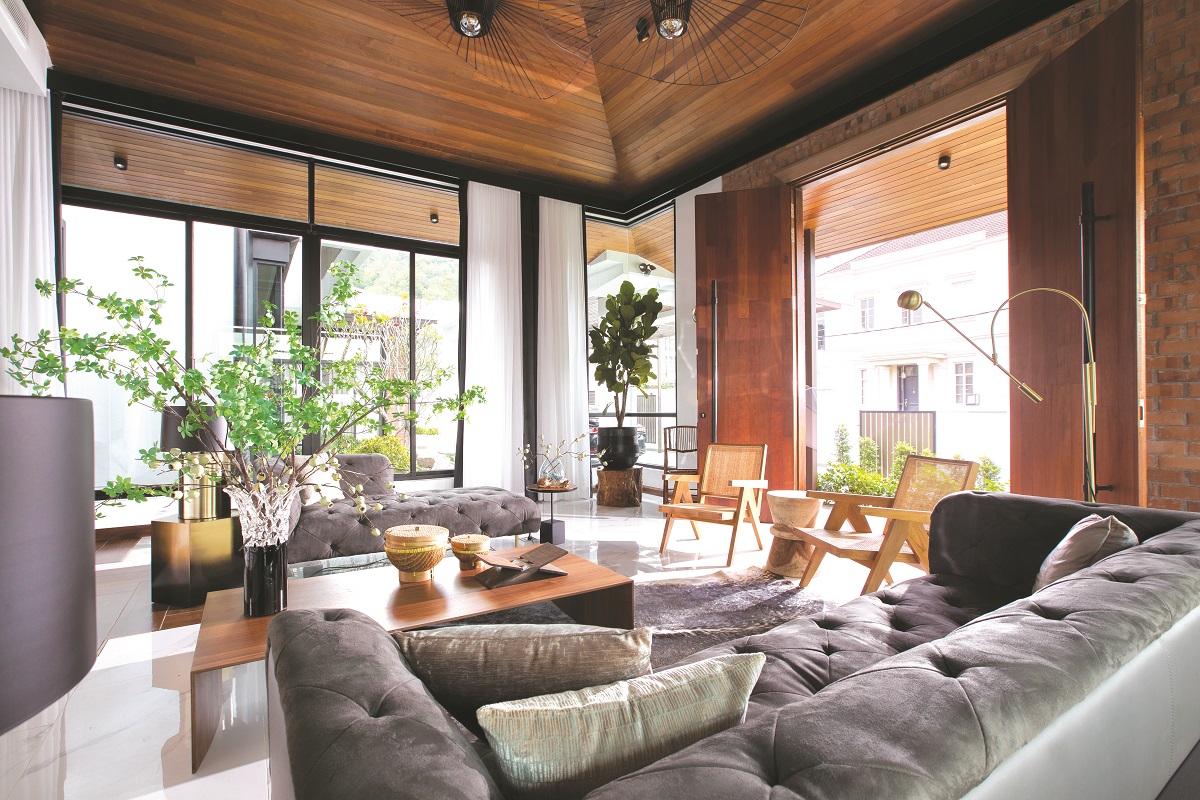
Here, daylight filters in softly through tinted glass sliding doors and large windows, creating a balance that is neither too bright nor too dim. Light moves through the space in a controlled way, casting subtle shadows that shift throughout the day.
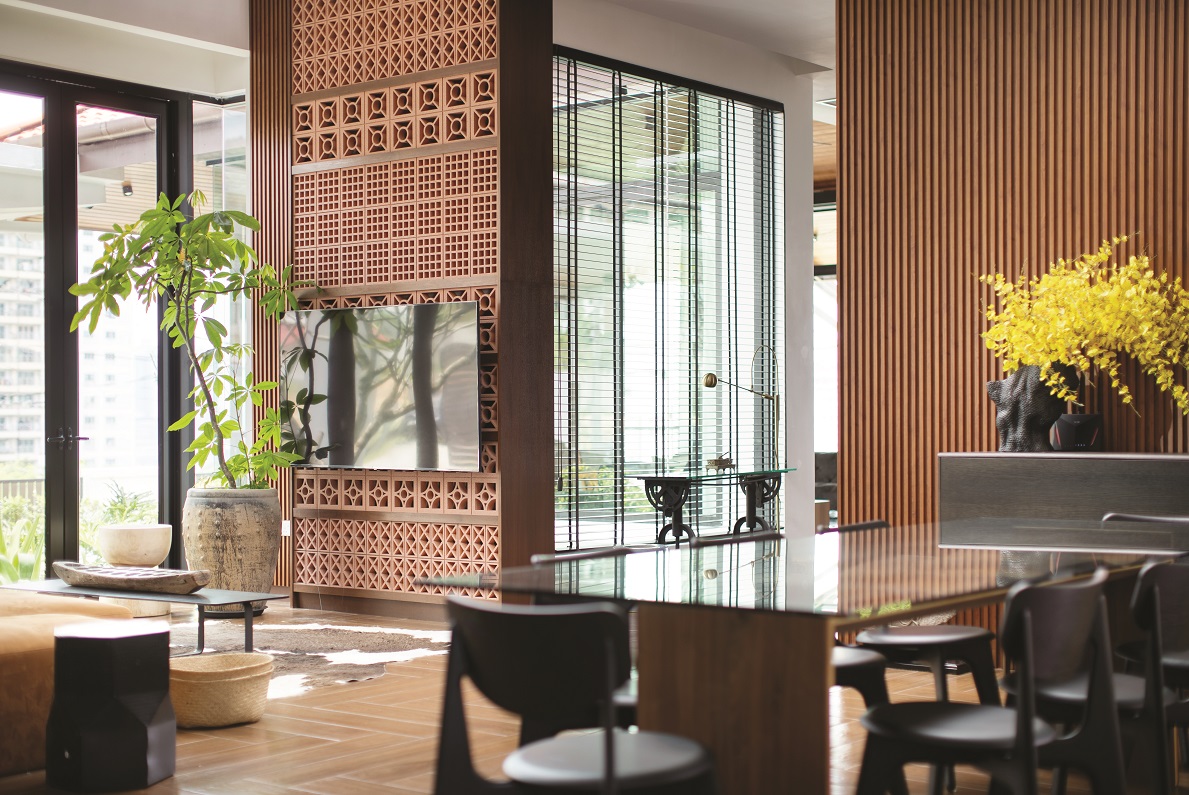
A key feature is the TV wall, where a reinterpretation of traditional carving is introduced through a customised screen. The detailing references classical motifs, executed in a simplified, contemporary manner.
Originally intended to be constructed using natural clay vent blocks, the feature was reworked with MDF (medium-density fibreboard) because of technical constraints.
“We had to remake the look,” Ida reveals.
The final result reinforces the design intent, bringing in elements of tradition without overwhelming the space.
Combined with filtered daylight, it creates a layered visual effect that feels both modern and rooted in context.
“I don’t believe in using too much artificial light. I like natural light,” Ida says.
Even without mechanical cooling, the house maintains a comfortable indoor environment — an intentional design made possible by a wide panel of sliding tempered glass doors kept open to optimise the natural airflow and sunlight while minimising the heat.
“When you have indirect light, the house will be kept cool,” she adds.
Me-time nooks, we-time corners
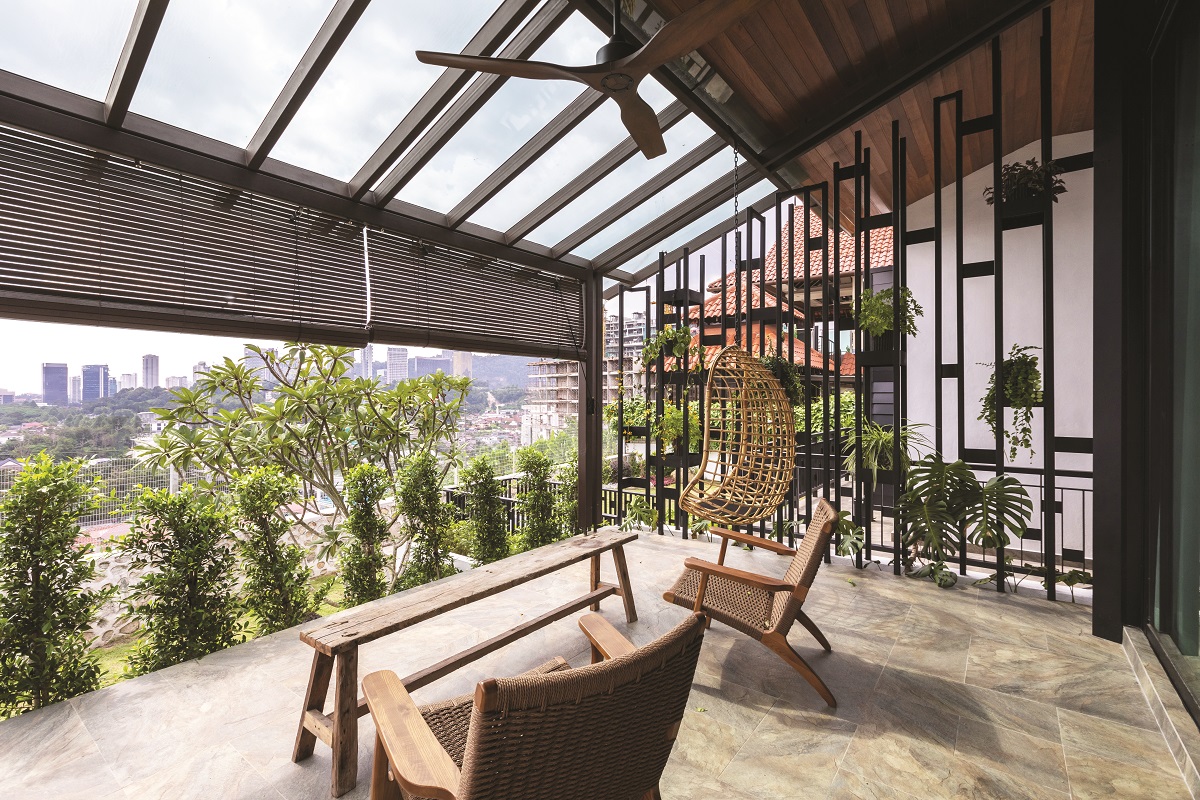
The informal living area extends to a veranda that forms part of the family’s daily rhythm.
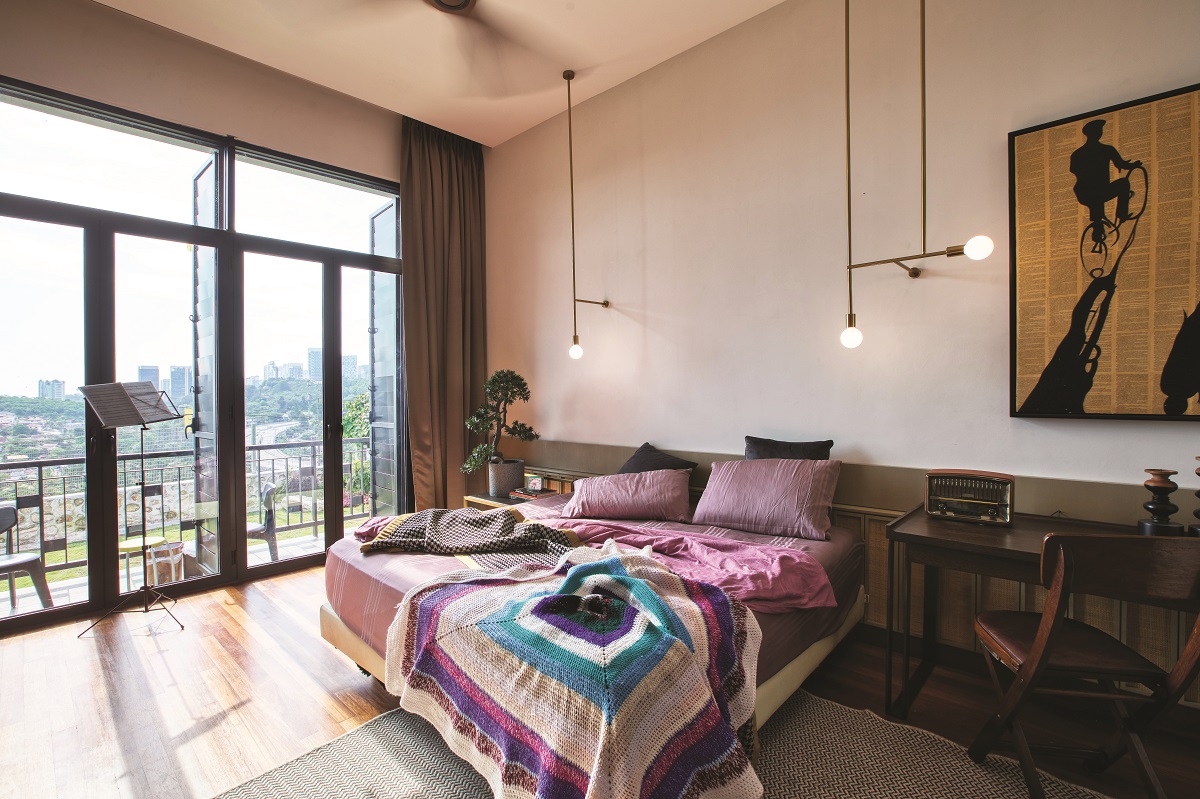
In the mornings, it serves as a quiet space to sit for coffee, overlooking views towards the city skyline. By evening, the same spot shifts into a place to watch the sunset.
At the rear of the house, the backyard is orientated towards a quieter setting where natural sounds — including birds — become part of the environment.
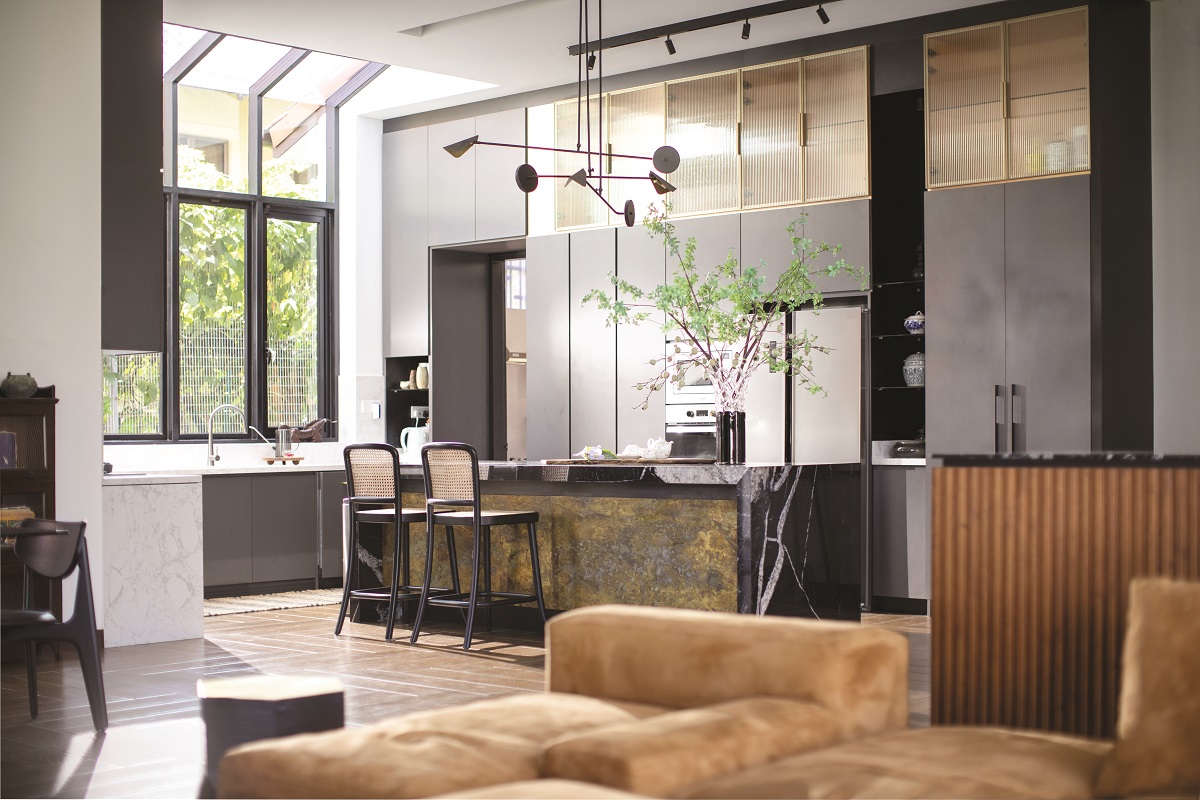
Inside, the kitchen reflects the homeowner’s lifestyle priorities.
“The homeowner said she’s not going to cook much, and only needs a small wet kitchen, while the dry kitchen can be a place of gathering,” Ida says.
As a result, the dry kitchen becomes the social core of the home, complementing the informal living area as the space for interactions and activities.
Blending timber and marble
The choice of materials across the home reflects a balance between natural aesthetics and long-term practicality.
“The floor is tile, but with a timber look in a herringbone pattern,” Ida says.
This allows the home to retain the warmth of timber while reducing maintenance, particularly in highly-utilised areas.
Real timber encases selected spaces, including the formal living area, where the marble flooring is paired with timber-lined ceiling, rendering an elegant and more composed setting for guests.
“It’s not going to be exposed to everyday clutter, so it’s more comfortable to spend time with friends and visitors in this area,” Ida says.
Spontaneous design decisions
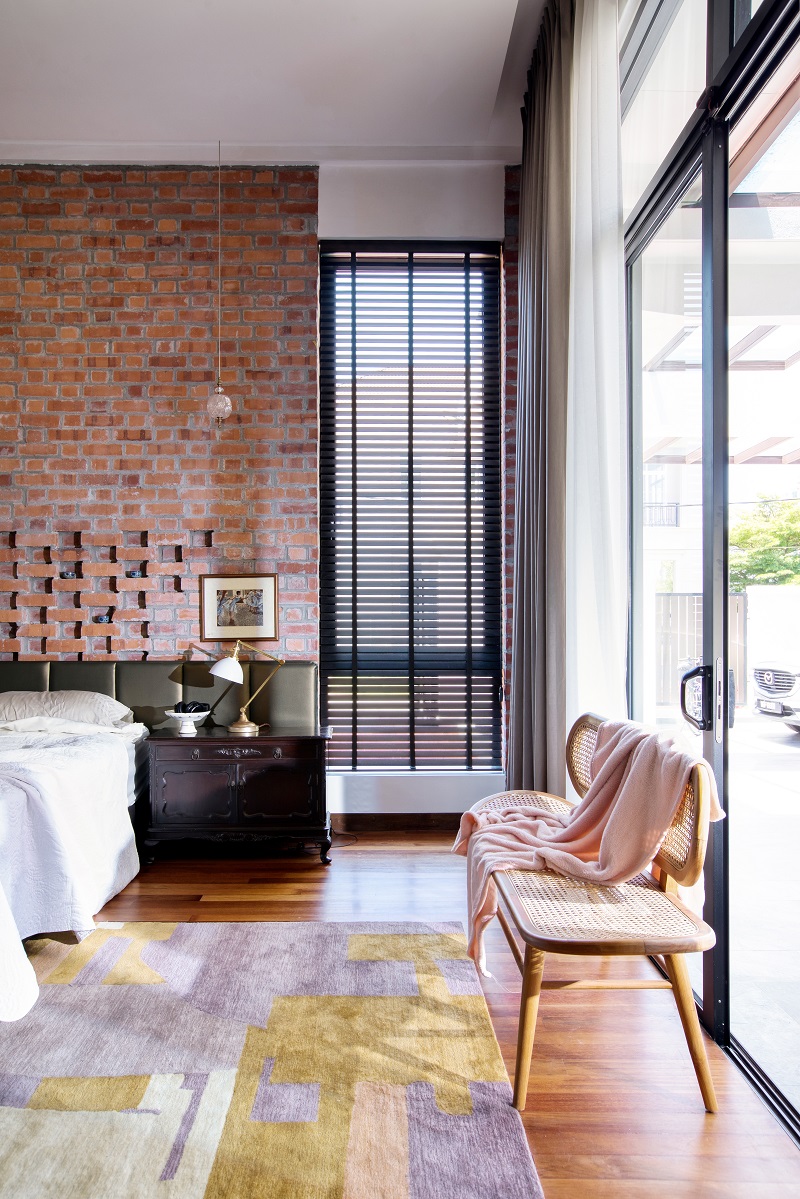
Not every element in the house was planned from the beginning, Ida reveals. Some decisions emerged during construction, including retaining an exposed brick wall after its natural texture stood out during site works.
As the house settles into its surroundings, the landscape continues to evolve. Grown trees soften the concrete, gradually integrating the house into its environment.
“The trees have matured very well,” Ida says.
Like many homes, it is expected to evolve over time — not just physically, but in how it is used.
“This is how it’s supposed to be. It ages — it gets better as it ages,” she muses.
In the broader market context, EdgeProp listings as at mid-March show bungalows in Sungai Penchala ranging from RM1.9 million to RM9.7 million, with land areas between 6,100 and 81,000 sq ft.
..........
EdgeProp's monthly print edition is out! Free delivery is available for selected regions. Subscribe now.