Share
Share


This article appeared in the May 12, 2026 issue of the monthly print edition. Subscribe now.
As congestion within urban confines drives the search for vertical living, landed homes will soon become an increasingly rare commodity. For industry veteran Datuk Jeffrey Ng Tiong Lip, founder and director of boutique developer Urban Hallmark Properties Sdn Bhd (UHP), this shift signals a new era for landed living in and around Kuala Lumpur, elevating it further up the lifestyle value chain.
With over four decades of industry experience, former Real Estate and Housing Developers’ Association (Rehda) president Ng observes that the appeal of landed homes now extends beyond comfort and space, evolving to align with the aspirations of those seeking a distinctive and rewarding quality of life.
UHP underscores this point with the introduction of Botanik Point, a 1.78-acre enclave that integrates the hallmarks of elevated landed living within a lush urban sanctuary — delivering a lifestyle experience that stands out as a rarity.
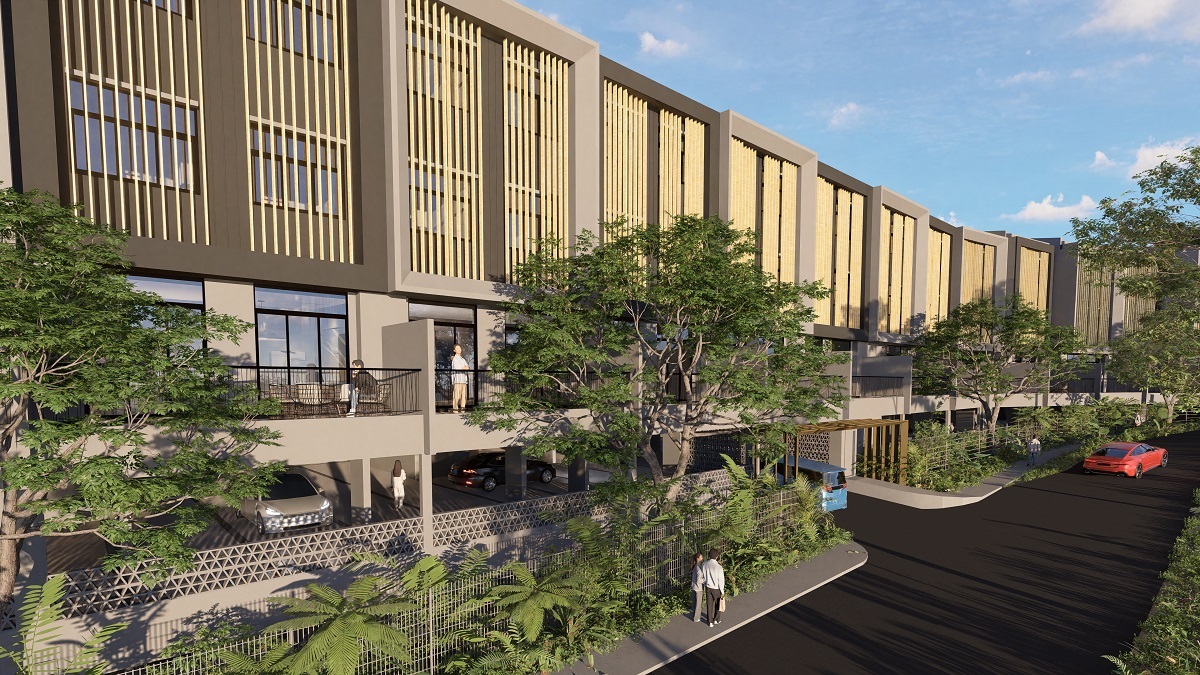
Taking shape in a green nook amidst the verdant hillside surroundings of Ampang’s Taman Zooview (Ulu Kelang), Botanik Point is a low-density residential development of townvillas (spacious townhouses) and semi-detached houses within the security of a gated-and-guarded perimeter.
“In line with our company name, Urban Hallmark Properties, the project is well positioned as a hallmark residential development in a convenient urban location in Ampang. Boutique developments are very much part of our DNA as a developer. This development offers low density, sustainability, attention to detail, functional space planning designs, and quality specifications selection,” Ng says.
Adding to the appeal of luxury space expected of an upmarket boutique development, he explains, is the proposition of a lifestyle immersed in natural surroundings. At its core, Botanik Point is conceived around a simple but powerful idea: integrating nature, architecture and wellness into a single living experience.
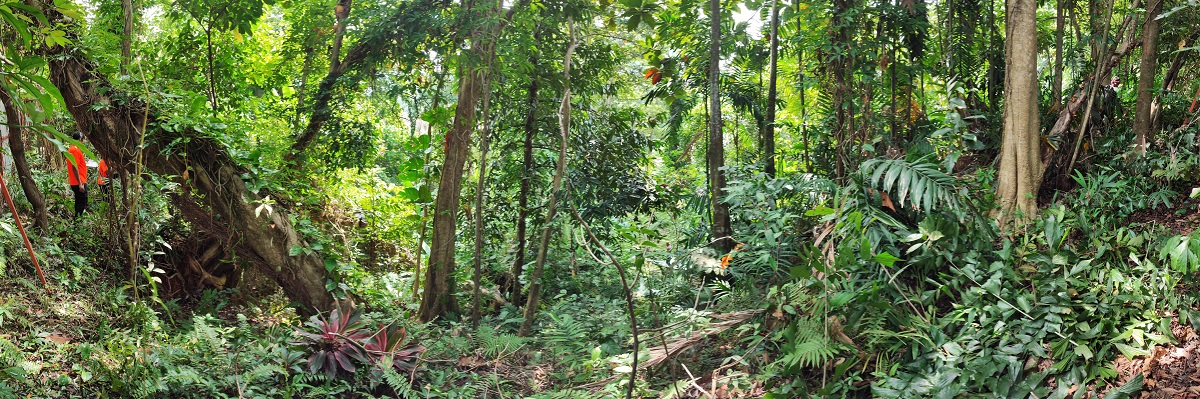
Exemplifying this biophilic design philosophy is the development approach itself, which not only preserves 30% of original forest vegetation within the parcel, but also much of the natural topography, choosing to build in a way that complements the raw beauty of the site rather than replacing it. The result is an exclusive “nature reserve” that residents of Botanik Point enjoy at their very doorstep.
“It’s not simply about owning a home in an appealing address, it’s about investing in a quality of life that offers privacy in a lush low-density sanctuary that promotes physical, mental and social wellbeing,” says Ng.
Upgrading lifestyles in an exclusive vicinity
According to Ng, the concept for Botanik Point was shaped by both market opportunity and the inherent qualities of the site itself. When UHP acquired the site, it was essentially a secondary forest within a mature bungalow neighbourhood.
“We saw an opportunity to do something quite different. Rather than maximising density, we made a conscious decision to keep the development low-rise and limited to just 46 homes, even though the land could have accommodated significantly more,” Ng says, adding that this approach was in harmony with the surrounding landed character of the area, and mindful of the sensitivities of the existing community.
Taman Zooview is a niche hillside freehold neighbourhood along the Titiwangsa range, prized for its serene greenery, quiet exclusivity, and zoo-side setting, which gives it a secluded feel while being just minutes away from the city centre. While it features premium-priced properties along its elevated landscape, many of the existing houses in the area were built between the 1990s and 2000s, and are now considered aged.
Similarly, residents within the vicinity are also maturing, either expanding in family size or advancing in age. The infusion of modern homes in the area will therefore likely resonate with those who already have an affinity with the neighbourhood, but are seeking to either upgrade their lifestyle, opt for better security and convenience, or simply continue to live close to loved ones in the area.
“From a market perspective, we have identified a clear gap — a lack of differentiated, high-quality landed homes within an established urban enclave. Feedback from property agents have also highlighted the importance of gated-and-guarded security for buyers in this segment. This has reinforced our direction to create a more exclusive, secure and low-density offering,” Ng reveals.
He says this perspective ultimately informed the type of homes UHP would introduce, from townvillas that offer a more efficient, low-maintenance entry into landed living, to semi-detached homes designed at a bungalow scale for multigenerational families.
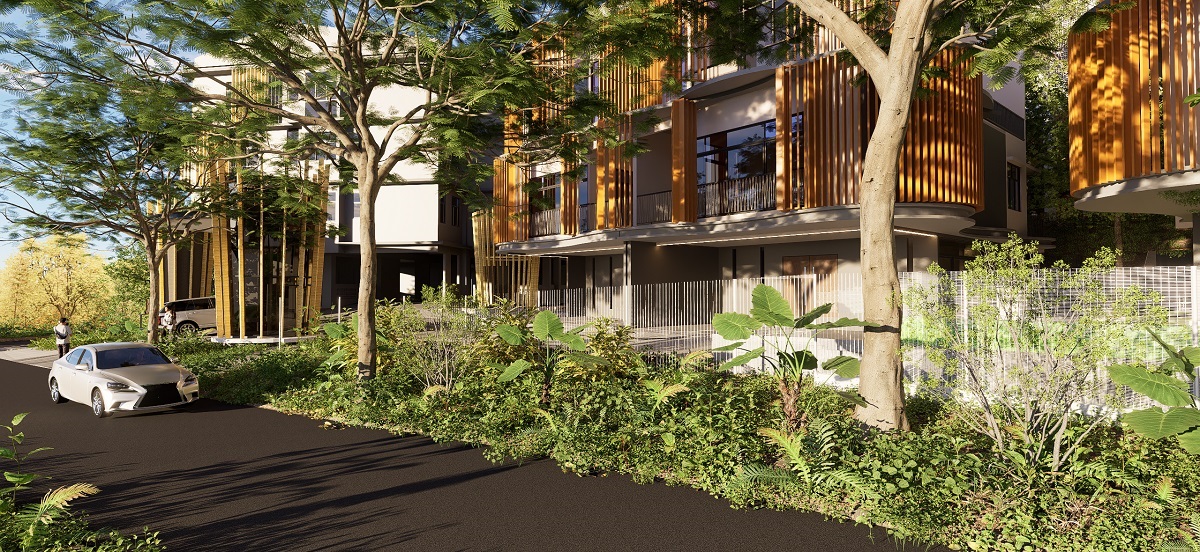
Indicatively priced between RM1.6 million and RM2.3 million, Botanik Point offers 42 townvillas in two layouts: the Kasawari TownVillas with 4 bedrooms and built-ups from 2,300 sq ft, and the Merpati TownVillas with 3- or 4-bedroom options starting from 2,200 sq ft.
Designed for liveability and convenience, the 1.5-storey townvillas feature covered car parks and smart card elevator access — rare in typical townhouse developments. Each unit also includes a dedicated air-well, spacious outdoor terrace, en-suite baths, guest powder room, and integrated smart home technology, among other features.
Botanik Point will also see a limited release of just four semi-detached homes, with built-ups ranging 5,500–5,800 sq ft. Priced from RM4.1 million, these 3-storey 6+1-bedroom residences are tailored for extended-family living.
In addition to an expansive elderly-friendly ground-level design, with a living room, bedroom, maid’s room, pantry and lift, the semi-detached units feature a large master bedroom with its own TV lounge, a main family lounge, large balcony, outdoor terrace and fully-fitted wet and dry kitchens. It also boasts sustainable features such as solar PV panels, an EV charging point, rainwater harvesting tank, and plenty of natural light and ventilation.
Ng says the design choice for the semi-detached units reflects a growing need for solutions that support ageing family members, as UHP believes multigenerational living will become increasingly relevant over time.
“Rather than just increasing size, we focused on functional adaptability. This includes dedicated ground floor suites for elderly family members, multiple living areas, and fully en-suite bedrooms to support both privacy and togetherness,” he explains, adding that the inclusion of a home lift enhances mobility between floors, allowing the home to function comfortably across generations.
Rewarding daily experiences
The lifestyle facilities at Botanik Point are deliberately curated to move away from the conventional approach of simply maximising quantity. Ng explains that the focus is on creating purposeful, experience-driven spaces that support a holistic wellness lifestyle.
“By allowing residents to live within nature, and not simply next to it, Botanik Point offers an interesting proposition for healthy living that drives our broader lifestyle proposition.
“The natural terrain plays a central role in shaping these spaces. Existing slopes are adapted into terrain-based play and fitness areas, such as climbing zones and kinetic outdoor gym equipment, encouraging intuitive and engaging movements. Quieter zones within the preserved forest support therapeutic wellness, including meditation corners, swing beds, water features, and contemplative areas where residents can reconnect with nature and escape the pace of urban life,” he says.
Part of this outdoor wellness ecosystem includes nature trails, a hammock garden, exercise terrace, incline challenge, yoga/meditation nook, canopy pods, fruit orchard, fitness garden, and fruit orchard.
Community wellness is equally emphasised at Botanik Point, with features such as communal orchards, community gardens, outdoor dining spaces, co-working studios, and multipurpose halls designed to foster organic social interaction without compromising privacy.
Even interior spaces promote a healthy and seamless indoor-outdoor relationship. High ceilings, wide vertical louvres, netting and other passive design strategies work together to optimise natural ventilation and reduce reliance on air-conditioning.
“What sets Botanik Point apart is that every element is part of a cohesive spatial narrative: a living environment designed to be active, restorative and socially connected, where facilities are not just used, but truly valued as part of everyday life,” Ng says.
Adding value to this alluring environment is its ethical approach to conservation.
The GreenRE Platinum-certified enclave employs high solar reflectance (SRI) hardscape materials, water curtain passive cooling, solar energy for outdoor lighting, motion sensor lighting for common washrooms, rainwater harvested water for irrigation and common washroom flushing system, recycled materials for landscaped and play areas, landscape composting, and even dedicated bicycle storage space to encourage green mobility habits.
Right time for something fresh
An overview at EdgeProp EPIQ data reveals that Botanik Point could be entering the market at a very relevant time for the area.
The immediate vicinity is dominated by a landscape of premium-priced bungalows and midpriced terraces. Most of the residential population is currently made up of mid-income earners (48.2%) and high-income earners (26.4%), confirming UHP’s perspective on potential demand from upgraders and down-sizers in the area.
Despite the lure of surrounding green serenity, there has also been very little transactional activity in the area over the past two years and fewer new developments in the area, suggesting that most residents are long-term owner-occupiers with a strong affinity to the locale, though there has been very little opportunity to upgrade within it.
Additionally, Botanik Point’s townvillas and semi-detached homes are rare even within a wider 1km radius, with the closest comparisons being older townhouses and semi-detached units in the Taman Melawati area, and semi-detached houses in Taman Ukay Perdana.
This bodes well for the product differentiation the project offers, allowing for a greater choice of landed home options in the area, and serving a wider range of demand.
There are currently no townhouse residential options within Taman Zoo View, while the last recorded transaction for a semi-detached house was in 2023, when a property with 4,542.41 sq ft of land was sold for RM1.65 million. Meanwhile, townhouses located in nearby Saujana Melawati were built in the early 2010s, and the most recent transaction (Feb 2025) was at approximately RM265.40 psf. Semi-detached transactions in the Ukay Perdana area over the past year ranged between RM1.02 million and RM2.4 million for properties that offer between 2,562 sq ft and 2,821 sq ft of built-up space (Table 1).
“Ampang is quite segmented in terms of demographics. In more established areas like Wangsa Maju and Setiawangsa, you tend to see a mix of lower- to middle-income households, with pockets of higher-end homes.
“Meanwhile, newer areas such as Taman Melawati and Kemensah have attracted more professionals and younger families, typically in their 30s to 40s, who are upgrading into landed homes with a preference for space and greenery,” Ng explains.
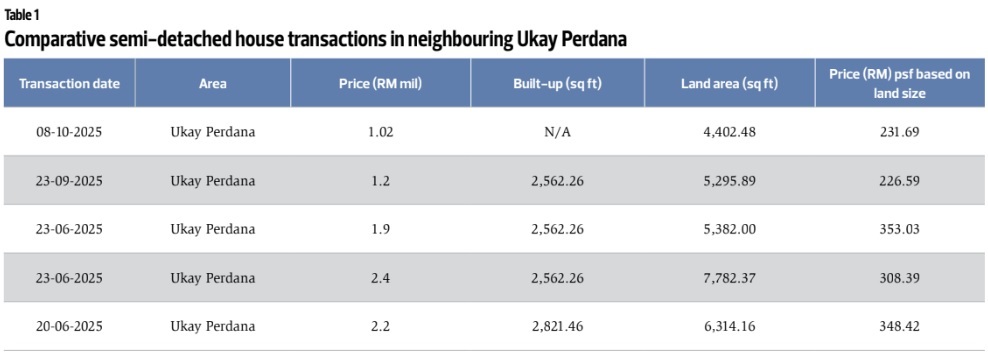
In the vicinity of Botanik Point, EPIQ recorded only five transactions for landed residences in 2025, and all were within Ukay Perdana.
This appeal extends well beyond Ampang’s immediate borders, drawing aspirational homeseekers from across the Klang Valley. Ng observes that many upgraders are increasingly in search of a nature-oriented lifestyle, with properties near the greenery of the Titiwangsa Range resonating strongly among those who yearn for relief from urban density, yet value convenient connectivity to the city.
Botanik Point’s residents will benefit from access to major highways such as the Middle Ring Road 2 (MRR2), Duta–Ulu Kelang Expressway (DUKE), Ampang–KL Elevated Highway (Akleh), Sungai Besi–Ulu Kelang Elevated Expressway (Suke), East Klang Valley Expressway (EKVE), and Setiawangsa–Pantai Expressway (SPE).
The area also hosts a range of established amenities, including Melawati Mall and KL East Mall, green recreation like Bukit Tabur and Taman Melawati Recreational Park, as well as proximity to medical facilities such as Gleneagles, Hospital KL, and Ampang Puteri Specialist Hospital.
“Altogether, this combination of connectivity, amenities and access to nature creates a well-balanced living environment — one that supports both convenience and quality of life for residents,” Ng says.
With an indicative gross development value of RM96 million, Botanik Point is slated for launch by mid-2026.
..........
EdgeProp brings you another month of data-driven insights, exclusive interviews, and market commentaries. Subscribe now for your free copy!