Share
Share


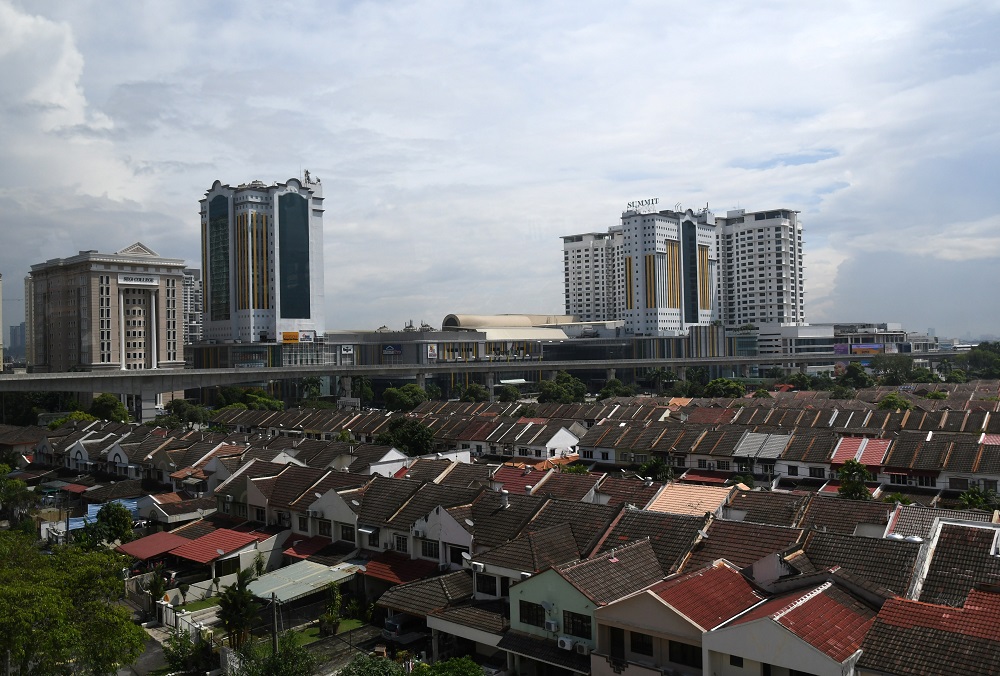
- The proposed Urban Renewal Act extends beyond high-rises and stratified properties; older landed residential and business premises across Peninsular Malaysia can be designated for redevelopment even if they hold freehold status.
The proposed Urban Renewal Act (URA) Bill 2025, recently tabled in Parliament, could fundamentally reshape Malaysia’s property landscape. While initially perceived as targeting old strata developments, the URA’s language is actually wide enough to include landed residences, business premises, and commercial properties, especially those more than 30 years old.
Property experts and homeowners’ groups warn that the Bill’s broad powers, including majority-consent mechanisms and compulsory acquisition, could endanger the rights of individual landowners, leading to displacement and loss of heritage neighbourhoods.
The National House Buyers Association (HBA) and several civic groups have raised alarm over the proposed URA Bill, warning that even landed homes (classic single storey landed houses, terraces, semidees, and bungalows), shoplots, and commercial parcels across Peninsular Malaysia— including freehold ones—may fall within its reach, not just aging condominiums or strata-titled apartments.
Under the Bill, areas deemed “aged, under-utilised, or dilapidated” may be designated as urban renewal zones, paving the way for redevelopment projects even without unanimous consent from all property owners.
Older landed homes are the next target
Across Peninsular Malaysia, thousands of landed houses and shophouses built in the 1970s–1990s now fall into the “over 30 years old” category including mature neighbourhoods in Petaling Jaya, Ampang, George Town, Seremban, Johor Bahru, and Ipoh.
Under the proposed Bill:
*Redevelopment may proceed with as little as 75% to 80% consent from owners.
*The remaining owners could be compelled to sell/participate through the Land Acquisition Act 1960.
*“Compensation” may take the form of cash or replacement property—not necessarily equivalent to a landed home, or a replacement shophouse.
If this Bill passes as it is, owners may wake up one day to find their neighbourhood marked for “renewal” and their lifelong property rights suddenly negotiable. You may lose a landed terrace house and be offered a condominium key in return. That’s not renewal—that’s replacement.
Pertinent interpretation and sections in the URA Bill
The URA Bill in its current form and substance inter-alia states:
*Definition of “Urban renewal area” means an area or site identified for urban renewal development plan
If that’s the case, the definition is area-based, not property-type-based—so, by default, it includes any kind of property (landed individual-titled residential property, stratified, business, industrial, commercial, public land plots, etc), unless the Bill is written is such a way that implicitly focuses on stratified titles only.
*Definition of “Minister” means the Minister charged with the responsibilities of the control and supervision of urban renewal.
*Definition of “Interested person” means a proprietor, developer, trustee, liquidator, legal representatives, or administrator or executor if the proprietor is dead.
The Bill empowers the Minister to designate a landed housing area as an “urban renewal area”. This risks the rights of opposers whose homes or neighbourhoods fall within the demarcated area, but whose votes would make no difference to the outcome if the developers could achieve the needed consent threshold (either 75% or 80%) from these opposers’ neighbouring “areas”. Doesn’t this make the URA an encompassing law to “strip” people off their properties under the guise of “renewal”, even though the Government is not the owner, and the intention for pure commercial interest of property developers is unconstitutional? This URA is fundamentally flawed because it gives the rights to “interested persons” and money-making developers to dictate how a private property should be dealt with.
*Sec 19(b): Consent Threshold: ’’where an urban renewal project is carried out …:
i) for a building which is 30 years or less, the consent threshold shall be 80%
ii) for a building which is more than 30 years, the consent threshold shall be 75%
This majoritarian approach is unprecedented in Malaysian land laws. “Consent threshold” is a clear indication that URA is against Article 8 and 13 of the Federal Constitution i.e. the rights to ownership of property is guaranteed, and under the National Land Code, the principle of indefeasibility of land title means that once you own and register at the land office, your title is secured. But by legislating a majority-consent mechanism and compulsory acquisition, the URA Bill may undermine that security. The draconian URA law also provides limited details on what “adequate” means, raising fears that market distortions or valuation manipulation could leave displaced owners shortchanged. The diminished consent thresholds and ambiguous compensation mechanism could violate these protections.
It is also not clear how “consent threshold” is calculated for landed areas, be they residential or commercial. Is it by way of strata share unit, or one unit one vote; numbers of owners, or property measurement, or land size; landed property for a condominium unit; or shophouse for a retail unit in a mixed development? What happens to owners who refuse, neglect, or defy eviction? Forced sale?
Why 30 years under URA laws?
The chosen benchmark and “trigger point” of 30 years is unacceptable when the housing minister himself had previously stated that a building’s lifespan is 70 years on the average. Even the Public Works Department (JKR) has stated that the lifespan of a reinforced concrete structure is 70–80 years old. It may even endure 100 years with a strong maintenance culture, and durable construction.
N.B.: The expected life expectancy of an average person is 75 years old and retirement age is generally 55–60 years of age. So, why the 30 years for URA laws? Even a housing loan, which typically lasts 35 years, would not have been paid off.
A 30-year benchmark is notably short compared to typical building lifespan worldwide. Buildings are generally designed—and often built—to last much longer. It’s the people who inhabit the buildings that need civic education, and not demolition of the buildings. So, the mystical 30-year benchmark remains an unanswered mystery to us.
Calls for amendments and safeguards
Management bodies (joint management bodies, management corporations (MCs), sub-MCs), residents associations, universities, and civic groups are urging lawmakers to revisit and amend the URA Bill before it is passed, proposing key protections such as:
1. Full unanimous consent (100%) for any redevelopment involving real properties.
2. Explicit exclusion of single-title landed homes from forced inclusion in urban renewal zones.
3. Like-for-like replacement—landed for landed or shophouse for shophouse—where owners voluntarily participate.
4. Independent valuation and transparent compensation mechanisms on “future values”, not based on current valuation
5. Right to remain for owners who choose not to sell or relocate
HBA also calls for state-level public hearings before designating any residential landed or business areas as renewal zones, and demands clear guidelines to prevent misuse of the URA legislation by developers.
5 things landed owners must know about the URA Bill
1. It’s not just for condos. The Bill applies to any property—strata or landed; residential or business; commercial or industrial—in designated renewal areas.
2. Your 30-year-old home may qualify. Areas with aging homes could be targeted as “underutilised” or “dilapidated”.
3. 75% consent may be enough, that’s what URA Bill says. Once that threshold is met, dissenting owners may face forced compulsory acquisition.
4. You may not get a landed replacement. Compensation could come as cash or apartment units, not necessarily a similar property.
5. Community and heritage loss. Mature neighbourhoods risk being demolished in the name of redevelopment.
URA is a game changer
Landed homeowners in Malaysia should not assume immunity from the URA Bill simply because they own a parcel of land rather than a strata unit. The Bill’s broad scope, the lowering of consent thresholds, and the potential for forced compulsory acquisition mean that landed properties are also at risk.
If the URA law passes in its current form, then the landscape of property ownership—for landed homes as much as for condos—could be altered in fundamental ways: reduced consent rights, forced participation, and possibly a shift in the nature of “landed living” in “redeveloped zones”.
Be forewarned: This URA law is a game changer and could be the most important Act that will forever change the landscape as to how land and properties are owned.
Landed property owners should therefore wake up, speak up, stand together, and act with urgency, monitor developments, and push for stronger protections before the law is finalised. Seek intervention from your local assemblyman, members of parliament and representatives. Progress must be balanced with protection. Don’t wait until the bulldozers come before you realise what “urban renewal” really means. Otherwise, today’s cherished neighbourhoods may become tomorrow’s casualties of unchecked redevelopment.
Once the URA Bill is passed, even landed homes with single titles could be swept into “renewal zones”. No landed property is truly safe—not today, not tomorrow. This isn’t urban renewal—it’s forced surrender.
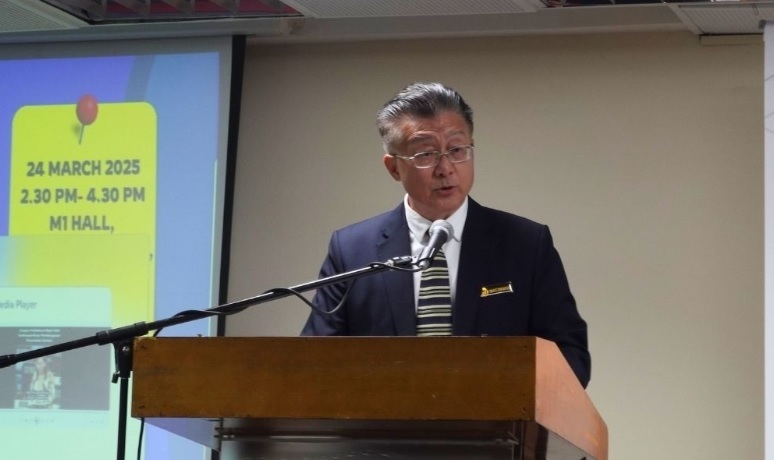
This article is written by Datuk Chang Kim Loong, honorary secretary-general of the National House Buyers Association (HBA).
HBA is a voluntary non-government and not-for-profit organisation manned wholly by volunteers.
HBA can be contacted at:
Email: [email protected]
Website: www.hba.org.my
Tel: +6012 334 5676
The views expressed are the writer's and do not necessarily reflect EdgeProp’s.
Unlock Malaysia’s shifting industrial map. Track where new housing is emerging as talents converge around I4.0 industrial parks across Peninsular Malaysia. Download the Industrial Special Report now.