Share
Share


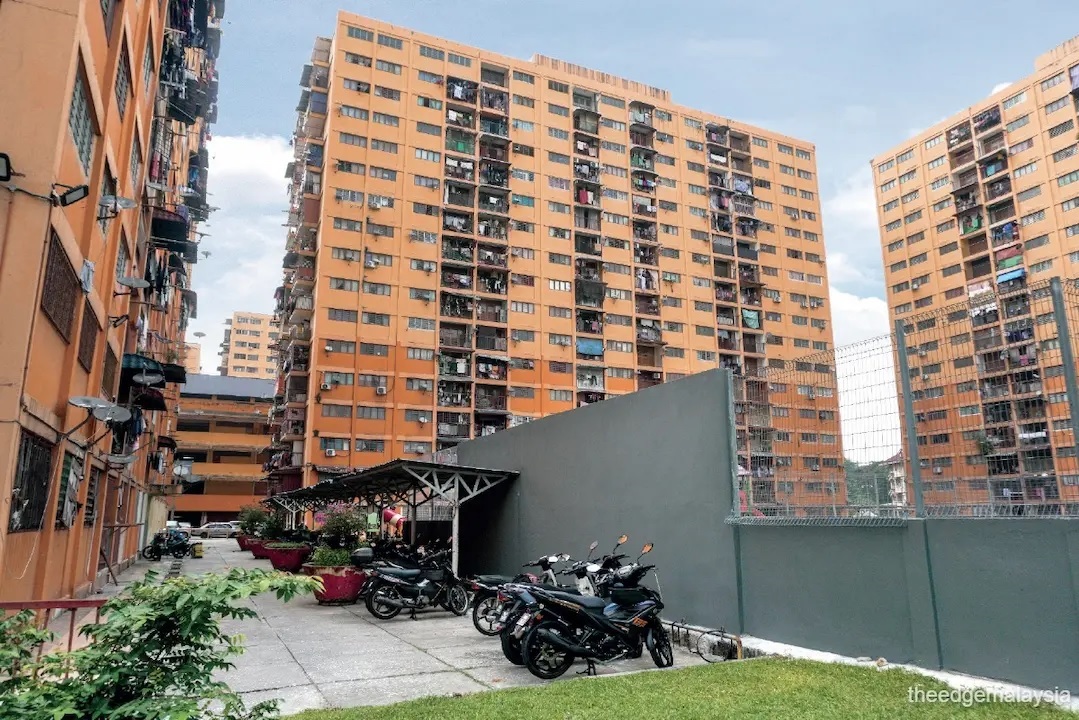
The proposal to use a 30-year building age as a redevelopment trigger under the Urban Renewal Act (URA) Bill (now in Parliament) remains fundamentally unsound, even with the Housing and Local Government (KPKT) Minister Nga Kor Ming’s latest suggestion of “reviewing” it.
Firstly, the Public Works Department (JKR)’s own engineering position is clear: reinforced concrete buildings in Malaysia have a lifespan of 70 to 80 years. It may even endure up to 100 years with a strong maintenance culture, and durable construction. More importantly, every residential and commercial building goes through rigorous approval processes before construction—including development orders and building plans approvals by local councils, licensing by KPKT itself (for residential), and the commissioner of buildings (COB) (for residential and commercial). These safeguards exist precisely to ensure long-term structural integrity. A blanket assumption that buildings aged 30 years are inherently unfit for occupation has no technical or regulatory basis. It is not based on research and official studies.
As such, the minister’s sweeping statements such as these are myths:
1) The 30-year figure is a general indicator of when many buildings start to show signs of ageing and become less suitable for modern use
2) This includes physical wear and tear, outdated designs or technology, higher maintenance costs, and failure to meet current safety or regulatory standards
3) Physical deterioration depends on materials, soil conditions and maintenance, while functional issues can appear within 20 to 30 years
4) From an economic point of view, some buildings become uneconomical to maintain once operating and upkeep costs exceed their market value, usually after 30 to 40 years
5) Buildings aged 25 to 40 years often need major repairs, those between 40 and 60 years may require full renewal or redevelopment, and non-heritage buildings around 70 years old are usually considered outdated unless well maintained.
These bare claims by Nga are very subjective. Moreover, they are neither substantiated nor backed by scientific statistics nor data collected and released by renowned research institutions.
In fact, by the admission of the minister, maintenance or lack of it seems to be the common thread that runs through his justifications attributed to the need of URA.
Weak maintenance culture
If a 30-year-old building appears worn or deteriorated, the issue is almost always poor maintenance or underfunded sinking funds—problems that require targeted repairs, upgrades, and better management enforcement, not demolition. Even the newest building will fall into disrepair fast if not maintained well. Therefore, using age as a blunt justification for redevelopment risks turning URA into a premature demolition exercise rather than a genuine renewal policy. It also creates the perception that viable communities are being sacrificed for redevelopment opportunities rather than actual safety concerns.

Hence, if the minister claims physical deterioration/state of a building will vary depending on how well it is maintained, then the culture of maintenance should be inculcated among residents, and improving standard of maintenance should be prioritised. But when demolition and rebuild is chosen over maintenance, it’s like putting the cart before the horse!
Besides, there is further mechanism in The Strata Management Act 2013 (SMA) (Act 757) in Malaysia where the COBs are vested with powers to administer and enforce the maintenance and management of strata properties and common areas with clear provisions for them to oversee defect rectifications in common properties during the defect liability period. Coincidentally, the SMA comes under KPKT’s scope and jurisdiction and hence, the minister is responsible for the adherence and enforcement of its laws and regulations.
Why 30 years under URA laws?
The expected life expectancy of an average person is 75 years old and retirement age is generally 55–60 years of age. So, why the 30 years for URA laws?
There are also serious economic and social implications. Today, many homeowners will still be servicing their 30–35 years housing loans when their buildings reach the proposed URA trigger age. Forcing redevelopment at this stage places owners in a precarious position. They may lose their existing homes, still owe outstanding loans, and face the additional risk that if the redevelopment project is abandoned (as many past projects have), neither the minister, KPKT, nor the developer bears responsibility. Homeowners are left to carry the financial burden alone. This is an unacceptable risk, especially in a policy environment where enforcement against errant developers and abandoned projects remains weak.
Architecture and engineering experts assert that age alone is not the definitive cause of structural deterioration, and should not be the main reason for demolition.
ATSA Architects CEO Azim A Aziz said other factors contributing to a building’s deterioration are low construction quality, weather and soil conditions, unauthorised alterations, and lack of proper maintenance.
“With proper maintenance and upgrades, buildings can last beyond 50 years, and even over 100 years. Age alone should not justify demolition for redevelopment.
“Most 30-year-old buildings are still structurally sound. A threshold below 40 years encourages unnecessary demolitions. Premature redevelopment also creates waste, increases carbon impact, and risks displacing communities,” Azim said, stressing that decisions on redevelopment must be context-based, not age-based.
Engineer Tan Seng Khoon echoes similar sentiments, saying that construction materials are also an important factor.
“Buildings made of bricks would normally last for about 50 years, while concrete buildings can last for about 100 years. Therefore, the 30-year threshold may not be suitable for these buildings. However, buildings made of wood are generally less durable, so they would have fallen into a bad shape in 30 years,” said Tan, who is also Institute of Engineers Malaysia past chairman.
A 30-year benchmark is notably short compared to typical building lifespan worldwide. Buildings are generally designed—and often built—to last much longer. It’s the people who inhabit the buildings that need civic education, and not demolition of the buildings. So, the mystical 30-year benchmark remains an unanswered mystery to us.
Many house buyers voice the same concerns. In a viral video titled: “URA: House buyers rep slams Nga Kor Ming” that has hit 1.5 million views and garnered 29k comments, a comment said, “My mother is 90 years old. She has to go [through] three cycles of URA. Don’t be ridiculous”.
Read also
Reader’s Letter: Urban Renewal Act could compromise MM2H property owners’ security
Power imbalance will grow sharply
Furthermore, lowering the consent threshold to 75% or 80% while also lowering the building age trigger intensifies pressure on minority owners; the weakest link. It creates conditions where consent is not freely given but is instead shaped by majority influence, speculative expectations, or external pressure. Combined with an arbitrary age benchmark, this framework risks eroding the protections embedded in the Strata Titles Act, which requires unanimous consent where demolition is involved. It also threatens core principles of indefeasible title and long-term security of property ownership—values at the heart of the Malaysian Torrens System.
At a broader policy level, the focus on demolition rather than maintenance reflects a worrying shift. Instead of strengthening long-term upkeep, ensuring proper sinking fund management, and addressing systemic governance failures, the URA approach appears to fast-track redevelopment for the benefit of property developers without transparent justification.
Before granting such sweeping powers, the public deserves clear evidence. How many of the buildings identified by KPKT in the 534 potential urban redevelopment areas across Peninsular Malaysia (where 139 sites are located in Kuala Lumpur alone) have been independently verified as structurally unsafe?
How many require demolition rather than repair, rejuvenation, revitalisation, regeneration, or call it by whatever name? Without these answers, a 30-year trigger is not renewal—it is an involuntary and forced risk imposed on ordinary homeowners.
Read also
Landed property beware: The URA Bill includes your home too
This article is written by Datuk Chang Kim Loong, honorary secretary-general of the National House Buyers Association (HBA).
HBA is a voluntary non-government and not-for-profit organisation manned wholly by volunteers.
HBA can be contacted at:
Email: [email protected]
Website: www.hba.org.my
Tel: +6012 334 5676
The views expressed are the writer's and do not necessarily reflect EdgeProp’s.
Unlock Malaysia’s shifting industrial map. Track where new housing is emerging as talents converge around I4.0 industrial parks across Peninsular Malaysia. Download the Industrial Special Report now.