Share
Share


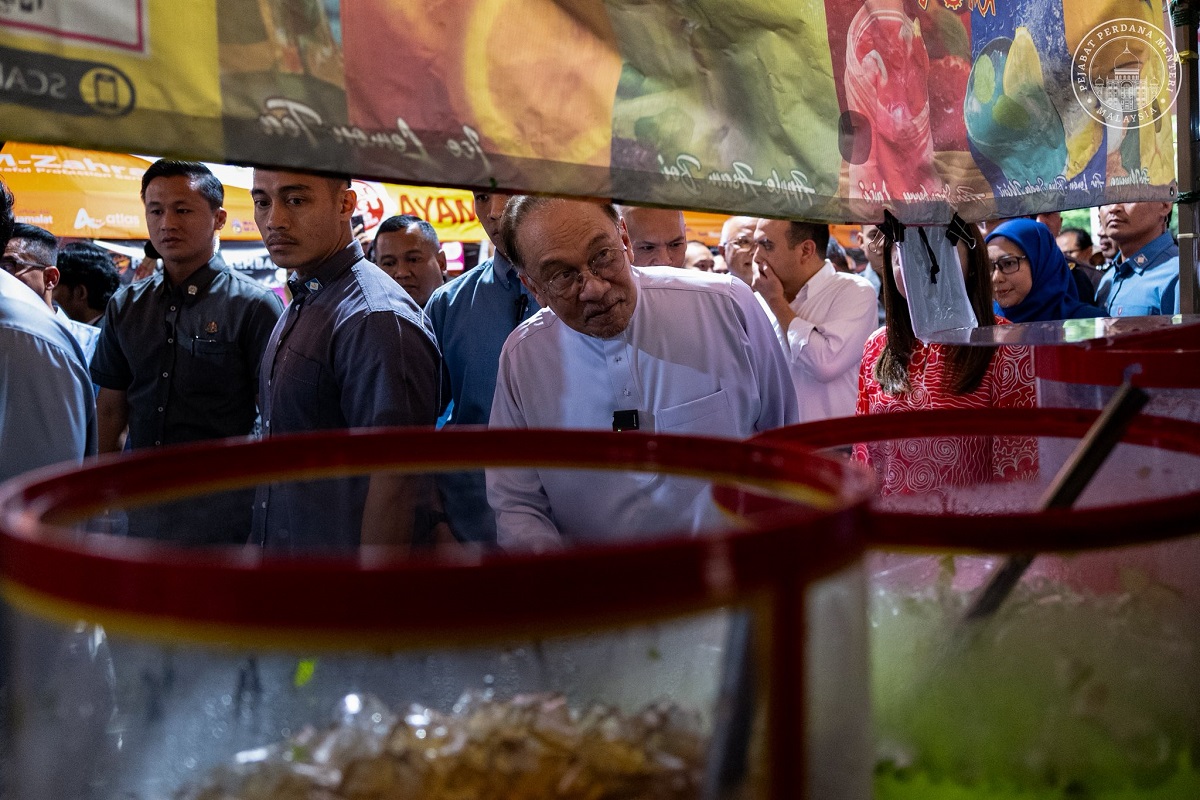
KUALA LUMPUR (Feb 25): Malaysia has restricted new data centre investments that are not linked to artificial intelligence (AI), as concerns mount over the high water and electricity consumption associated with such facilities, Prime Minister Datuk Seri Anwar Ibrahim (pictured) told the Dewan Rakyat on Tuesday.
Anwar noted that AI-driven data centres require significant energy and water resources, particularly for server cooling. However, he maintained that Malaysia’s current supply of electricity and water remains sufficient to support existing operations, as well as approved projects in the pipeline.
“For the past one and a half years, almost two years ago, we have limited the entry of new data centres that are not related to AI.
“If there are benefits in terms of high technology and AI advancement, those are easily approved. So all new applications that are not related—merely data centres taking advantage of cheaper water facilities and lower energy prices—have already been stopped,” he said.
It is understood that AI data centres are designed to support complex AI workloads, while traditional data centres focus on general computing tasks.
Anwar was responding to a supplementary question from Datuk Che Mohamad Zulkifly Jusoh (Besut-PN), who raised concerns over the rapid growth of AI and its impact on national utilities.
Citing statistics from the US' industry player, the Besut member of Parliament noted that data centres account for approximately 4.4% of total electricity consumption there, while water usage for cooling can reach millions of litres.
He went on to ask how the government would ensure that large-scale AI data centre investments would not overload the national grid, result in further electricity tariff hikes, or disrupt supply to domestic users and small and medium-sized enterprises.
The concerns also come as Malaysia has seen a surge in data centre investments over the past year, driven by global technology firms expanding their cloud and AI infrastructure footprint in Southeast Asia.
Industry observers have, however, cautioned that such developments could strain the national grid, water resources and potentially lead to supply disruptions if not carefully managed.
Anwar, in his responses, said projections by the Ministry of Energy Transition and Water Transformation indicate that, based on current applications, capacity remains adequate for the next one- to two years. Beyond that timeframe, longer-term solutions are being pursued, including regional energy connectivity initiatives.
He pointed to the development of the Asean Power Grid, including energy transmission projects linking Vietnam to Peninsular Malaysia and Singapore, as well as plans to channel hydropower from Sarawak to Peninsular Malaysia and Singapore. These efforts, he said, are expected to strengthen long-term energy security and meet growing demand from digital infrastructure.
Earlier, Anwar also noted that proposed legislation of the Artificial Intelligence Governance Bill to regulate the full lifecycle of AI systems is still at an early drafting stage. He said the bill is slated to address issues relating to ethics, accountability and risk management in AI deployment.
The framework will also aim to ensure economic fairness for AI creators and provide legal certainty for investors. The prime minister added that the government is considering incorporating provisions on harm and incident reporting involving AI systems.
He was responding to a question from Puan Hajah Rodziah Ismail (Ampang-PH), who asked how the upcoming bill would address copyright and intellectual property concerns, particularly where AI systems are trained on copyrighted texts, images, audio and video content, and what protections would be afforded to creators and rights holders against unauthorised use of their works.
Unlock Malaysia’s shifting industrial map. Track where new housing is emerging as talents converge around I4.0 industrial parks across Peninsular Malaysia. Download the Industrial Special Report now.
.jpeg?Dc.IvzT0vI55UUTaKxAW9caca44P99nz)