Share
Share


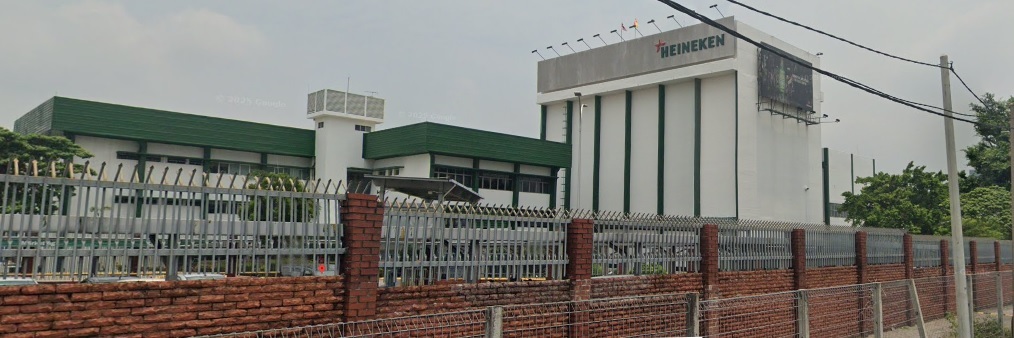
PETALING JAYA (March 26): When Heineken NV announced last week that its Singapore unit would phase down large-scale brewing in favour of a regional logistics and innovation hub, the headlines focused on export projections and analyst commentary.
For property investors tracking the Klang Valley, however, a parallel story is emerging in Petaling Jaya (PJ) — one with implications that extend beyond the brewing sector.
Heineken Malaysia Bhd’s facility in Sungei Way sits at the centre of the group’s regional production realignment. The Malaysian listed unit is expected to supply to Singapore and broader Asia-Pacific export markets, as Asia Pacific Breweries Singapore transitions towards an import-based model, with full impact anticipated by 3Q2027.
Industry observers note that production is not being consolidated into a single location, but split across regional hubs. Vietnam is expected to absorb a significant share of high-volume brewing, while Malaysia’s role is shaped by proximity to Singapore and its established production base.
For the Sungei Way Free Industrial Zone (FIZ) and the wider PJ industrial corridor, the timing is notable. Market participants point to a repricing trend in underlying industrial land values, supported by a series of institutional transactions over recent years.
One asset, multiple owners, a clear trajectory
The revaluation of Sungei Way’s industrial land can be traced through a single former Western Digital site and its successive ownership changes since 2020.
When Taiwanese contract manufacturer Wistron Corp acquired the 11-acre facility in October 2020 for RM120 million — via its subsidiary, Wistron Technology (Malaysia) Sdn Bhd — it implied a baseline of approximately RM250 psf for brownfield industrial land in the area.
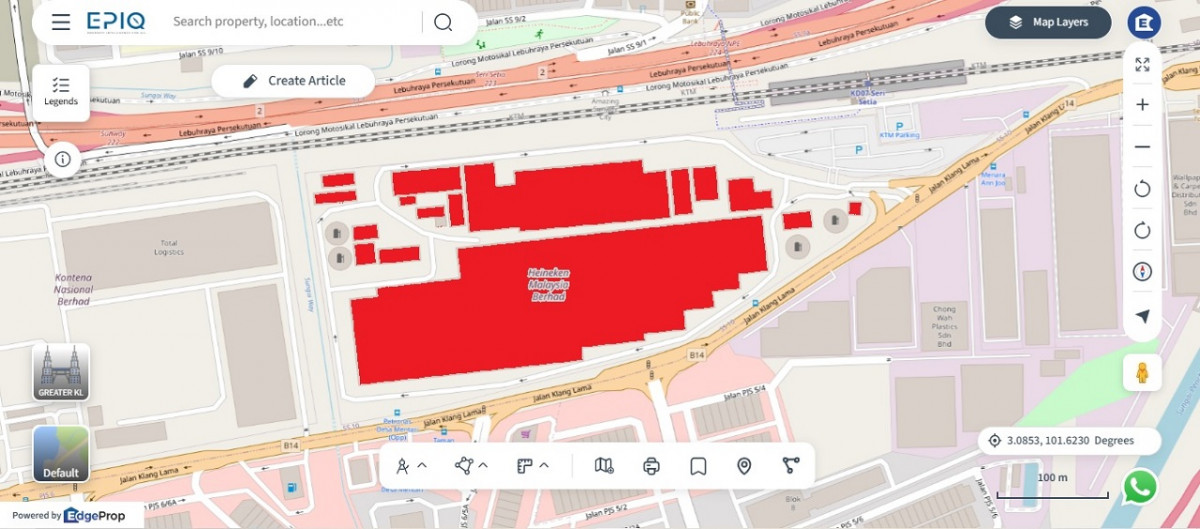
In June 2022, RHB Trustees, on behalf of Sunway REIT, entered into a sale and purchase agreement to acquire a 3.63-acre parcel in Section 35 (now named Sunway REIT Industrial PJ1, which is directly adjacent to the NXP Semiconductors campus) for RM60.05 million, translating to about RM380 psf. The transaction was completed in November 2022.
The entry of a listed REIT marked a shift in buyer profile, indicating growing institutional interest in income-generating industrial assets within the zone.
In late 2023, Wistron Corp announced the disposal of its remaining Malaysian real estate to NXP Semiconductors’s Malaysian unit NXP Malaysia Sdn Bhd for a minimum consideration of RM185 million (RM386 psf).
Taken together, these transactions illustrate a progressive repricing trajectory, contributing to a broader re-evaluation of the area.
Emerging benchmarks and a split market
Recent EdgeProp listings within the Sungei Way FIZ indicate that pricing has moved beyond earlier transaction benchmarks.
Based on current listings, the average land or built-up cost is approximately RM779 psf, although this masks a divergence by asset size.
Mid-scale industrial assets (around 36,000 sq ft) are averaging RM880 psf, reflecting demand for last-mile logistics and manageable industrial use.
In contrast, large-scale industrial land (300,000+ sq ft) is priced at around RM570 psf, reflecting typical bulk acquisition dynamics despite higher overall ticket sizes.
This “liquidity split” highlights how pricing is increasingly shaped by asset scale, usability and buyer profile.
Institutional signals and tightening supply
The broader Klang Valley industrial market is showing similar trends.
According to JLL Malaysia’s 2Q2025 report, industrial vacancy fell to 2.0% (from 3.9%), despite the addition of approximately 2.1 million sq ft of new supply. Capital values rose 3.9% year-on-year.
At the same time, Axis REIT reported portfolio occupancy of 97%, with rental reversions exceeding 5% in FY2025.
The REIT continues to expand along the Port Klang corridor, with acquisitions totalling RM130 million.
Logistics demand comes into focus
Heineken Malaysia’s export contribution is currently less than 1% of total revenue.
However, according to TA Securities, if Malaysia captures 60% of Singapore-bound supply, revenue could increase by approximately RM344.7 million (FY2027) and RM360.4 million (FY2028), with net profit impact rising from 1.5% to 6.2%.
While Vietnam is expected to anchor high-volume regional production, Malaysia’s proximity positions it as a primary supply base for Singapore-bound demand.
Such an increase would require corresponding logistics capacity.
A more defined regional role
The Tuas brewery site in Singapore is slated for redevelopment into a regional logistics and innovation hub, while retaining a pilot brewery. It will function as a high-tech R&D "test kitchen", integrating Singapore’s global GenAI Lab to prototype small-batch recipes, sustainable packaging, and draught beer innovations before they are scaled for mass production across Malaysia and Vietnam.
This points to a more defined regional operating structure — with Singapore positioned as a coordination and innovation hub, Vietnam as a high-volume production base, and Malaysia playing a larger role in proximate, export-oriented supply.
The Johor-Singapore Special Economic Zone provides additional structural context for cross-border manufacturing supply chains.
Heineken is one example, but the configuration it is adopting reflects broader shifts in how industrial assets are being positioned within the Klang Valley.
Well-located industrial sites in established corridors such as PJ are likely to remain under close watch as capital continues to assess opportunities aligned with evolving production and logistics requirements.
Editor’s note: This article is for informational purposes only and does not constitute financial or investment advice.
..........
EdgeProp's inaugural monthly print edition is fresh off the press! Free delivery is available for selected regions. Subscribe now.