Share
Share



KUALA LUMPUR (April 2): Corporate real estate (CRE) players in Malaysia are embracing a dual mandate to manage cost savings, as well as long-term transformation agendas amid a weakening global outlook.
According to a press statement, the “(Y)OUR SPACE Horizon Report H1 2026” report by Knight Frank found that 70.8% of surveyed occupiers aim to balance these traditionally exclusive pressures.
"Sentiment for global economic expansion is softer this year, with 38.5% of those polled seeing it as weak. For CRE players in Malaysia, this means that they must manufacture progress internally, with capital expenditure prioritised for outcomes that fund transformation or reduce long-term cost or risk. This is an opportunity for rebalancing and optimisation through right-sizing with intent," said Knight Frank Malaysia office strategy and solutions senior executive director Teh Young Khean.
A cornerstone of this mandate is a shift towards performance over presenteeism, with 43.1% of respondents prioritising learning outcomes and mentor contact over hours spent in the office.
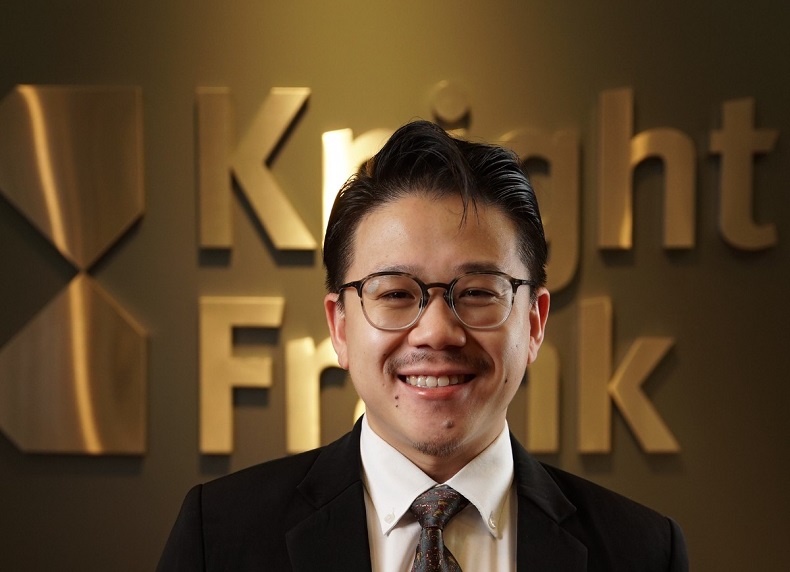
"Intentions to increase occupation density and enhance amenities are holding steady, striking a balance as occupiers strive to achieve more from the same amount of space while managing workforce wellbeing. Looking ahead, productivity and efficiency will dominate organisational strategy as firms prioritise operational optimisation," said Knight Frank Malaysia head of landlord representation, office strategy and solutions Kamini Palany.
More than half of occupiers, or 50.8%, expect artificial intelligence (AI) to be selectively embedded into core workflows by 2026.
In the Malaysian context, approximately 56% of employers are currently maintaining their workforce levels.
"The indicators are clear: 2026 is a year for targeted workplace optimisation, not reinvention. Leaders are comfortable with adjustments that enhance collaboration, support hybrid rhythms or improve employee experience at the margins. We anticipate occupiers to programme learning-intensive environments, where AI use changes how teams work and configure data-sensitive collaboration, without large capital expenditure outlays or sweeping redesigns," Teh said.

Despite a reduced appetite for spatial expansion, 36.7% of surveyed occupiers anticipate an increase in sustainably accredited buildings within their portfolios.
"Here, we anticipate secure, scalable energy to grow as a decisive factor for site selection and investment, particularly if AI impacts on workflows render energy solvency non-negotiable. Moving forward, occupiers may look to the three-outcome rule in evaluating capital expenditure outlay, where every project is attached to cost reduction, resilience or capability-building results, with approval contingent on explicit delivery of these outcomes," said Knight Frank Malaysia head of tenant representation, office strategy and solutions Naythan Chong.
..........
Get EdgeProp's inaugural monthly print edition! Free delivery is available for selected regions. Subscribe now.