Share
Share


This article appeared in the May 12, 2026 issue of the monthly print edition. Subscribe now.
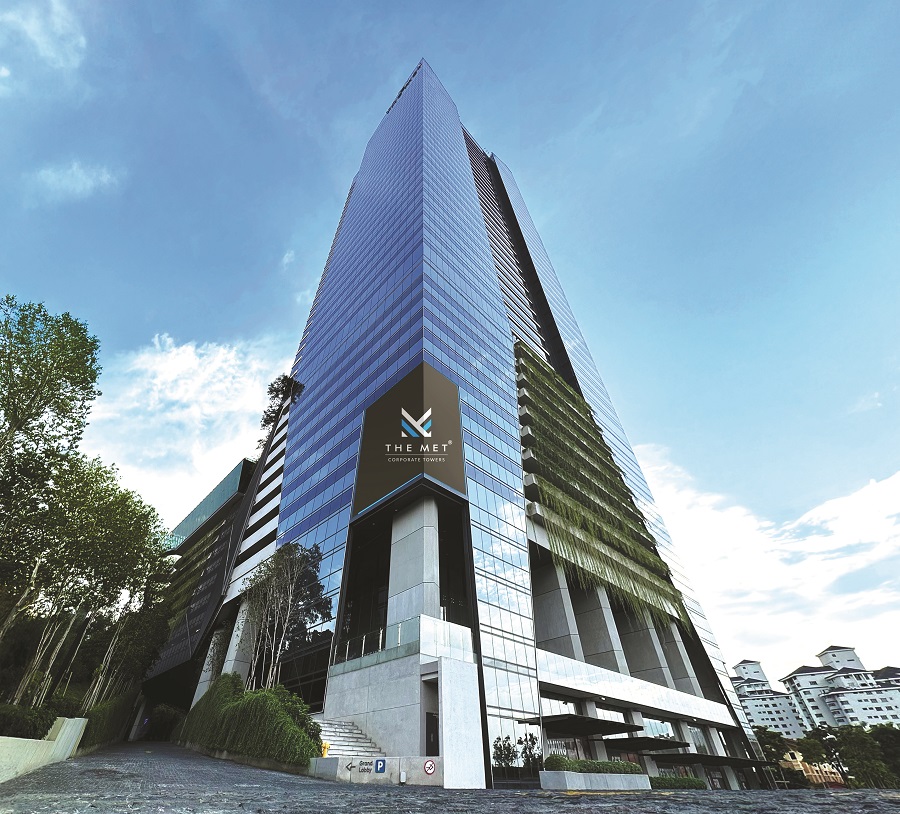
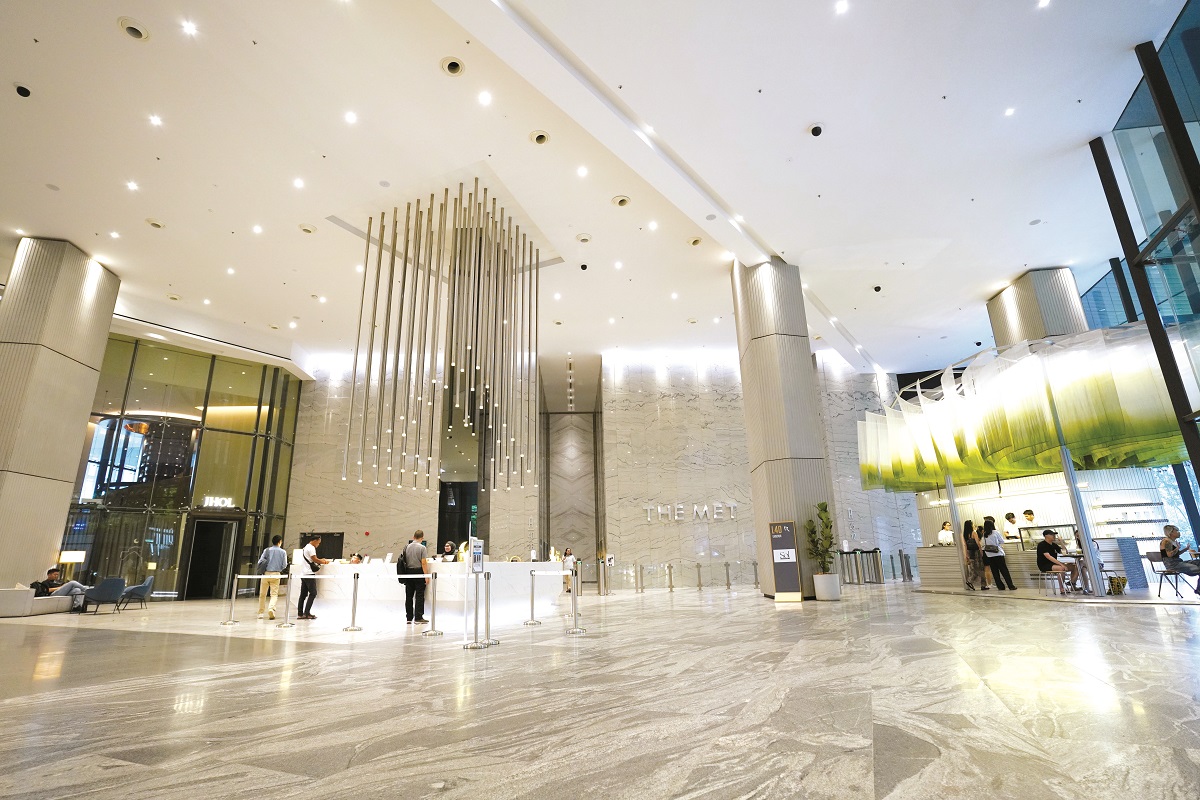
Upon entering The MET Corporate Towers in KL Metropolis, visitors are welcomed by a lobby that departs sharply from the conventional office environment. High ceilings, a self-playing piano and a distinctive ambient scent give the space the atmosphere of a hospitality setting rather than a typical workplace — a deliberate design statement from Triterra Sdn Bhd, the developer behind the project.
Positioned under the concept of a “New Business Class”, The MET is recognised as the first Grade A stratified corporate office development within KL Metropolis, Mont’Kiara, Kuala Lumpur. Comprising two towers rising 30 and 42 storeys, the development is said to be the tallest premium Grade A corporate towers within a 5km radius of its location.
Realised through collaborations with established international architectural firms, the development holds Green Building Index (GBI) certification, incorporating approximately 0.5 acres of landscaped areas, an energy-efficient softscape design, a rainwater harvesting system and firstflush diverters for water quality management.
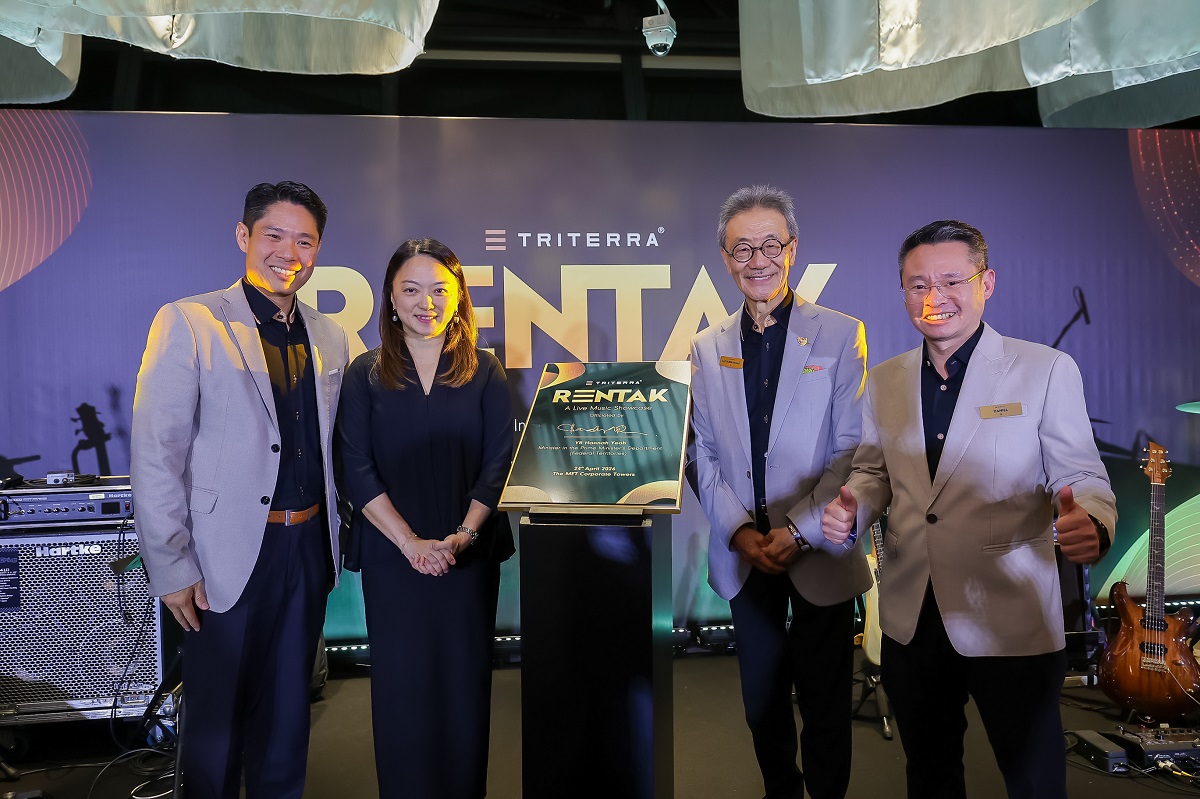
Triterra, which marked its 10th anniversary on April 24 at The MET with a “Rentak”-themed celebration, drew a full house of guests, featuring a musical lineup that revisited the golden sounds of the 1980s and 1990s, with performances by Ning Baizura, Elvira Arul, and Yazmin Aziz. Federal territories minister Hannah Yeoh was also in attendance.
Tickets were priced at RM250 per person, inclusive of a buffet dinner at the Malaysian Food Garden on Level 9.
The event venue was sponsored by Colony Coworking & Event Space, a tenant at The MET, reflecting the integration of occupants within Triterra’s broader placemaking strategy. For example, its lifestyle and events component, The 3RD Space, accounts for 20% of the building’s total space and is designed to activate the development beyond standard office hours.
Three generations, one philosophy
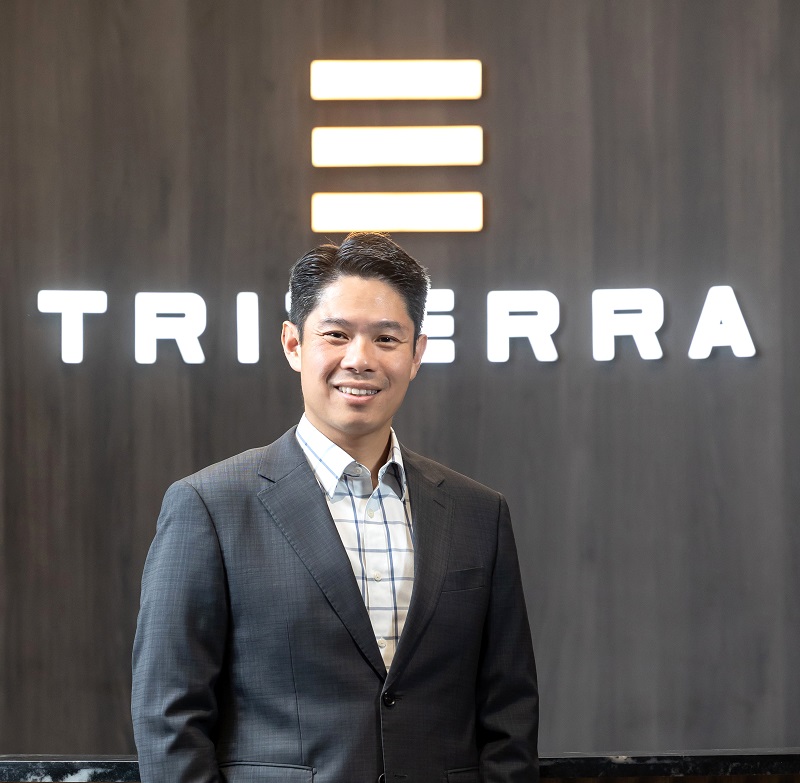
In an exclusive interview with EdgeProp, Triterra CEO Christopher Lim outlines a long-term strategy anchored in what he calls a “three-generational” leadership philosophy — drawing lessons from the past, applying them to present-day decisions, and ensuring developments remain relevant for the future.
“We meet today, we explore tomorrow, and let’s create something the day after,” Lim states.
This philosophy underpins Triterra’s “trilogy of life” concept, which emphasises continuity, adaptability, and long-term value creation.
Lim notes that while real estate remains a fundamentally traditional, brick-and-mortar industry, Triterra intentionally incorporates younger perspectives into its leadership structure to better anticipate shifting market expectations.
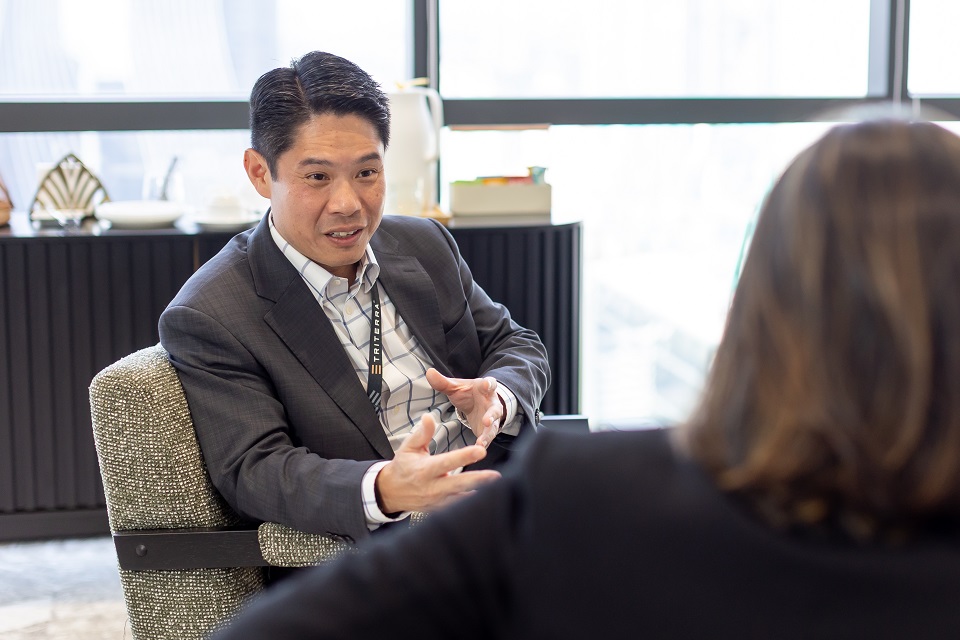
“Boutique players like us prioritise innovation, and we would have that edge, because we are more directly involved in engagement and dialogue with stakeholders,” he says.
Bringing stakeholders along the journey
Lim places strong emphasis on stakeholder engagement, noting that projects are often conceptualised years in advance, requiring developers to anticipate market needs well beyond current conditions.
“We need to invest time to explain what’s next and bring stakeholders along that journey,” he says, adding that this approach fosters stronger, long-term relationships with buyers, consultants and financial institutions.
On market positioning, Lim observes that rapid societal and technological changes are reshaping consumer expectations — particularly among younger demographics with shorter attention spans and a preference for dynamic environments. Developers, he says, must continuously adapt, engage, and “push the envelope” to remain relevant.
Lessons from The MET
Reflecting on The MET as Triterra’s flagship commercial project, Lim says a key lesson is the need to continuously raise industry benchmarks. While the development introduces technological integration, green features and placemaking at the time of launch, market expectations have since evolved further.
He stresses that future-proofing developments — despite higher upfront costs — delivers longterm value and cost efficiencies for end-users.
“What may appear as savings today could result in higher costs over time if developments are not built to last,” he says.
Lim adds that The MET has evolved beyond a conventional office space into a lifestyle-driven hub, hosting corporate launches, lifestyle gatherings, and private functions alongside its core business tenancy.
“We are seeing a shift where people want to work in spaces that also offer lifestyle and community experiences,” he says.
What comes next
Lim hints that Triterra is currently exploring two land parcels — both still at the planning stage — with a combined tentative gross development value of approximately RM1.2 billion to RM1.3 billion. Details remain limited pending the necessary approvals.
He also indicates that future projects may integrate both residential and commercial components, noting that residential activity accounts for approximately 70% of overall property market transactions.
“It’s going to be interesting for the next residential and commercial project. We are planning for the two,” he says, without disclosing further details.
The wider case for KL
Lim highlights the importance of providing suitable premises for small and medium enterprises (SMEs), which he describes as key economic drivers, while also ensuring Malaysia remains competitive in attracting multinational corporations.
He stresses that KL’s competitiveness should extend beyond pricing, with technological advancement, sustainability standards, and infrastructure quality serving as key differentiators in positioning the city alongside Singapore, Jakarta and Bangkok as a regional business hub.
While acknowledging the government and government-linked companies’ contributions through landmark developments, Lim observes that greater attention may be needed for midtier and functional commercial spaces — the segment between iconic projects and everyday commercial developments — to strengthen KL’s appeal to a broader range of global businesses.
“As a property developer, we should work alongside SMEs to provide them with conducive and suitable business premises so that they can thrive,” he says.
He adds that strengthening this ecosystem could generate broader economic benefits, including job creation, increased tourism, and growth in business-related activities such as conferences — with positive spillover effects across Malaysia.
On the topic of property investment, Lim highlights concerns regarding the delay in firsttime property purchases, noting that many individuals are now acquiring their first property at around 35 years old, compared to their early 20s previously, thereby reducing potential investment timeframes by approximately 10 to 14 years.
He also observes that in several overseas markets, property ownership is often prioritised over vehicle ownership as an initial investment milestone.
However, Lim notes that Malaysia has made improvements in public transportation infrastructure, which supports greater mobility and may reduce early reliance on private vehicle ownership. In this context, he suggests that, ideally, similar conditions could encourage individuals to consider property acquisition at a younger age, aligning with long-term financial planning.
He further emphasises the need for greater industry-wide collaboration to address structural and systemic challenges among key stakeholders, including architects, bankers, lawyers, developers and valuers, where existing operational friction points persist. Lim suggests the adoption of a roundtable approach to facilitate more open dialogue on longstanding or complex issues within the sector.
..........
EdgeProp brings you another month of data-driven insights, exclusive interviews, and market commentaries. Subscribe now for your free copy!