Share
Share


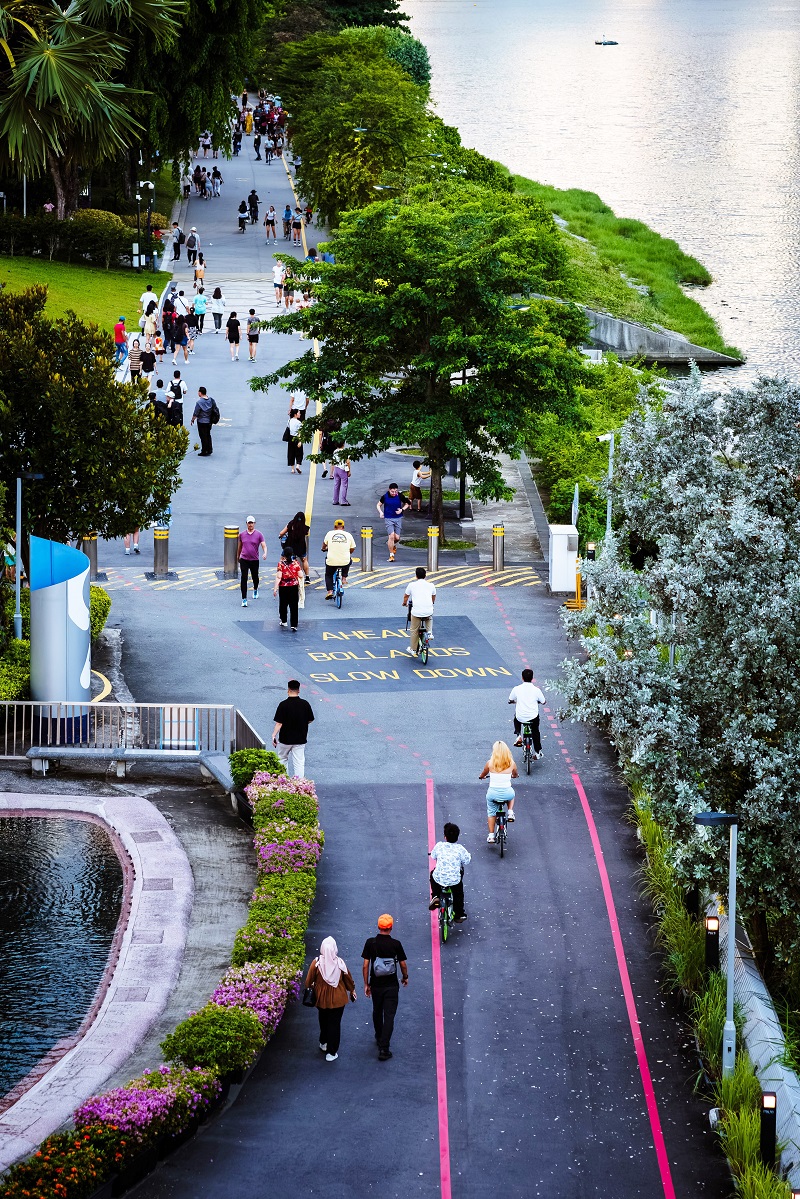
Malaysia’s transition towards a net-zero future is shifting beyond individual buildings towards the broader urban systems in which they operate.
While measures such as greenery, renewable energy, efficient cooling, electric-vehicle infrastructure and green building certification have become established components of the sustainability discussion, the wider performance of cities depends on how these elements function collectively.
A building may achieve high levels of operational efficiency, for example, while being located within an urban environment that remains heavily dependent on private vehicles.
Similarly, extensive landscaping does not necessarily address the embodied carbon from the concrete and steel used in construction.
This raises a broader question for Malaysia’s urban development: whether sustainability should be assessed solely at project level or through the performance of entire neighbourhoods and cities.
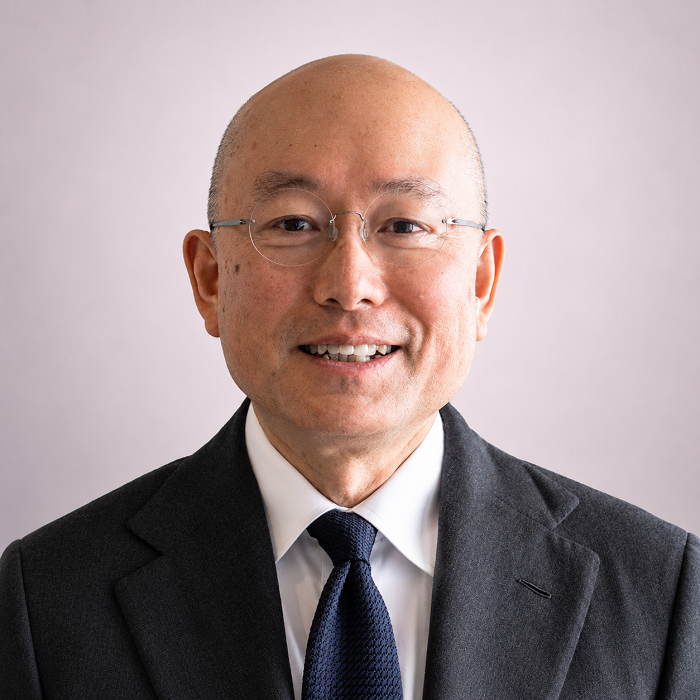
In an exclusive interview with EdgeProp, The Oval Partnership founding director Christopher Law says the scale of the challenge varies between cities, particularly when embodied energy is considered alongside operational energy.
Law, whose firm specialises in sustainable, context-responsive architecture, urbanism, conservation and placemaking globally, was a speaker at the International Sustainability Week (ISW) 2026. The event, co-organised by GreenRE Sdn Bhd and Qube Integrated Malaysia Sdn Bhd, with EdgeProp as media partner, which took place on Sept 10 and 11 at Malaysia International Trade and Exhibition Centre (Mitec) Kuala Lumpur under the theme “From Certification to Transformation: Building a Net Zero Future Together”.
Law notes that where net-zero efforts focus primarily on operational energy, challenges may include continued reliance on coal-fired or fossil-fuel electricity generation. However, incorporating embodied energy into the assessment significantly broadens the challenge, creating a substantial implementation gap across cities.
“Each city has a unique set of circumstances. If we just focus on net zero in operating energy, then for some cities it is the reluctance to give up coal fire or fossil fuel electricity generation. But if we take embodied energy into account, then the gap becomes enormous everywhere,” he says.
The economic environment also influences the pace of the transition. Law cautions against treating resistance to climate action as a uniform phenomenon, noting that priorities differ across markets and societies.
“In many Western countries voters are less concerned about climate issues than, say, five years ago. They would rather focus on affordability issues. As a result many politicians and international corporations are now rolling back on their climate targets. This has an impact on the Asia-Pacific region.
“On the other hand, the development of green technologies such as wind turbines, EV cars, photovoltaic panels, and electric storage have already achieved impressive technical prowess and continue to gain economic momentum despite the best efforts from some politicians to kill it,” he adds.
In his view, the definition of a sustainable building also warrants closer examination, such as “the practice of putting lots of plants on a massive carbon-intensive concrete or steel structure and calling it a green building”.
The distinction between substantive sustainability and environmental branding, he argues, ultimately extends beyond physical interventions.
“The real change is social,” Law stresses, pointing to the need for a post-carbon civilisation to develop its own cultural, technological, economic and political systems.
His view places urban sustainability within a broader historical transformation, in which different eras have developed distinct social, cultural, economic and technological systems.
Under this perspective, achieving net-zero objectives involves more than adopting individual technologies or design features; it requires changes in how cities function and how their communities participate in them.
Community participation is consequently central to effective urban governance. Drawing on The Oval Partnership’s work across Asian cities, Law describes participation not simply as an aspirational principle but a practical requirement for governance.
He says effective systems need to account for a wide range of stakeholders, including different levels and sections of government, large corporations, small- and medium-sized enterprises, professional and trade groups, as well as non-profit and community organisations.
The appropriate structure, he adds, depends on the political, social and economic context of each location.
This approach also informs The Oval Partnership’s “Open City” principle, which promotes permeable and human-scaled urban environments. For large neighbourhood developments, Law emphasises that the social and functional dimensions of a project are as important as its physical form.
“The development of the ‘software’ is equally important as the development of the physical design,” he says, adding that some urban forms are more conducive to creating vibrant and resilient districts than others.
Translating aspiration into implementation
The implications of this wider approach are also reflected in the growing role of green building certification. GreenRE executive director Ashwin Thurairajah tells EdgeProp that sustainability commitments are increasingly being assessed against their ability to demonstrate measurable outcomes.
“Malaysia’s cities won’t be defined by how many sustainability pledges get made, but by the quality of outcomes delivered. That takes more than ambition; it takes trusted standards, measurable performance, and the kind of collective action that turns policy into practice, one verified project at a time,” he says.
For Malaysia, the national aspiration to achieve net-zero greenhouse gas emissions by 2050, together with the National Energy Transition Roadmap, establishes a policy direction.
However, translating those ambitions into practical outcomes requires changes across buildings, communities and infrastructure.
Certification provides one mechanism for establishing measurable standards. Rather than relying on subjective definitions of what constitutes a green building, recognised certification frameworks assess performance against established criteria and provide evidence that can be tracked across a project’s lifecycle.
GreenRE’s own certification data illustrates the growth of this approach. As of May 31, the organisation had certified more than 1,000 projects representing over 500 million sq ft of gross floor area across residential, commercial and industrial developments.
The data also indicates an increase in tracked energy and greenhouse gas savings. Annual greenhouse gas savings recorded under the scheme rose from approximately 8,500 tonnes of carbon dioxide equivalent in 2016 to more than 400,000 tonnes by May 31. Annual energy savings increased from around 16 million kWh in 2016 to more than 600 million kWh.

At the township level, approximately 20,000 acres have achieved GreenRE certification. The certification process for townships considers areas including stormwater management, green and blue spaces exceeding authority requirements, walkability and safety.
Ashwin points out that these figures represent GreenRE’s own certification data rather than the entire Malaysian green building sector, where multiple frameworks operate. Nevertheless, the figures demonstrate the increasing emphasis on measurable and verifiable sustainability performance.
This emphasis is also reflected at the reporting level. The National Sustainability Reporting Framework, introduced by Malaysia’s Advisory Committee on Sustainability Reporting, is raising expectations for corporate sustainability disclosures by aligning the country’s reporting with internationally-recognised standards.
Certification can therefore provide independently-assessed performance information that supports sustainability reporting, while also strengthening confidence in projects seeking green financing. It can further encourage designs intended to maintain efficiency and resilience throughout an asset’s operational life.
Certification is just the beginning
Yet, certification alone does not resolve the broader challenge facing Malaysian cities.
“Certification, though, was never meant to be the destination,” Ashwin says, stressing that certification represents the beginning of a longer process of continuous improvement.
The next stage involves considering urban areas as interconnected systems rather than collections of individual projects. This includes questions around decarbonising existing urban areas at scale and incorporating climate resilience, biodiversity and mobility into the built environment as integrated considerations.
Such a transition requires cooperation among policymakers, developers, financiers, planners, architects, engineers, technology providers and certification bodies. Each has a different role in determining whether cities can become environmentally sound, economically competitive and resilient.
“Cities around the world are experimenting with new financing models, low-carbon technologies and urban design approaches; and industry platforms are increasingly where those experiences get compared and adapted for local use,” Ashwin says.
The broader direction is therefore one in which sustainability is increasingly measured through outcomes rather than commitments alone.
“Future-ready cities need sustained collaboration between policymakers, developers, financiers, planners, architects, engineers, technology providers and certification bodies — each responsible for a different part of the same outcome: cities,” Ashwin says.
For Malaysia, the challenge lies not simply in increasing the number of green buildings or certified developments, but in ensuring that individual projects contribute to urban environments that are measurable, adaptable, resilient and capable of supporting the communities around them.
..........
EdgeProp monthly brings you data, insights and solutions for an evolving market. Subscribe now for your free copy!