Share
Share


This article appeared in the Sept 10, 2026 issue of the monthly print edition. Subscribe now.
The Kuala Langat Local Plan 2030 Draft Amendment 3 has received the green light from Selangor’s planning department and is pending state approval for gazettement, according to Kuala Langat Municipal Council documents.
Notably, it is more than a technical planning update. If approved, it will align local, state and national economic goals, while formally positioning Carey Island as one of Selangor’s major long-term growth engines.
Unlike the first two amendments that were surgical in nature (Table 1), Draft Amendment 3 is strategic. Driven by policy, it reworks about 17.46% of the district, increasing the lots zoned for industrial and commercial use to enable Carey Island’s redevelopment and other projects listed under Selangor’s Integrated Development Region in South Selangor (IDRISS) programme, besides accommodating growing industrial development on the ground.
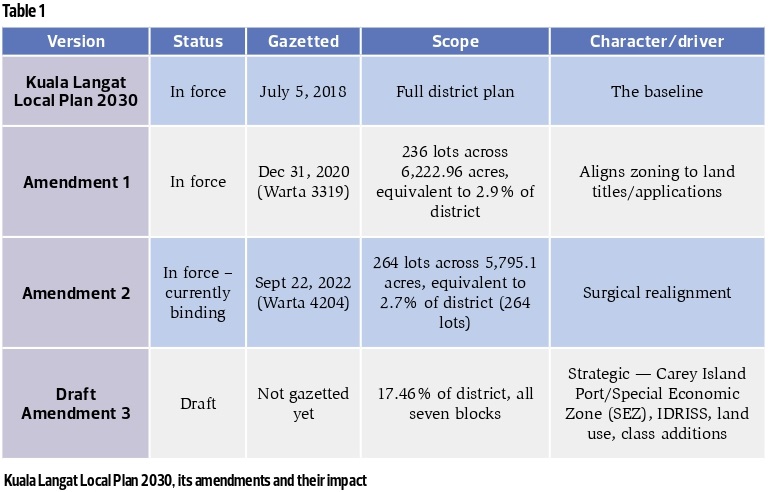
Draft Amendment 3 changes land use for 601 lots across 37,073.70 acres, including 8,210.74 acres within three nautical miles from the coast, incorporating the Carey Island Development Master Plan (Pelan Induk Pembangunan Pulau Carey) into the local plan.
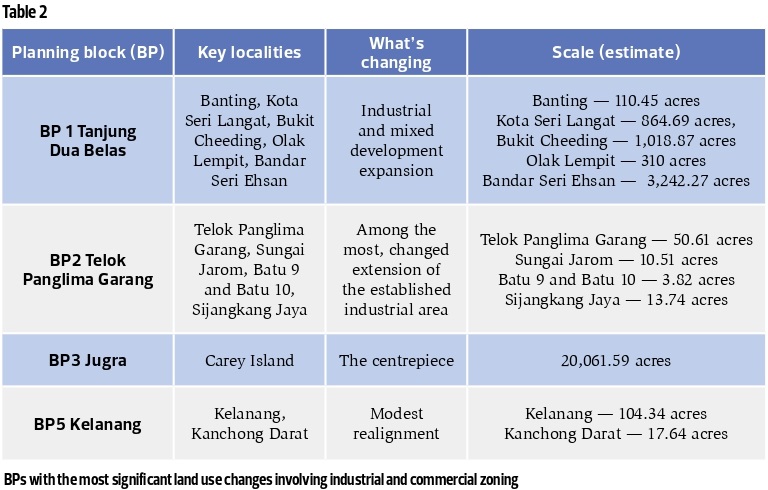
Carey Island alone constitutes almost half the changes. Industrial zoning changes also mostly fall onto planning blocks (BP) 1 and 2, which form the Banting, Kota Seri Langat and Telok Panglima Garang belt.
Thickening of the industrial spine
The rezonings at Kota Seri Langat and Olak Lempit (BP1 and BP2) do not invent a new industrial corridor. Instead, with developments including the Lion Industrial Park, the GreenRE-certified COMPASS @ Kota Seri Langat and IOI Industrial Park @ Banting, it reflects demand that is already visible on the ground.
Carey Island (BP3) is the strategic centrepiece and the larger long-term bet: a future port-industrial platform that could support Port Klang, IDRISS and the wider southern Selangor corridor.
BP5, covering Kelanang and Kanchong Darat, is more modest and should be read as smaller realignments rather than the main thrust of the amendment.
IDRISS: THE STATE PROGRAMME DRIVING THE CHANGE
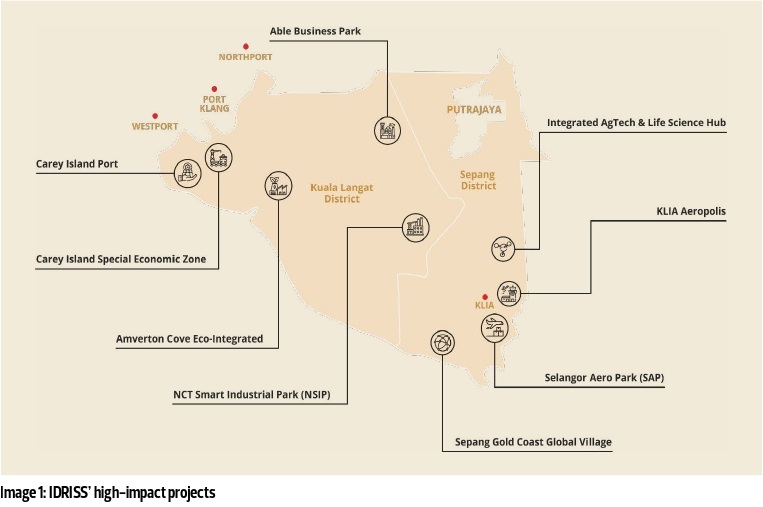
The IDRISS initiative is led by the Selangor government, with Invest Selangor Bhd as its official secretariat, to drive integrated, high impact development across the state’s southern districts, in alignment with the Selangor Plan (Rancangan Selangor) agenda.
IDRISS covers over 16,369.58 acres of development land across Kuala Langat and Sepang, with an estimated gross development value of RM57.7 billion. It features nine high-impact projects and seven focus sectors: industrial, commercial, residential, port, tourism, education and smart agriculture.
Its incentives are valid until Dec 31, 2029, signalling the pace at which Selangor intends the region to build out.
IDRISS incentives
• Special land premium scheme
• Instalment on development charges at 0% interest
• 50% remittance on assessment rate for vacant land for first two years
• Business license fee exemption for five years
CAREY ISLAND: THE DESIGNATED ENGINE, BUT FOR WHAT?
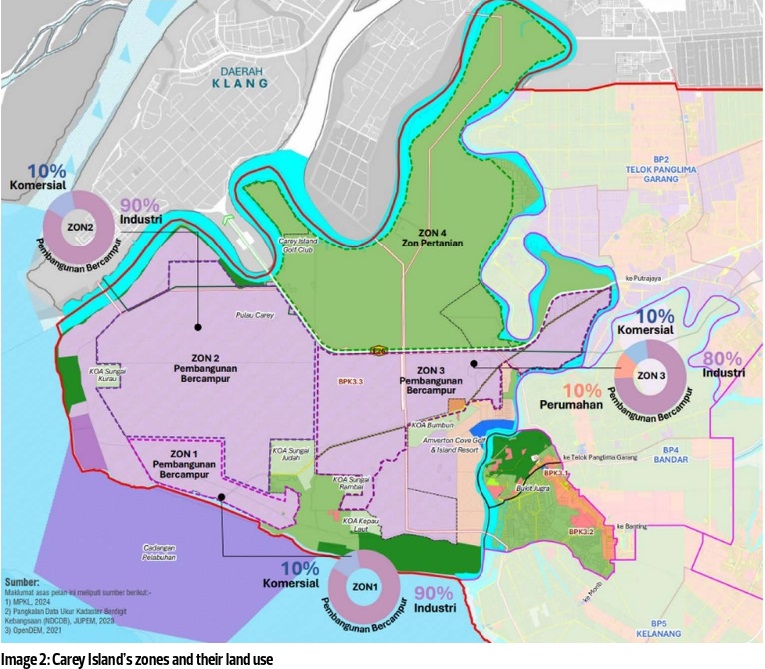
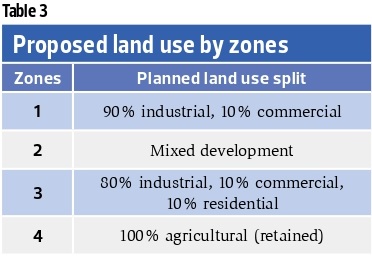
The draft zoning for Carey Island plan points to a more layered structure, with port and harbour-related land concentrated towards the south-western edge, mixed development zones across parts of the island, agricultural and green areas retained in other sections, and selected zones with a heavier industrial ratio (Image 2, Table 3).
So, what can Carey Island offer and why is it being treated as a national mega infrastructure project? The answer is because Port Klang needs expanding to accommodate larger cargo handling requirements, given that the Strait of Melaka is one of the world’s most important trade routes. At the same time, southern Selangor and Negeri Sembilan are seeing a new wave of industrialisation, driven by manufacturing, logistics, energy, data centres and China Plus One supply-chain shifts.
Carey Island sits at the intersection of those forces. It is not just about adding another port terminal, it is about creating the next port-in dustrial platform for the Klang Valley — one that can support larger cargo handling, bulk storage, logistics, downstream manufacturing, petrochemical-related activity and the wider industrial expansion taking place across Kuala Langat, Sepang and Negeri Sembilan.
Simply put, Carey Island matters because it can connect Port Klang’s next phase of growth with the industrial base already forming across southern Selangor and Negeri Sembilan.
That mainland industrial base is already visible. Kuala Langat is not emerging as a single-sector story, it is forming around recycling, paper and packaging, advanced materials, electric-vehicle battery manufacturing, industrial gases, rubber glove manufacturing, steel-linked activity, logistics and selected digital infrastructure.
It is also carrying the legacy of being Selangor’s former steel base.
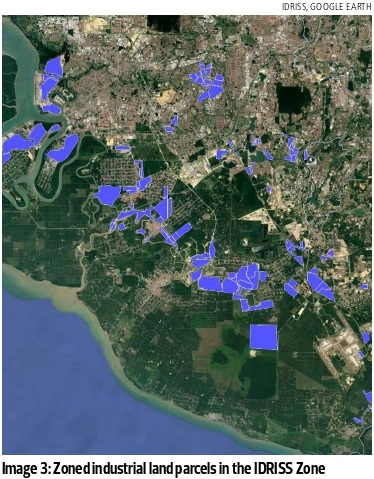
Recent investments of more than RM10 billion, together with occupiers across IDRISS zones, particularly in Kota Seri Langat and Olak Lempit, point to a growing industrial base. Companies such as Nine Dragons Paper Mill, TenPower, OMRON, BWYS Scaffolding and Bridge Data Centres show that this is no longer a speculative corridor, but a growing industrial base built around resource-processing, manufacturing, recycling, packaging, industrial support and infrastructure-led users.
Carey Island should therefore be seen as the port-side extension of that base. The mainland corridor already shows demand; Carey Island can provide the missing upstream layer: port access, bulk storage, raw material handling, marine services and logistics infrastructure.
Singapore, and the two largest ports in Europe, Antwerp and Rotterdam, are examples of how ports can work not simply as cargo handlers but areas that store, transform, blend, distribute and re-export. In other words, they become the first layer of the economy, not the whole economy.
This is how Carey Island anchors the port-industrial base, while Kuala Langat provides the manufacturing and logistics spine, Sepang adds airport-linked connectivity, Klang Valley provides labour and services, and Negeri Sembilan extends the industrial corridor southwards.
DATA CENTRES BELONG TO THE MAINLAND STORY
Data centres need to be mentioned because they are one of the most closely watched industrial real estate themes in Malaysia today. They are relevant to the wider Kuala Langat story, but they are not the core Carey Island story. They belong more naturally to the emerging mainland industrial corridor between Dengkil, Banting and Kota Seri Langat, where ready industrial land, power access, fibre routes and proximity to Cyberjaya can support digital infrastructure.
WHAT THE DRAFT AMENDMENT’S TRAJECTORY SIGNALS
A self-supporting mixed industrial cluster is forming
The encouraging signal is the emergence of clustering around the IDRISS zone. As large industrial loads concentrate in one corridor, the case for dedicated power, water, fibre, contractors, security, worker housing and specialised services becomes stronger.
The direction is clear: West Port needs room to grow, port-adjacent industries will keep looking along the same coast, and IDRISS gives the wider corridor a way to organise that growth.
This is not demand arriving in one big wave. If the right anchors come in, each project helps make the next one more likely.
Connectivity will carry the growth
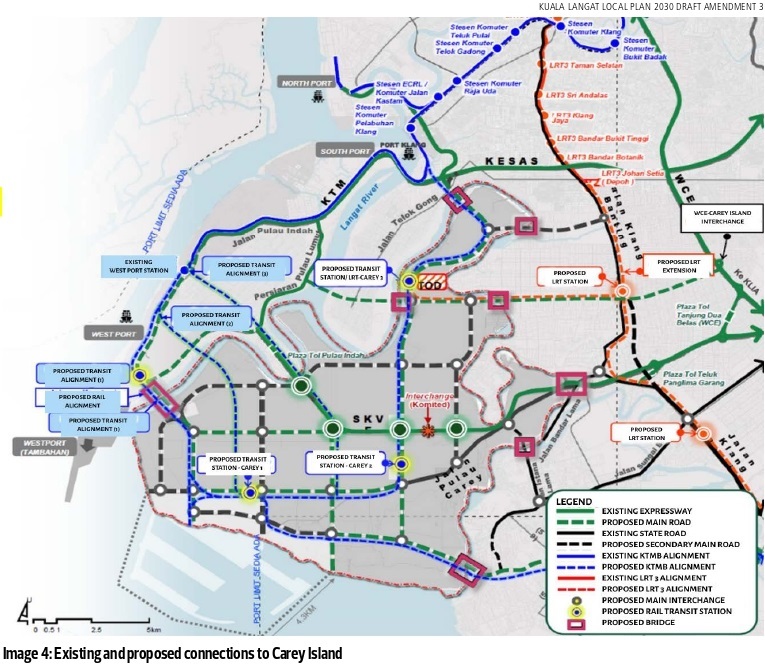
The existing South Klang Valley Expressway (SKVE), Shah Alam Expressway (Kesas), and West Coast Expressway (WCE) are being integrated with proposed new arterial links, while a proposed LRT Carey Line and extension would tie the corridor into the new existing Komuter line, East Coast Rail Link (ECRL) and Express Rail Link (ERL) rail network, and on to Kuala Lumpur International Airport. In short, road and rail are moving in the same direction as the zoning.
WHAT TO WATCH OUT FOR: THE GROUND ITSELF
Selangor’s next move
The next test is not simply whether Draft Amendment 3 is gazetted. It is whether Selangor can turn planning designation into market movement.
The SD Guthrie Bhd–Menteri Besar Selangor Incorporated memorandum of understanding (MOU) signed in February is an important early signal. It establishes a framework to explore feasibility studies and master planning for at least 2,500 acres, with potential expansion to 5,000 acres, within Carey Island Estate. Just as importantly, it links the proposed development to IDRISS, the Third Port initiative, and a potential Carey Island SEZ.
That is the kind of state-backed first mover signal the market will watch closely. MOUs are nice, but the stronger proof will come from joint venture announcements or development agreements where partners, capital commitments and delivery timelines are clearly identified, signalling that Carey Island is moving from concept to initial delivery.
Anchors, not empty zones
Zoning and conversions alone do not create value. Who commits is the real signal. Malaysia has seen this play before: glossy industrial park launches, golden spades in the ground, but no anchor tenants to carry the project. Without credible first movers, land can sit dormant for 10 to 20 years while capital, infrastructure and political attention remain locked in a project that has yet to prove demand.
For Carey Island, the easy win will be the port-linked users: logistics operators, storage players, petrochemical users, tank farm operators, marine service providers, energy-transition companies and downstream manufacturers. For the mainland corridor, the signal will be take-up by manufacturers, logistics users, data centre operators, SME suppliers and industrial service providers.
The test is not whether land is developed. It is whether credible anchors arrive and whether they bring their ecosystems with them.
Infrastructure signals
Infrastructure announcements will be another key marker. SKVE already passes through Carey Island on the route between Telok Panglima Garang, Pulau Carey and Pulau Indah/ Westport, giving the island an existing highway relationship with Port Klang and the wider Klang Valley.
The next signs to watch are commitments around port works, road upgrades, rail connectivity, power, water, utilities and digital infrastructure. These will matter not only for industrial delivery, but also for the residential and commercial elements needed to support the wider zone.
A functioning industrial corridor cannot rely on factories alone. Besides power and water for industry, it also needs roads, drainage, utilities, housing, retail, worker accommodation, healthcare, schools and local services for the people who will live and work there. That is what will determine whether Carey Island and the wider IDRISS corridor become a complete economic zone, rather than just another planned industrial area.
Land issues, briefly
Carey Island also carries physical development challenges. Much of the island is low-lying coastal land, and any major industrial or port-related development will need to account for ground treatment, settlement, drainage, flood risk and environmental safeguards.
This does not make development impossible. It simply means Carey Island cannot be valued or planned like ordinary inland industrial land. The cost of preparation must be matched by industries that genuinely need its port-industrial setting.
Land values as the market signal
Finally, land pricing will be an important indicator. If Kuala Langat and Carey Island continue to attract developer interest, land values are likely to reflect that expectation.
This is especially true when major infrastructure is announced. Highways can positively influence land development, population growth and economic activity, with industrial developments along established highway corridors showing a stable upward price trend after operations begin, stated an EdgeProp report in 2020: “How significant are highways to property prices?”.
In the examples cited, industrial lots along SKVE recorded an average increase of about 29%, or roughly 5.3% compound annual growth rate, with individual industrial parks rising by around 2.2%–9.9% per annum. The point is not that every site will move the same way, but that infrastructure can change how the market prices accessibility, industrial use and future development potential.
For Carey Island and Kuala Langat, the same logic applies. Announcements around port works, SKVE connectivity, utilities, rail, water and power infrastructure could all feed into stronger land-price expectations. But price growth will only be sustainable if it is supported by real take-up, infrastructure delivery, named tenants and credible first movers.
Land values can rise on expectation, but they hold when delivery follows.
Commercial and residential follow-through
The final signal will be whether commercial and residential uses follow the industrial story.
People do not move to industrial parks simply because land has been rezoned. They move when there are jobs, housing, amenities, schools, healthcare, retail, leisure options and things to do. That is what turns an industrial corridor into a functioning ecosystem.
And Carey Island is not starting from zero.
Amverton Cove already provides a leisure and commercial anchor, with an existing golf course, while plans for residential and commercial uses are already in the works.
Conclusion
The lesson from Draft Amendment 3 is that Kuala Langat’s industrial future is no longer theoretical. The map is being redrawn around IDRISS, Carey Island and the managed industrial park corridor.
The harder part is what comes next. Zoning will only matter if Selangor can bring in the right first movers, credible anchors, infrastructure commitments and a clear role for each zone.
Carey Island is the prize. It should not be treated as spare land waiting to be filled, but as scarce port-industrial land that can help Port Klang move beyond throughput into storage, processing, manufacturing, logistics, energy transition activity and long-term industrial value for the wider Klang Valley.
Disclaimer: AREA Group has development interests in the district through COMPASS @ Kota Seri Langat. Readers should weigh its comments accordingly. While every effort has been made to ensure that the information provided in this article is accurate, reliable, and complete as of the time of writing, it is for general information only, and should not be relied upon to make any financial, investment, real estate or legal decisions. The information should not substitute advice from trained professionals, and EdgeProp accepts no liability for any decisions made from the information given.
Alistair LaBrooy is director of AREA Group of Companies, a real estate advisory, market intelligence, and development group, with capabilities in real estate investment trust (REIT) and investment management services.
..........
EdgeProp monthly brings you data, insights and solutions for an evolving market. Subscribe now for your free copy!